




This article was originally published in the Brand Finance Football 50 2025 report

Associate Professor,
Ravensbourne University
London
In May 2025, Manchester United took on Chelsea at Wembley Stadium to the delight of more than 74,000 fans. For FA Cup sponsors Adobe, this was an opportunity to let their brand shine on a massive stage, particularly since another 1.3 million people watched on BBC One and 160,000 opted to stream using the BBC iPlayer. Brands and media organisations are in agreement: Women’s sports are in play.
To continue growing the women’s game, investment in the players, the national teams, and the developmental structure for athletes are required. The rise of the U.S. Women’s national team provides a blueprint for how this investment fosters global growth of the sport. The team’s historic dominance - World Cup wins in four of the nine tournaments that have been played - is an outcome of Title IX, a 1972 federal law that requires equal opportunity for boys and girls at any institution receiving federal funds.
The team’s success on the international stage led to women soccer players like Mia Hamm and Abby Wambach becoming household names. Now, the market for the top American women in the sport is expanding, with the likes of Trinity Rodman, Lindsey Horan Heaps, and Naomi Girma playing in the elite soccer leagues in the U.S., France, and England, respectively.
In the last decade, however, the historic gap between the U.S. Women’s National Team and the rest of the world has been shrinking. The explosive popularity of women footballers and widespread success of organisations from countries outside of the States is the result of an investment in their national and club teams, creating the momentum that continues to drive the sport’s growth. Footballing superstars from around the world have widespread appeal both at home and abroad, offering access points to new or underdeveloped markets for women’s sports.
While Brazilian legend Marta, who led her side to the Copa América Feminina victory in summer 2025, has been an icon in the women’s game for years, young talent like Colombia’s Linda Caicedo, Japan’s Momoko Tanikawa, and Zambia’s Barbra Banda are expanding perceptions of what women footballers look like and where they are from. As girls are encouraged to play football and structural support is provided to make that happen, the calibre - and thus appeal - of the beautiful game continues to mature.
This growth is even more remarkable when considered against the challenges and struggles that these players must overcome. Women footballers are paid significantly less then their male counterparts, even in countries where the women’s teams generate substantial attention and revenue.
Medical research and physical training best practices are developed based on men’s bodies, meaning women athletes are disproportionately at risk for some injuries - an issue brought to light with the notable number of ACL tears sidelining national team stars for the 2023 World Cup. Travel conditions often are inferior, meaning women will be forced to sit in economy during international travel and deal with the physical consequences of sitting in cramped spaces for long periods of time while being expected to perform at elite levels soon after.
As media and brand deals increase for women’s leagues and national teams, investing more resources into supporting women athletes across multiple fronts is imperative.
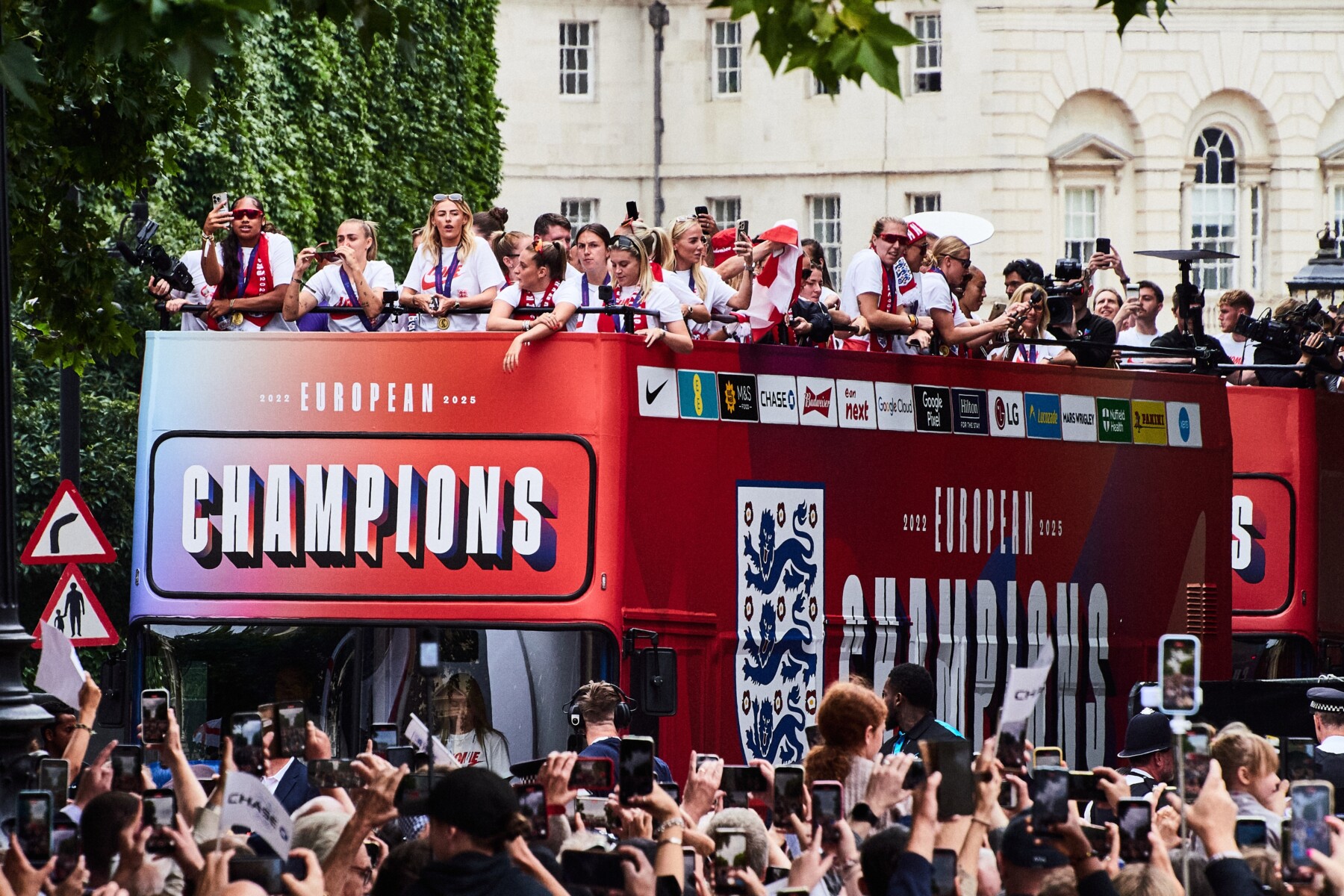
More pragmatically, it’s also a fertile growth opportunity for the brands investing in the women’s game. Both club and national women’s football teams are increasingly visible on the global stage. The 2023 iteration of the Women’s World Cup hosted by Australia and New Zealand shattered both attendance and audience records. Over 650,000 people swarmed Switzerland for the 2025 Euro Cup, and more than 16 million viewers in the UK watched as England’s Lionesses raised the trophy.
These numbers are expected to continue to grow apace - and not just in the Global North. Recent research by Nielsen Sports and PepsiCo projects the global fan base for women’s football will grow by almost 40% by 2030, representing more than 800 million people around the world. For global brands, this is a huge opportunity to expand their reach and engagement with audiences who might otherwise be underserved in the sporting world.
While in general the Global South is at an earlier developmental stage for the women’s game when compared to Europe and the rest of the Global North, similar patterns are emerging. An increase in media coverage and corresponding investment in the game, including promoting the success of key players in major tournaments, drives audience engagement and increases appeal to fans of both the women’s and men’s games.
Continued success and growth relies on stable investment, however, and the brands that opt in early to leverage the women’s game are poised to have a promising return on their investment. Notably, this includes the goodwill that comes with sponsorship of and engagement with a traditionally underserved - but highly invested - audience.
Fans of women’s sports care desperately about the continued success and growth of their players, teams, and organisations, and brands that move into this space have an unparalleled opportunity to make an impact that provides both commercial returns and positive social benefits.
The build-up to the 2027 Women’s World Cup in Brazil - the first-ever South American nation to host the tournament - is already gathering steam, and expectations are high for this tenth edition of the tournament. Media deals are setting records, including BBC and ITV in the UK, Deutsche Telekom in Germany, and Netflix entering the mix for the U.S. market.
Sponsors are lining up to have their brands present at these events, tapping into what are expected to be record-setting audiences - brand managers that aren’t thinking about their own brand’s sponsorship potential should be.
And perhaps most importantly, the World Cup tournaments and the sport’s rising popularity means young girls from around the world will have the chance to witness elite athletes perform at the highest level - and see women who look just like them doing it.