





Brand Finance’s Airlines 50 2026 reveals that the collective brand value of Vietnam’s airlines sector amounts to $1.4 billion
HANOI, 5 May 2026 – Vietnam’s airlines sector makes its mark globally, with two of the nation’s brands featured among the world’s top 50 despite ongoing geopolitical conflicts in the Middle East, which have contributed to volatility in global oil markets and creating potential operational pressures, including fluctuating fuel costs and airspace disruptions.
According to the Airlines 50 2026 report by Brand Finance, the world's leading brand valuation consultancy, the collective brand value of the country’s airlines brands amounts to USD1.4 billion, reflecting strong momentum and an optimistic outlook for the sector’s future.
Vietjet (brand value up 117% to USD906 million) more than doubles its brand value, making it the world’s fastest growing airlines brand this year and entering the top 50 for the first time, ranking 37th. This achievement was driven by the brand’s strong focus on international expansion. Over the past year, it has added high-efficiency routes connecting Vietnam to Australia, India, Indonesia, Kazakhstan, and Russia. This initiative boosted flight ticket sales through an increase in passenger numbers over the past year.
Vietjet also recorded robust revenue growth from diversified streams such as baggage and seat selection fees as well as onboard services, amounting to 41% of total air revenue by the third quarter of 2025. This revenue growth was supported by operational efficiency and optimised flight operations, which kept costs low and probability high.
Vietnam Airlines (brand value up 36% to USD513 million) also makes its debut among the top 50 airlines brand globally, ranking 49th this year as its brand value shows notable growth. The brand’s performance was supported by its financial restructuring, with a capital increase in 2025 that improved Vietnam Airlines’ financial health and contributed to its growth. Additionally, the air transport provider also ranks as the 15th strongest airline brand globally, receiving a Brand Strength Index (BSI) score of 85/100 and an AAA brand strength rating.
The brand benefited from a significant rebound in international travel, driving up flight ticket sales and through an increase in both domestic and international passenger numbers. The brand’s strategic decision to expand its network by resuming suspended flights and launching new international routes provided a channel to broaden its market reach, which further supports a rise in its core transportation revenue.
Alex Haigh, Managing Director Asia Pacific, Brand Finance, commented:
“The performance of Vietjet and Vietnam Airlines reflects a maturing industry, which is driven by a focus on meeting evolving travel demand and propelled by strategic decisions that have elevated the brands’ positions in the global market. The country’s airlines industry has entered a state that is increasingly well placed to meet global expectations as the need for international travel and air transport rises within the next few years.”
Global Insights
The combined brand value of the world’s top 50 airlines has risen 11% year-on-year to USD147 billion, reflecting sustained international travel demand, operational discipline, and strategic investments in premium offerings, despite fuel price instability and ongoing geopolitical tension in the Middle East.
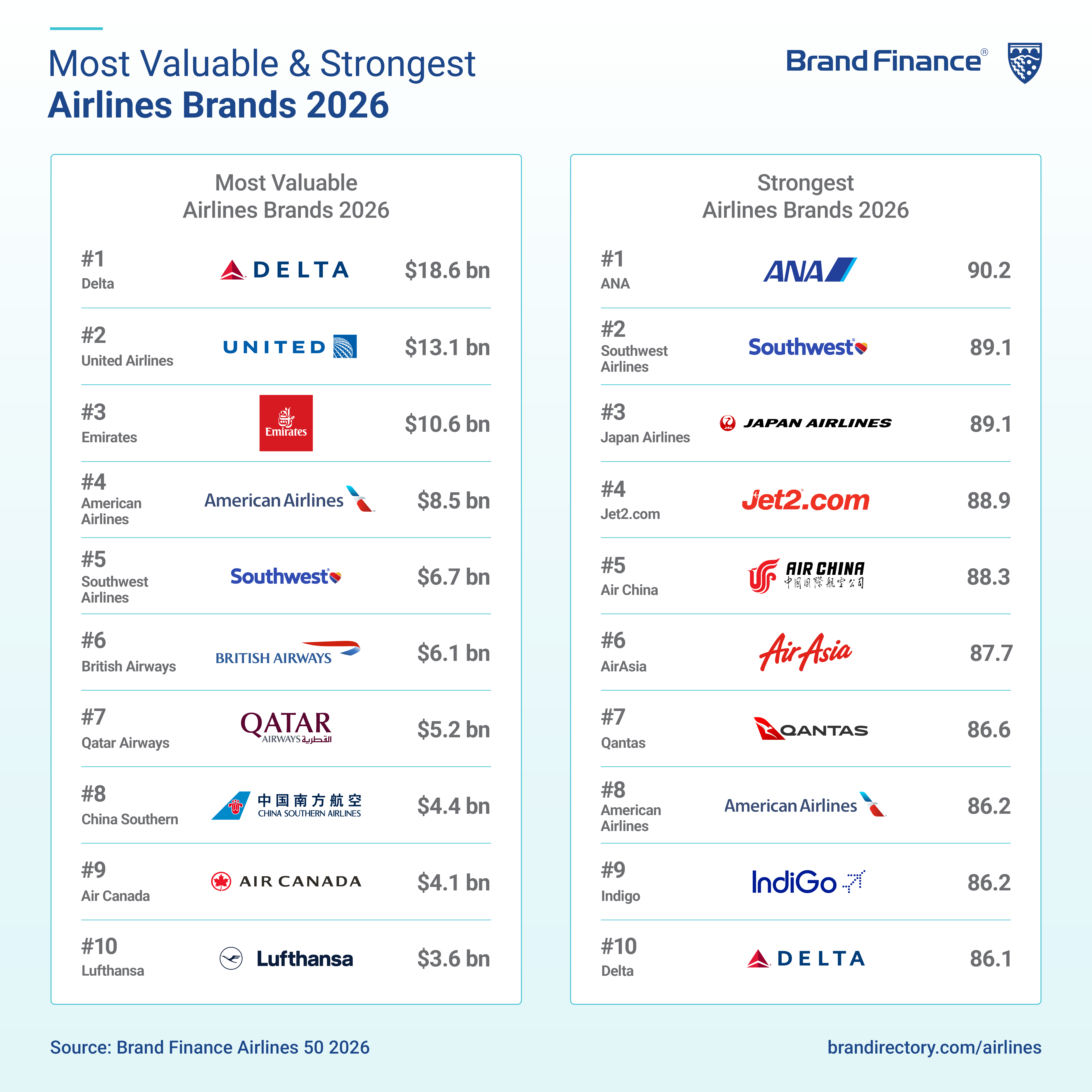
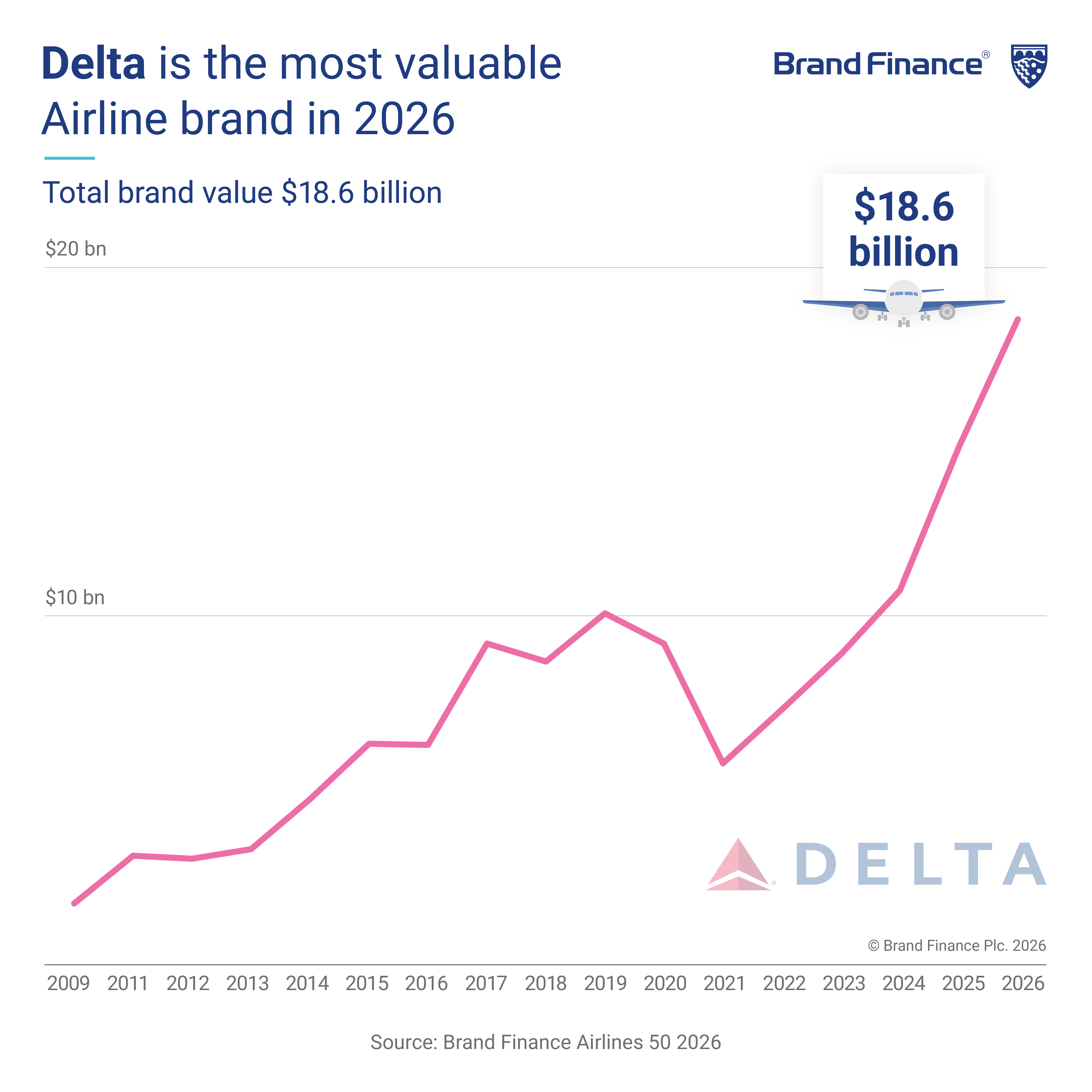
Delta retains its position as the world’s most valuable airline brand, with its brand value rising 25% to USD18.6 billion. The airline’s industry-leading reliability and commitment to service excellence continue to strengthen customer loyalty across domestic and international markets.
ANA (brand value up 23% to USD2.9 billion) has been named the strongest airline brand in the world, with a Brand Strength Index (BSI) score of 90.2/100 and an AAA+ rating. Its strength reflects strategic international expansion, operational excellence, and market leadership.
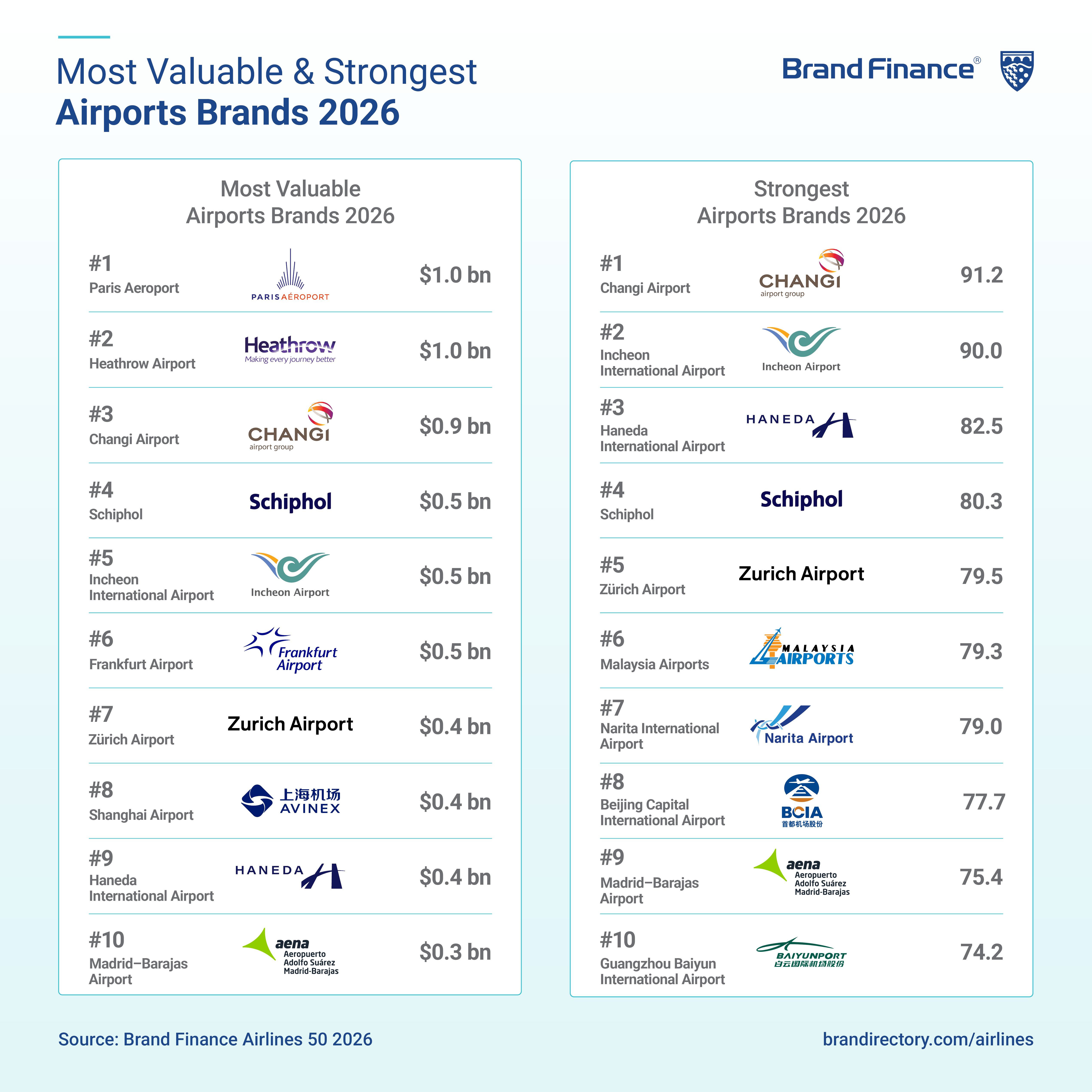
Meanwhile, Paris Aéroport tops the global airport ranking with a 36% brand value rise to USD1 billion, overtaking Heathrow Airport (brand value down 2% to USD972 million), driven by rising passenger traffic and strategic pricing initiatives. Singapore’s Changi Airport (brand value up 16% to USD889 million) remains the strongest airport brand worldwide, with a BSI score of 91.2/100 and an AAA+ brand strength rating, thanks to record passenger traffic, customer satisfaction, and award-winning service. Schiphol Airport (brand value up 39% to USD540 million) is the fastest-growing airport brand, benefiting from rising European travel demand and expanded connectivity.




Brand Finance is the world’s leading brand valuation consultancy. Bridging the gap between marketing and finance, Brand Finance evaluates the strength of brands and quantifies their financial value to help organisations make strategic decisions.
Headquartered in London, Brand Finance operates in over 25 countries. Every year, Brand Finance conducts more than 6,000 brand valuations, supported by original market research, and publishes over 100 reports which rank brands across all sectors and countries.
Brand Finance also operates the Global Brand Equity Monitor, conducting original market research annually on 6,000 brands, surveying more than 175,000 respondents across 41 countries and 31 industry sectors. By combining perceptual data from the Global Brand Equity Monitor with data from its valuation database — the largest brand value database in the world — Brand Finance equips ambitious brand leaders with the data, analytics, and the strategic guidance they need to enhance brand and business value.
In addition to calculating brand value, Brand Finance also determines the relative strength of brands through a balanced scorecard of metrics, compliant with ISO 20671.
Brand Finance is a regulated accountancy firm and a committed leader in the standardisation of the brand valuation industry. Brand Finance was the first to be certified by independent auditors as compliant with both ISO 10668 and ISO 20671 and has received the official endorsement of the Marketing Accountability Standards Board (MASB) in the United States.
Brand is defined as a marketing-related intangible asset including, but not limited to, names, terms, signs, symbols, logos, and designs, intended to identify goods, services, or entities, creating distinctive images and associations in the minds of stakeholders, thereby generating economic benefits.
Brand strength is the efficacy of a brand’s performance on intangible measures relative to its competitors. Brand Finance evaluates brand strength in a process compliant with ISO 20671, looking at Marketing Investment, Stakeholder Equity, and the impact of those on Business Performance. The data used is derived from Brand Finance’s proprietary market research programme and from publicly available sources.
Each brand is assigned a Brand Strength Index (BSI) score out of 100, which feeds into the brand value calculation. Based on the score, each brand is assigned a corresponding Brand Rating up to AAA+ in a format similar to a credit rating.
Brand Finance calculates the values of brands in its rankings using the Royalty Relief approach – a brand valuation method compliant with the industry standards set in ISO 10668. It involves estimating the likely future revenues that are attributable to a brand by calculating a royalty rate that would be charged for its use, to arrive at a ‘brand value’ understood as a net economic benefit that a brand owner would achieve by licensing the brand in the open market.
The steps in this process are as follows:
1 Calculate brand strength using a balanced scorecard of metrics assessing Marketing Investment, Stakeholder Equity, and Business Performance. Brand strength is expressed as a Brand Strength Index (BSI) score on a scale of 0 to 100.
2 Determine royalty range for each industry, reflecting the importance of brand to purchasing decisions. In luxury, the maximum percentage is high, while in extractive industry, where goods are often commoditised, it is lower. This is done by reviewing comparable licensing agreements sourced from Brand Finance’s extensive database.
3 Calculate royalty rate. The BSI score is applied to the royalty range to arrive at a royalty rate. For example, if the royalty range in a sector is 0-5% and a brand has a BSI score of 80 out of 100, then an appropriate royalty rate for the use of this brand in the given sector will be 4%.
4 Determine brand-specific revenues by estimating a proportion of parent company revenues attributable to a brand.
5 Determine forecast revenues using a function of historic revenues, equity analyst forecasts, and economic growth rates.
6 Apply the royalty rate to the forecast revenues to derive brand revenues.
7 Discount post-tax brand revenues to a net present value which equals the brand value.
Brand Finance has produced this study with an independent and unbiased analysis. The values derived and opinions presented in this study are based on publicly available information and certain assumptions that Brand Finance used where such data was deficient or unclear. Brand Finance accepts no responsibility and will not be liable in the event that the publicly available information relied upon is subsequently found to be inaccurate. The opinions and financial analysis expressed in the study are not to be construed as providing investment or business advice. Brand Finance does not intend the study to be relied upon for any reason and excludes all liability to any body, government, or organisation.
The data presented in this study form part of Brand Finance's proprietary database, are provided for the benefit of the media, and are not to be used in part or in full for any commercial or technical purpose without written permission from Brand Finance.