





Brand Finance data shows China’s top 15 pharma brands reach $12.9 billion as innovation, traditional medicine, and global expansion fuel growth
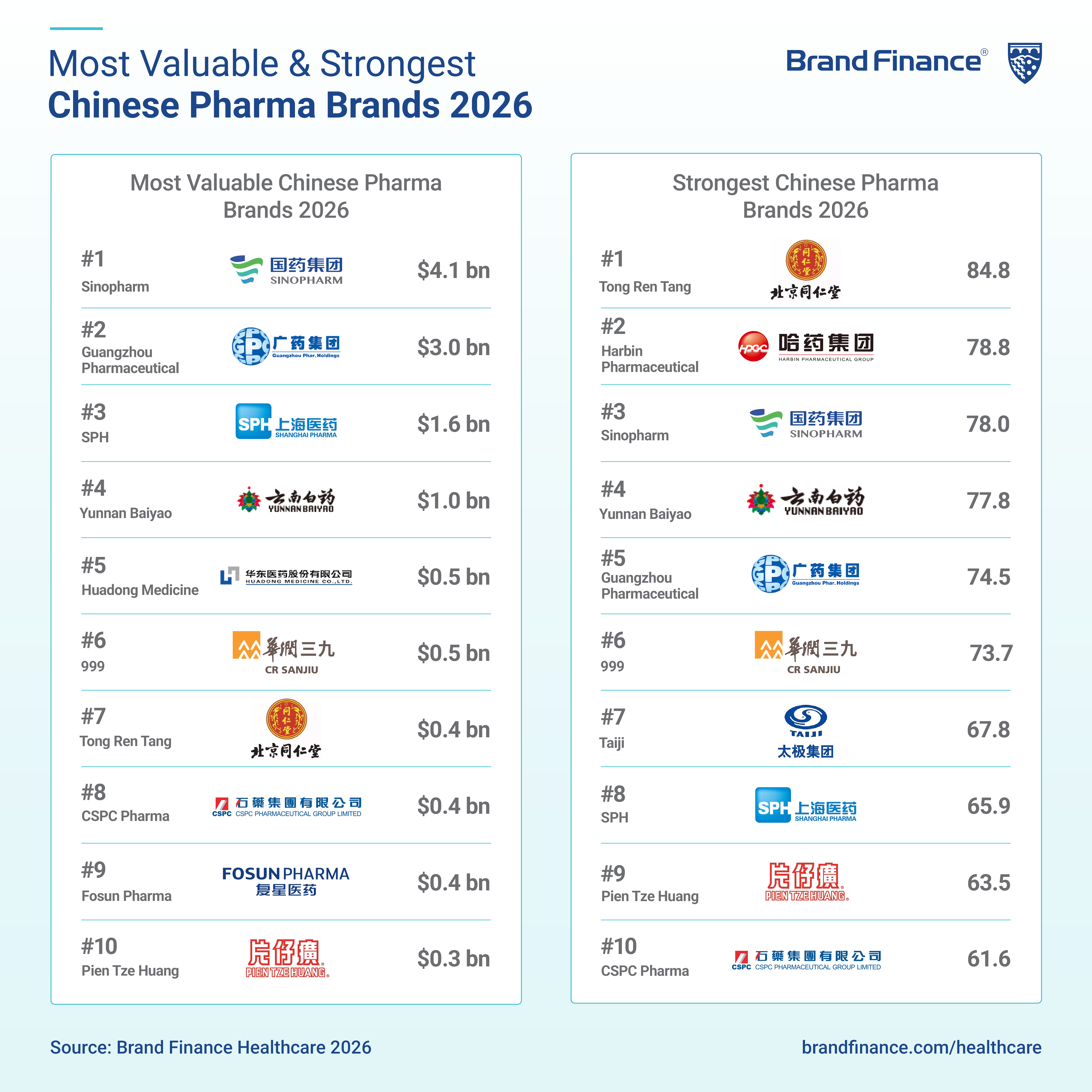
BEIJING, 30 April 2026 – China’s pharmaceutical sector is gaining stronger global momentum, with the total brand value of the country’s top 15 pharmaceutical brands rising 10% to USD12.9 billion this year, according to the Healthcare 2026 report from Brand Finance, the world's leading brand valuation consultancy.
This growth reflects a broader transformation across China’s pharmaceutical landscape, driven by rising domestic demand, stronger innovation pipelines, international expansion, and increasing global confidence in both modern and traditional Chinese healthcare brands. As Chinese pharmaceutical companies move beyond generics into higher-value therapies while expanding cross-border partnerships, licensing deals, and overseas market presence, the sector is strengthening both its commercial influence and brand equity.
Sinopharm (brand value up 10% to USD4.1 billion) retains its position as the most valuable Chinese pharmaceutical brand, supported by the scale of its pharmaceutical distribution network and expanding international footprint. Sinopharm also ranks as the 11th most valuable and fifth strongest pharma brand globally with a Brand Strength Index (BSI) score of 78.8/100 and an AA+ brand strength rating. Stronger healthcare cooperation across Southeast Asia and Belt and Road markets has further reinforced Sinopharm’s position as one of China’s leading healthcare groups.
Guangzhou Pharmaceutical (brand value up 20% to USD3 billion) ranks second this year, in addition to emerging as the fastest-growing Chinese pharmaceutical brand. Its rise is driven by growing demand for traditional Chinese medicine, herbal remedies, and consumer healthcare products, supported by increasing domestic preference for preventive and natural healthcare solutions. As the traditional Chinese medicine market continues to expand, Guangzhou Pharmaceutical is well positioned to capture sustained long-term growth. Meanwhile in the global pharma ranking, the brand retains its position as the 15th among the most valuable in the sector and eight strongest brand with a BSI score of 74.5/100 and AA+ rating.
Shanghai Pharmaceuticals Holding (brand value up 2% to USD1.5 billion) also maintains a strong position, benefiting from its vertically integrated model spanning manufacturing, distribution, and retail pharmacy. Its continued expansion across innovative drugs, strategic partnerships, and Southeast Asian markets reinforces its resilience in an increasingly competitive sector. The brand rounds up the top 20 global pharma brand this year.
Scott Chen, Managing Director China, Brand Finance, commented:
“China’s pharmaceutical sector is evolving rapidly, combining scientific innovation, manufacturing scale, and growing global ambition with the enduring strength of trusted domestic healthcare brands. The rise of Guangzhou Pharmaceutical highlights how traditional Chinese medicine and preventive healthcare are becoming increasingly powerful commercial drivers, while Sinopharm’s continued leadership reflects the scale and sophistication of China’s broader healthcare ecosystem. As Chinese pharmaceutical brands expand internationally and move further up the value chain, they are strengthening not only their commercial competitiveness, but also China’s position as a major force in the future of global healthcare.”
In brand strength, Tong Ren Tang (brand value up 6% to USD399 million) remains the strongest Chinese pharmaceutical brand, with a BSI score of 84.8/100 and an AAA rating. Backed by more than 350 years of heritage, deep consumer trust, and leadership in traditional Chinese patent medicines, the brand continues to benefit from rising consumer interest in preventive healthcare and traditional medicine.
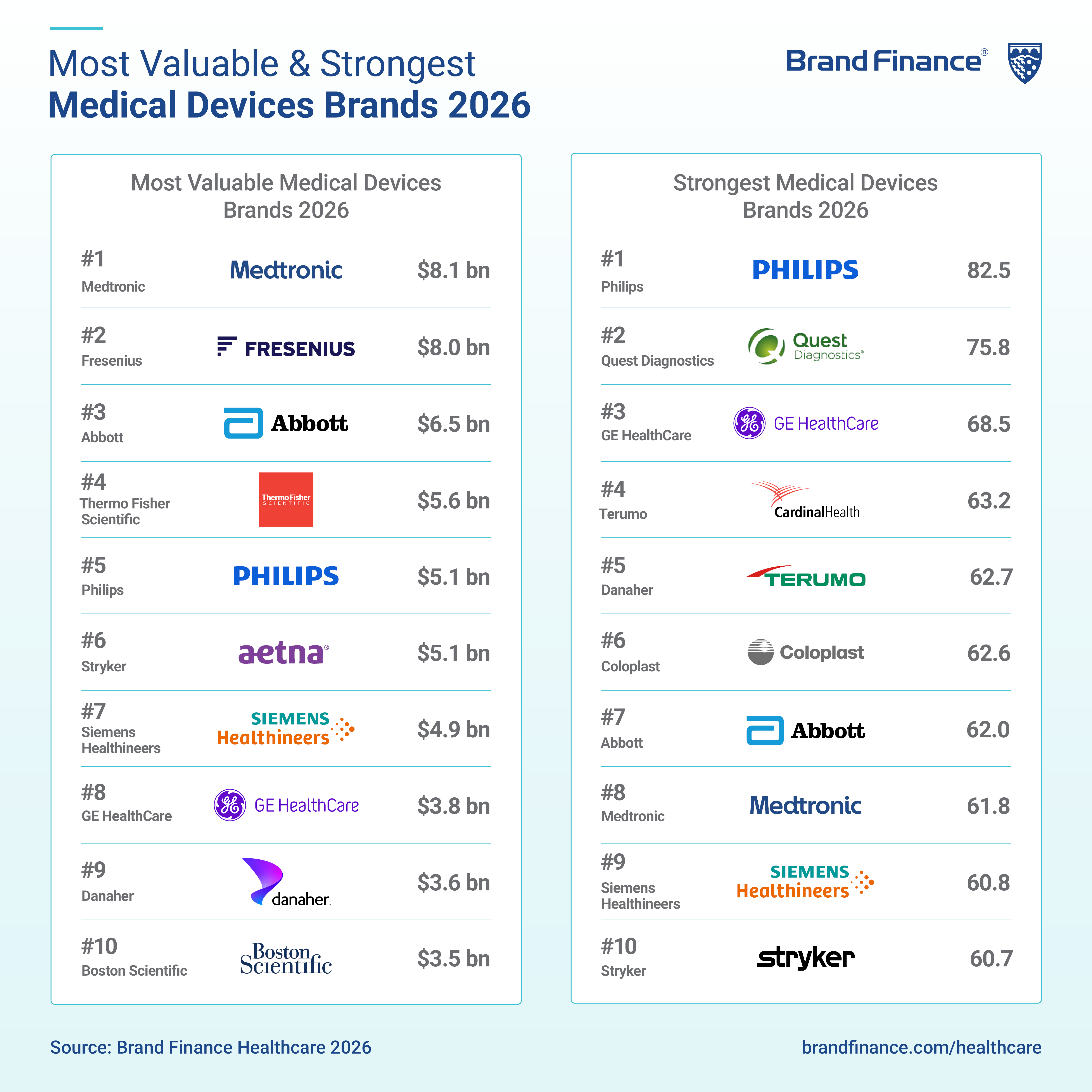
Medtronic (brand value up 10% to USD8.1 billion) retains its position as the most valuable medical devices brand for the second consecutive year, supported by innovation, new product launches, and strong performance across its cardiovascular, neuroscience, and diabetes portfolios. Fresenius (brand value up 9% to USD8 billion) remains second, while Abbott (brand value up 11% to USD6.5 billion) climbs one rank to third.
Harbin Pharmaceutical (brand value up 20% to USD163 million) ranks as China’s second strongest pharmaceutical brand, with a BSI score of 78.8/100 and an AA+ rating, reflecting improving consumer confidence and strong recognition across healthcare categories.
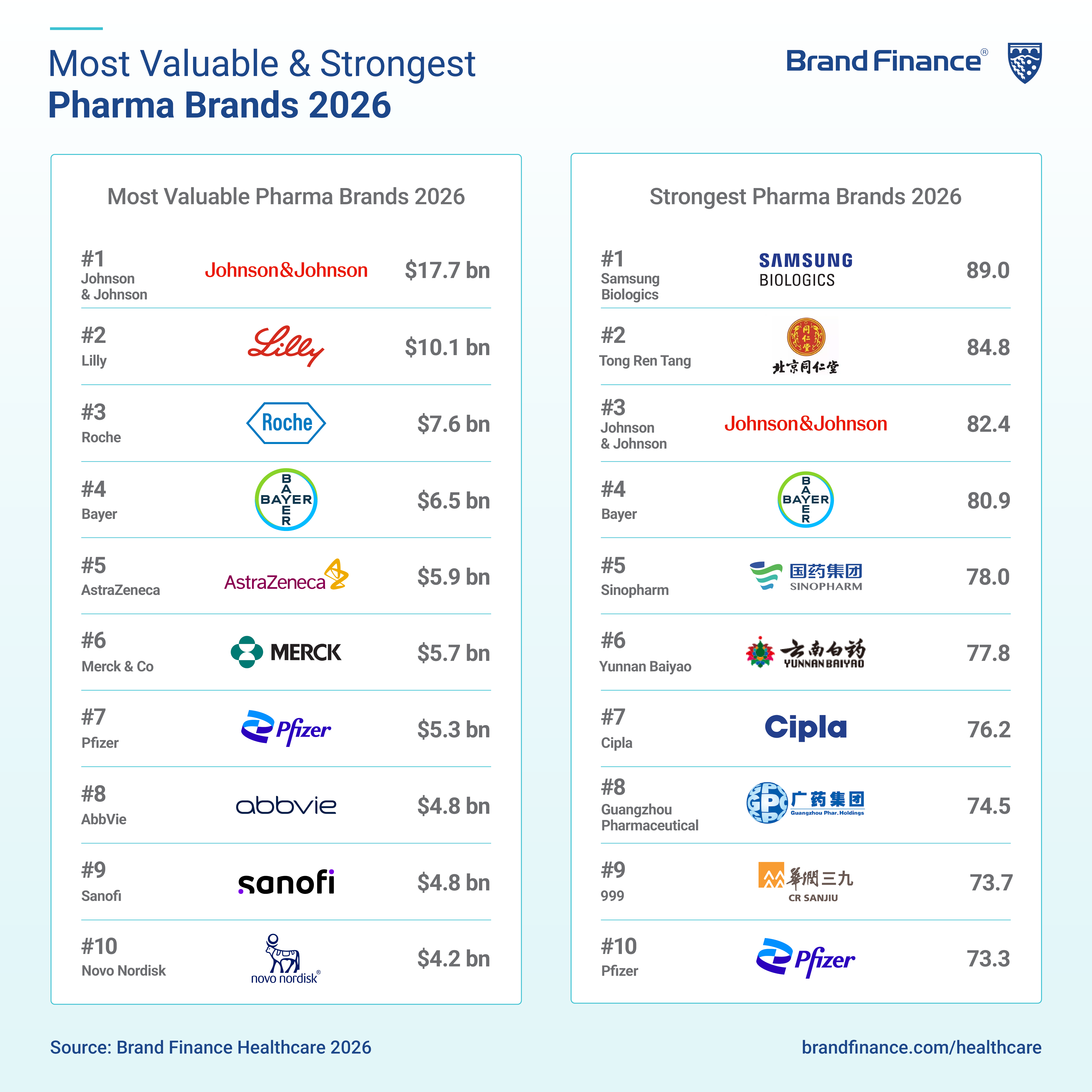
Meanwhile in the global pharma rankings, Johnson & Johnson (brand value up 14% to USD17.7 billion) retains its position as the world’s most valuable pharmaceutical brand for the eighth consecutive year.
The battle for leadership in the weight-loss drug market is increasingly reshaping global pharmaceutical brand rankings, with Lilly (brand value up 26% to USD10.1 billion) gaining ground rapidly as Novo Nordisk (brand value down 24% to USD4.2 billion) faces mounting competitive pressure.
Samsung Biologics (brand value up 32% to USD1 billion) is the strongest pharmaceutical brand in 2026, with a BSI score of 89/100 and an AAA rating.




Brand Finance is the world’s leading brand valuation consultancy. Bridging the gap between marketing and finance, Brand Finance evaluates the strength of brands and quantifies their financial value to help organisations make strategic decisions.
Headquartered in London, Brand Finance operates in over 25 countries. Every year, Brand Finance conducts more than 6,000 brand valuations, supported by original market research, and publishes over 100 reports which rank brands across all sectors and countries.
Brand Finance also operates the Global Brand Equity Monitor, conducting original market research annually on 6,000 brands, surveying more than 175,000 respondents across 41 countries and 31 industry sectors. By combining perceptual data from the Global Brand Equity Monitor with data from its valuation database — the largest brand value database in the world — Brand Finance equips ambitious brand leaders with the data, analytics, and the strategic guidance they need to enhance brand and business value.
In addition to calculating brand value, Brand Finance also determines the relative strength of brands through a balanced scorecard of metrics, compliant with ISO 20671.
Brand Finance is a regulated accountancy firm and a committed leader in the standardisation of the brand valuation industry. Brand Finance was the first to be certified by independent auditors as compliant with both ISO 10668 and ISO 20671 and has received the official endorsement of the Marketing Accountability Standards Board (MASB) in the United States.
Brand is defined as a marketing-related intangible asset including, but not limited to, names, terms, signs, symbols, logos, and designs, intended to identify goods, services, or entities, creating distinctive images and associations in the minds of stakeholders, thereby generating economic benefits.
Brand strength is the efficacy of a brand’s performance on intangible measures relative to its competitors. Brand Finance evaluates brand strength in a process compliant with ISO 20671, looking at Marketing Investment, Stakeholder Equity, and the impact of those on Business Performance. The data used is derived from Brand Finance’s proprietary market research programme and from publicly available sources.
Each brand is assigned a Brand Strength Index (BSI) score out of 100, which feeds into the brand value calculation. Based on the score, each brand is assigned a corresponding Brand Rating up to AAA+ in a format similar to a credit rating.
Brand Finance calculates the values of brands in its rankings using the Royalty Relief approach – a brand valuation method compliant with the industry standards set in ISO 10668. It involves estimating the likely future revenues that are attributable to a brand by calculating a royalty rate that would be charged for its use, to arrive at a ‘brand value’ understood as a net economic benefit that a brand owner would achieve by licensing the brand in the open market.
The steps in this process are as follows:
1 Calculate brand strength using a balanced scorecard of metrics assessing Marketing Investment, Stakeholder Equity, and Business Performance. Brand strength is expressed as a Brand Strength Index (BSI) score on a scale of 0 to 100.
2 Determine royalty range for each industry, reflecting the importance of brand to purchasing decisions. In luxury, the maximum percentage is high, while in extractive industry, where goods are often commoditised, it is lower. This is done by reviewing comparable licensing agreements sourced from Brand Finance’s extensive database.
3 Calculate royalty rate. The BSI score is applied to the royalty range to arrive at a royalty rate. For example, if the royalty range in a sector is 0-5% and a brand has a BSI score of 80 out of 100, then an appropriate royalty rate for the use of this brand in the given sector will be 4%.
4 Determine brand-specific revenues by estimating a proportion of parent company revenues attributable to a brand.
5 Determine forecast revenues using a function of historic revenues, equity analyst forecasts, and economic growth rates.
6 Apply the royalty rate to the forecast revenues to derive brand revenues.
7 Discount post-tax brand revenues to a net present value which equals the brand value.
Brand Finance has produced this study with an independent and unbiased analysis. The values derived and opinions presented in this study are based on publicly available information and certain assumptions that Brand Finance used where such data was deficient or unclear. Brand Finance accepts no responsibility and will not be liable in the event that the publicly available information relied upon is subsequently found to be inaccurate. The opinions and financial analysis expressed in the study are not to be construed as providing investment or business advice. Brand Finance does not intend the study to be relied upon for any reason and excludes all liability to any body, government, or organisation.
The data presented in this study form part of Brand Finance's proprietary database, are provided for the benefit of the media, and are not to be used in part or in full for any commercial or technical purpose without written permission from Brand Finance.