





Brand Finance ranks seven Japanese brands among the strongest and most valuable brands in the Food & Drink 2026 report
TOKYO, 1 September 2026 – Seven Japanese food and drinks brands, collectively contribute USD8.1 billion in brand value to the sectors total, according to the Food & Drinks 2026 report by Brand Finance, the world's leading brand valuation consultancy. Yet beneath that headline figure, most record declining brand value, falling Brand Strength Index (BSI) scores, or both. The message from this year's results is unambiguous: heritage alone is no longer sufficient to sustain brand strength.
The Brand Finance Food & Drink 2026 report shows that growth is being driven by healthier, more convenient and innovative products. Food brands are expanding into areas such as high-protein snacks and functional nutrition, while drinks brands are benefiting from demand for bottled water, sports hydration and wellness-led products. Japan’s results should be seen in this context: its leading brands are still trusted, but falling BSI scores suggest they are not keeping up with changing consumer expectations.
This pressure is particularly acute in Japan, where consumers are becoming more value-conscious amid persistent inflation while maintaining high expectations around food safety, natural ingredients and functional wellness. With the over-65s demographic projected to exceed 30% of the population by 2030, demand for nutrient-dense, convenient and health-oriented products is clear. Japanese brands must therefore translate legacy trust into sharper modern relevance.
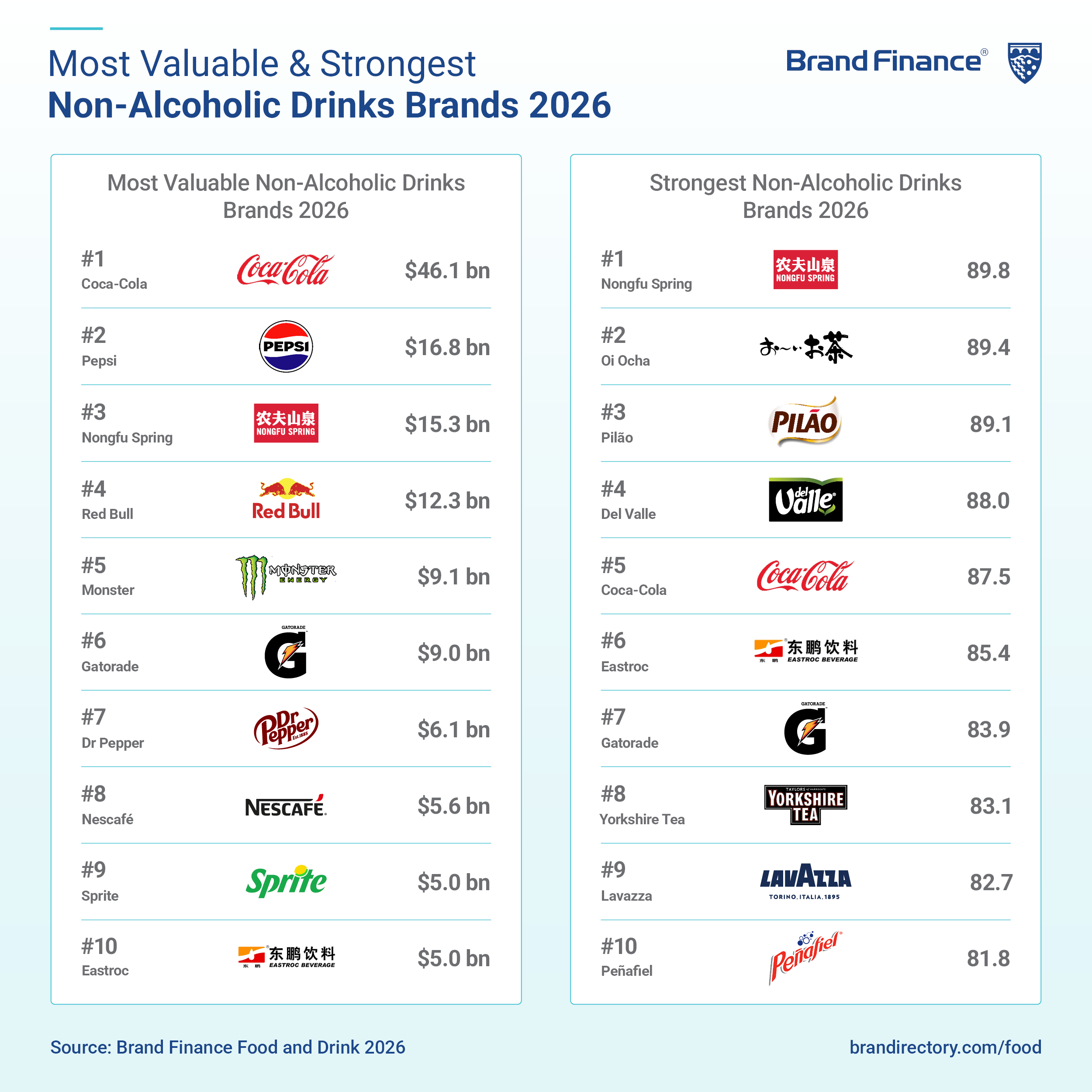
Oi Ocha (brand value up 10% to USD534 million), ranks 40th in the non-alcoholic drinks ranking, and is the standout performer and clearest exception to the broader pattern. It holds the second-highest brand strength score in the global ranking, with a BSI score of 89.4/100 and an AAA strength rating. Its proposition aligns directly with current demand: natural ingredients, sugar-free refreshment, ready-to-drink convenience and the global appeal of Japanese green tea culture.
Parent company Ito En has placed Oi Ocha at the center of its global growth strategy, prioritising overseas expansion alongside domestic reform. The brand demonstrates how Japanese product trust can achieve world-class strength when anchored to a clear, health-led and scalable proposition.
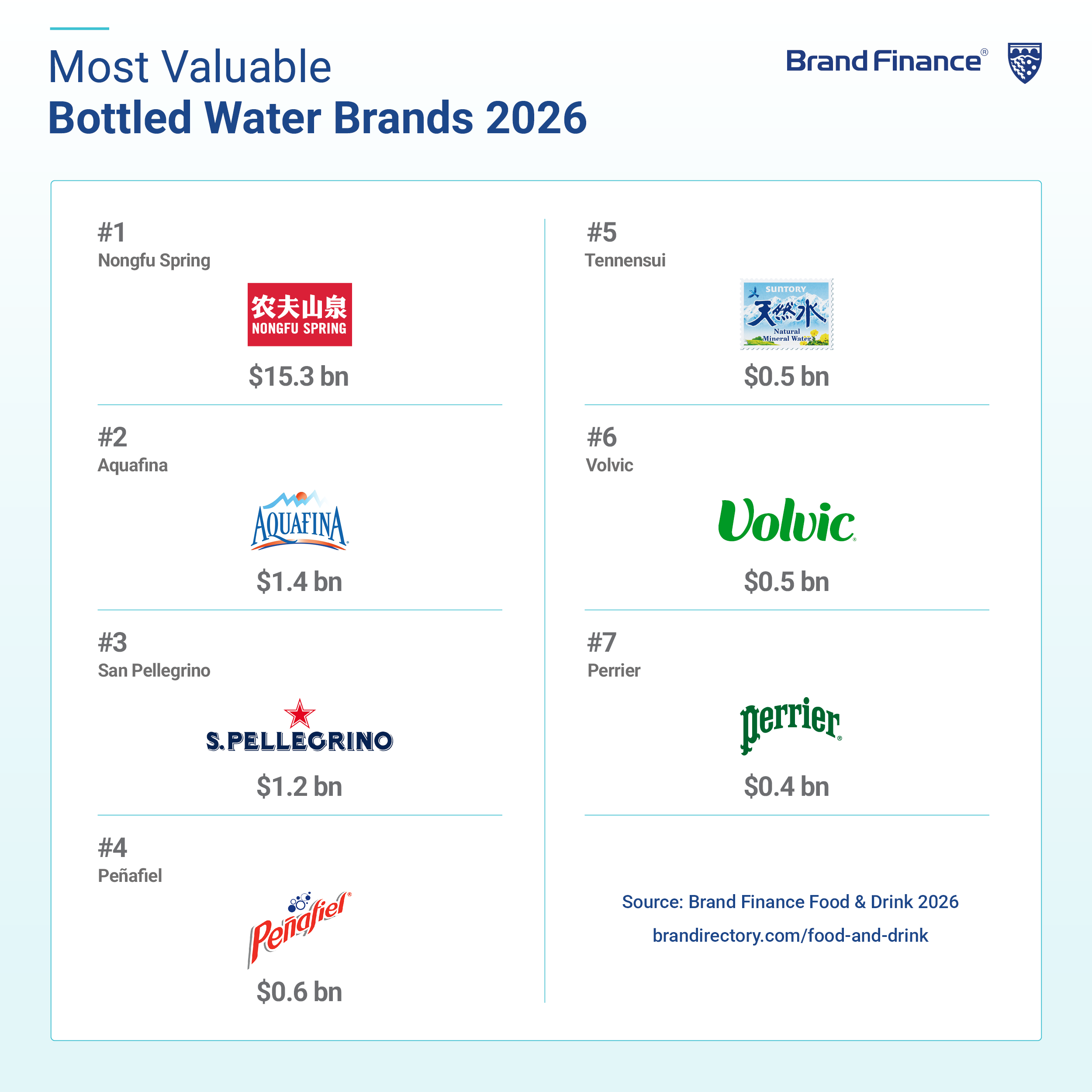
Ranking 41st globally among the most valuable non-alcoholic drinks brands, Tennensui grew 41% to USD470 million, supported by strong demand for bottled water, a USD17 billion category in the ranking. However, its BSI score dipped to 80.7/100, showing that strong value growth has not translated into stronger consumer equity. To sustain momentum, the brand will need to keep building distinctiveness as bottled water becomes more competitive.
Within the food sector, Kikkoman (brand value down 6% to USD1.5 billion), ranks 58th, showcasing the strength of Japanese culinary heritage at a global scale. The brand’s FY2026 revenue rose slightly over 5% to JPY745.5 billion (approximately USD4.9 billion) with approximately 81% generated outside Japan. However, its BSI score declined to 74.1/100 (AA brand strength rating) shows that even globally recognised pantry brands must keep refreshing consumer appeal as cooking habits, affordability, and health considerations evolve.
Ajinomoto (brand value up 18% to USD1.9 billion), ranks 45th globally, recording the strongest brand value growth among Japanese food brands in 2026, supported by its move beyond condiments into nutrition, healthcare-adjacent products and sustainable food systems. However, its BSI score dipped slightly to 71.9/100 (AA brand strength rating), showing that this strategic reinvention still needs to translate into stronger consumer-facing equity around health, sustainability and everyday usefulness.
Meiji (brand value down 1% to USD1 billion), ranks 75th, recording the highest BSI score among Japanese food brands in the ranking. Its BSI declined marginally to 77.0/100 (AA+ brand strength rating), supported by a portfolio spanning premium chocolate, dairy, infant nutrition and health supplements. This breadth provides resilience across consumption occasions and supports targeted growth in Asian markets where Japanese quality standards command a premium.
Nissin (brand value down 17% to USD1.4 billion) and Yakult (brand value down 24% to USD1.3 billion) record the largest brand value declines and steepest BSI score dips among Japan's food and drinks brands in 2026. Nissin scored 75.4/100 (AA+ brand strength rating) in 2026, from 84.4/100 in 2025, while Yakult scored 63.1/100 (A+ brand strength rating), from 75.4 in 2025. Their declines show how even powerful category associations, instant noodles for Nissin and probiotic drinks for Yakult are being tested as consumers scrutinise price, nutrition, functional benefits and convenience more closely.
Alex Haigh, Managing Director, Brand Finance Asia Pacific, commented:
“Japan’s food and drinks brands have long benefited from deep consumer trust, strong product quality and powerful cultural heritage. But the 2026 results show that these strengths are no longer enough on their own. Declining BSI scores point to a clear need to renew consumer relevance as health, functionality, convenience and value reshape the category. Oi Ocha is the clearest example of what works, translating Japanese green tea heritage into a modern, health-led proposition, while Tennensui’s growth and Ajinomoto’s reinvention show that relevance can also be built through nutrition and portfolio transformation.”
The 2026 Brand Finance Food & Drink rankings confirm that Japan's food and drinks industry stands at a strategic inflection point. Future opportunities lie in converting Japanese heritage into products that feel trusted, high quality and culturally distinctive while meeting demand for health, functionality, convenience, affordability and innovation. Where that alignment is taking hold, brands will benefit. Where it is not, the cost of relying on legacy equity alone is visible in the BSI scores.
Global Insights
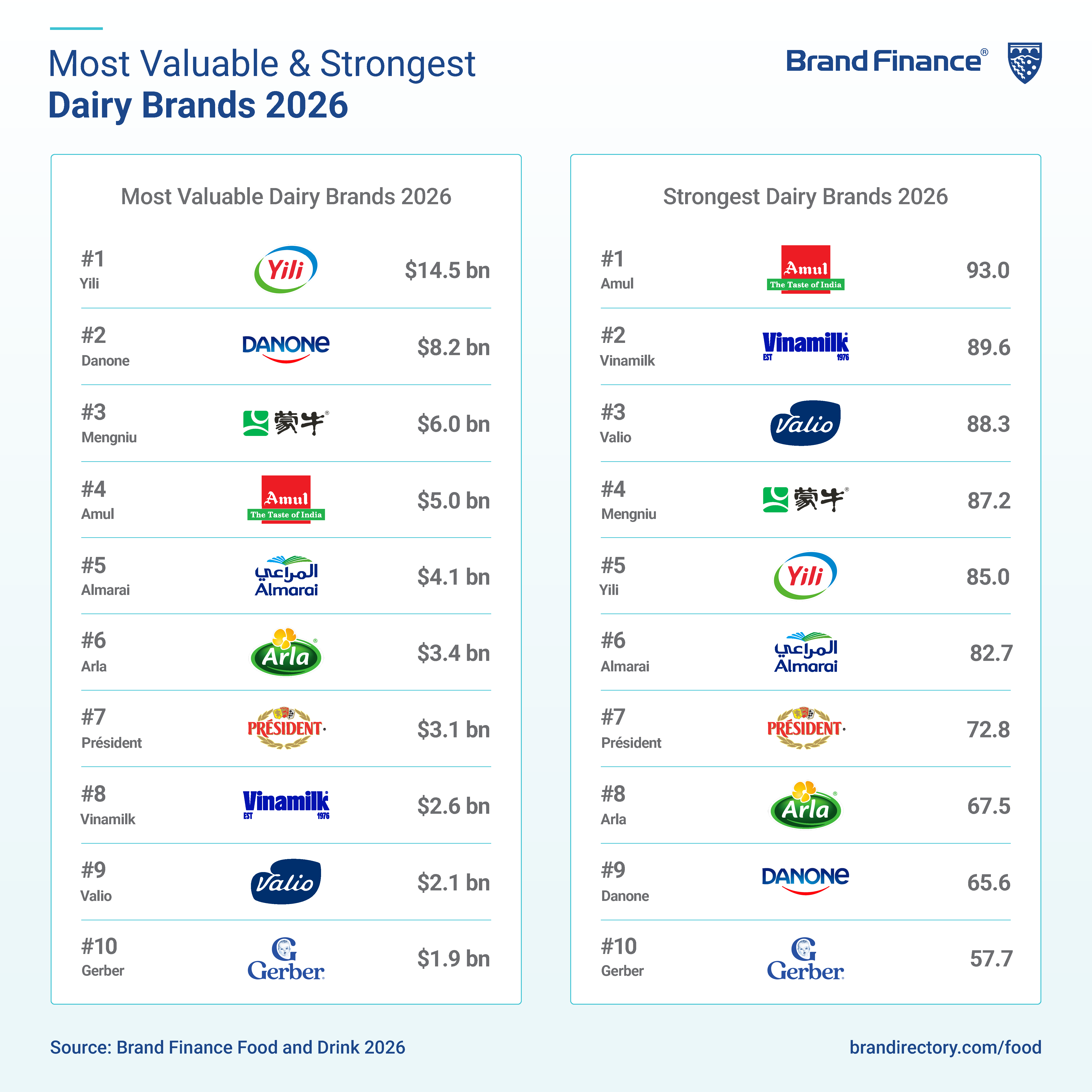
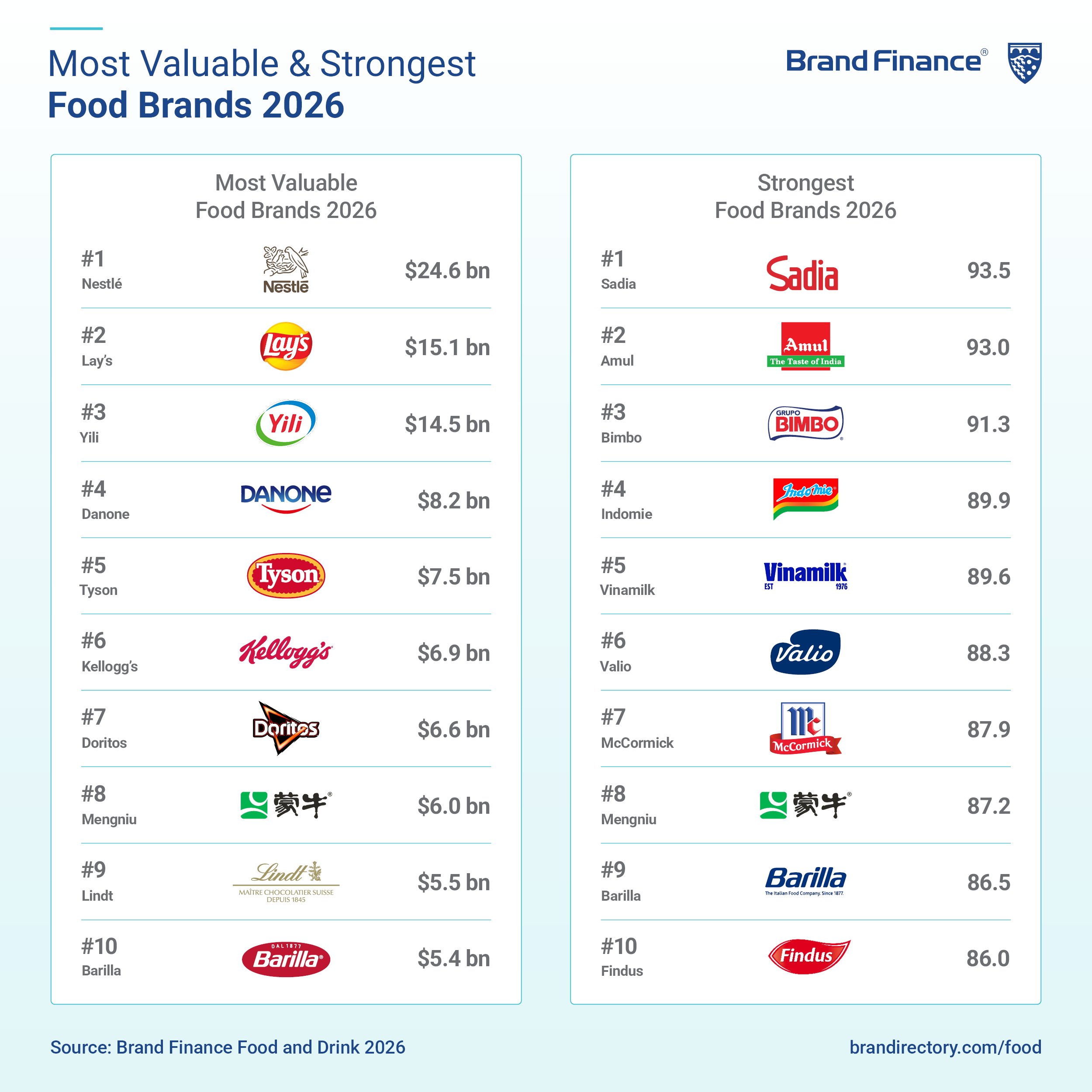
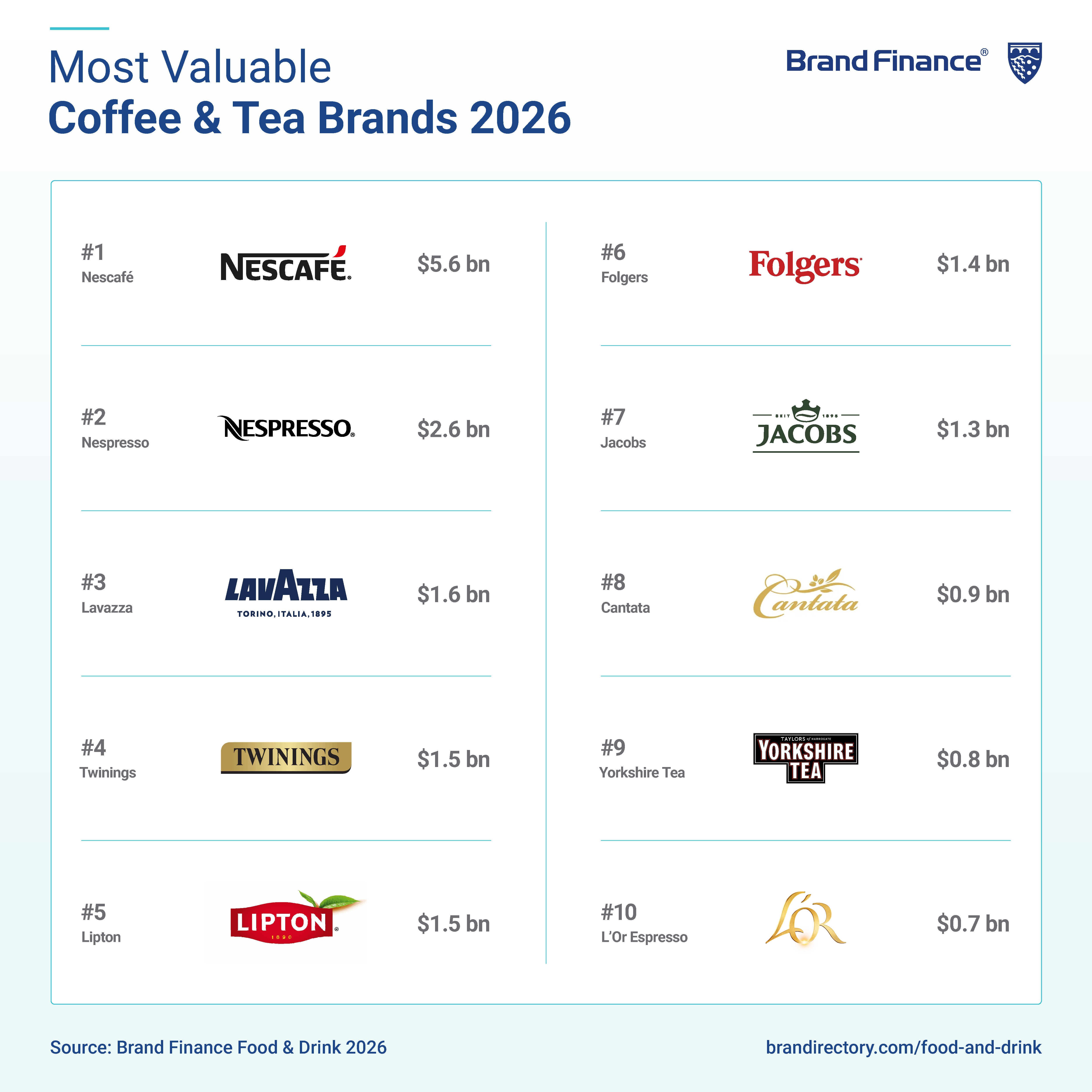
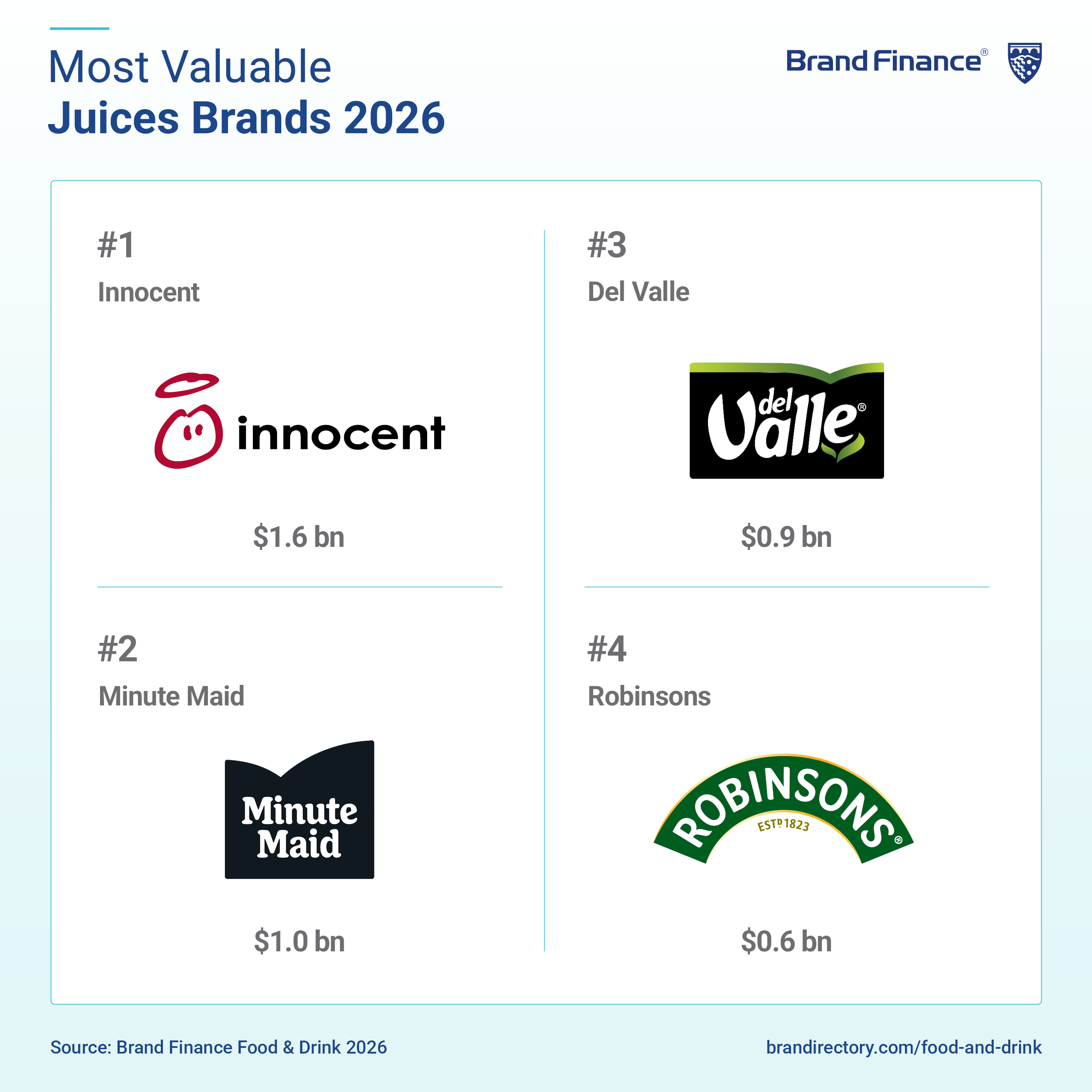
The global food and drinks sector records a combined brand value of USD448.7 billion in 2026, as growth across food, non-alcoholic drinks, and dairy brands continues despite a shift away from inflation-led price increases. The world’s 100 most valuable food brands are collectively worth USD278.3 billion, while the top 50 non-alcoholic drinks brands account for USD170.4 billion and the top 10 dairy brands for USD50.8 billion.
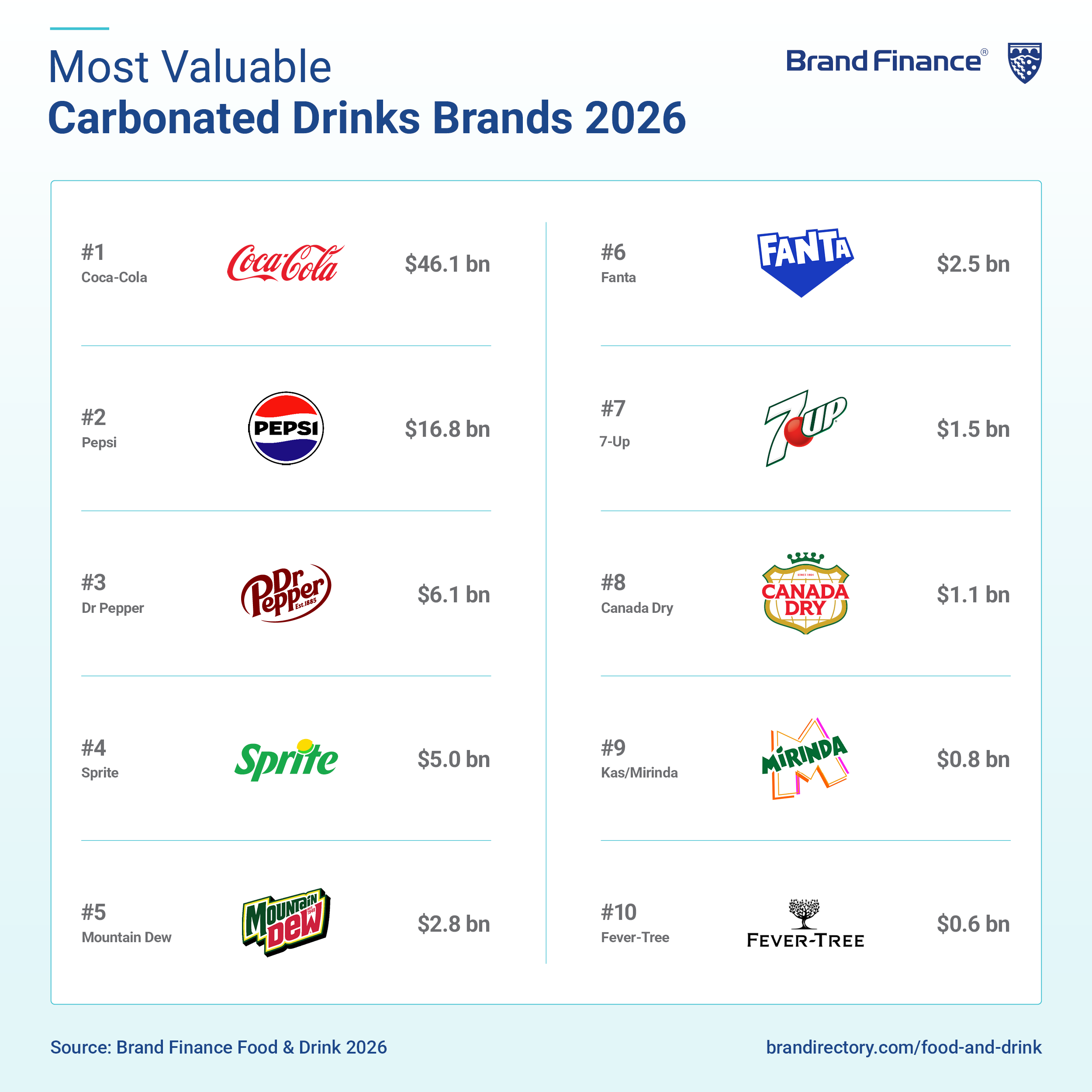
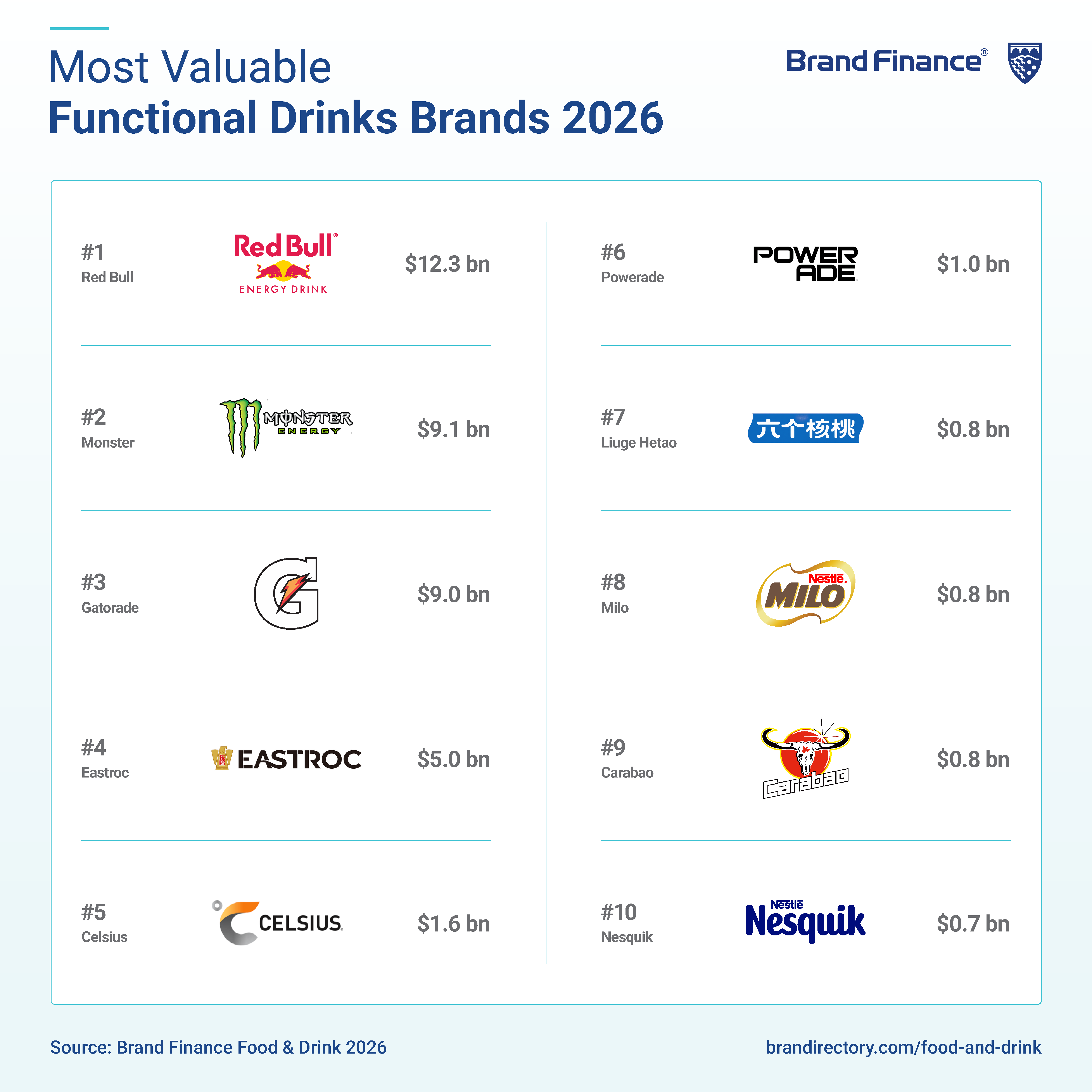
Incumbent category leaders continue to hold their ground: Nestlé remains the world’s most valuable food brand, following a 23% increase in brand value to USD24.6 billion; Coca-Cola retains its position as the world’s most valuable non-alcoholic drinks brand, despite a slight 1% decline in brand value to USD46.1 billion; and Yili remains the world’s most valuable dairy brand, with brand value rising 29% to USD14.5 billion. However, the rankings also highlight shifting dynamics in brand strength and growth, with Nongfu Spring overtaking Coca-Cola as the world’s strongest non-alcoholic drinks brand, Sadia ranking as the world’s strongest food brand, and Amul leading the dairy ranking for brand strength. Growth is increasingly being driven by innovation, health-led positioning, and portfolio diversification, with Canada Dry emerging as the fastest-growing non-alcoholic drinks brand, Eastroc rising strongly as it expands into electrolyte and functional beverages, and functional drinks now accounting for a combined USD33.4 billion in brand value.




Brand Finance is the world’s leading brand valuation consultancy. Bridging the gap between marketing and finance, Brand Finance evaluates the strength of brands and quantifies their financial value to help organisations make strategic decisions.
Headquartered in London, Brand Finance operates in over 25 countries. Every year, Brand Finance conducts more than 6,000 brand valuations, supported by original market research, and publishes over 100 reports which rank brands across all sectors and countries.
Brand Finance also operates the Global Brand Equity Monitor, conducting original market research annually on 6,000 brands, surveying more than 175,000 respondents across 41 countries and 31 industry sectors. By combining perceptual data from the Global Brand Equity Monitor with data from its valuation database — the largest brand value database in the world — Brand Finance equips ambitious brand leaders with the data, analytics, and the strategic guidance they need to enhance brand and business value.
In addition to calculating brand value, Brand Finance also determines the relative strength of brands through a balanced scorecard of metrics, compliant with ISO 20671.
Brand Finance is a regulated accountancy firm and a committed leader in the standardisation of the brand valuation industry. Brand Finance was the first to be certified by independent auditors as compliant with both ISO 10668 and ISO 20671 and has received the official endorsement of the Marketing Accountability Standards Board (MASB) in the United States.
Brand is defined as a marketing-related intangible asset including, but not limited to, names, terms, signs, symbols, logos, and designs, intended to identify goods, services, or entities, creating distinctive images and associations in the minds of stakeholders, thereby generating economic benefits.
Brand strength is the efficacy of a brand’s performance on intangible measures relative to its competitors. Brand Finance evaluates brand strength in a process compliant with ISO 20671, looking at Marketing Investment, Stakeholder Equity, and the impact of those on Business Performance. The data used is derived from Brand Finance’s proprietary market research programme and from publicly available sources.
Each brand is assigned a Brand Strength Index (BSI) score out of 100, which feeds into the brand value calculation. Based on the score, each brand is assigned a corresponding Brand Rating up to AAA+ in a format similar to a credit rating.
Brand Finance calculates the values of brands in its rankings using the Royalty Relief approach – a brand valuation method compliant with the industry standards set in ISO 10668. It involves estimating the likely future revenues that are attributable to a brand by calculating a royalty rate that would be charged for its use, to arrive at a ‘brand value’ understood as a net economic benefit that a brand owner would achieve by licensing the brand in the open market.
The steps in this process are as follows:
1 Calculate brand strength using a balanced scorecard of metrics assessing Marketing Investment, Stakeholder Equity, and Business Performance. Brand strength is expressed as a Brand Strength Index (BSI) score on a scale of 0 to 100.
2 Determine royalty range for each industry, reflecting the importance of brand to purchasing decisions. In luxury, the maximum percentage is high, while in extractive industry, where goods are often commoditised, it is lower. This is done by reviewing comparable licensing agreements sourced from Brand Finance’s extensive database.
3 Calculate royalty rate. The BSI score is applied to the royalty range to arrive at a royalty rate. For example, if the royalty range in a sector is 0-5% and a brand has a BSI score of 80 out of 100, then an appropriate royalty rate for the use of this brand in the given sector will be 4%.
4 Determine brand-specific revenues by estimating a proportion of parent company revenues attributable to a brand.
5 Determine forecast revenues using a function of historic revenues, equity analyst forecasts, and economic growth rates.
6 Apply the royalty rate to the forecast revenues to derive brand revenues.
7 Discount post-tax brand revenues to a net present value which equals the brand value.
Brand Finance has produced this study with an independent and unbiased analysis. The values derived and opinions presented in this study are based on publicly available information and certain assumptions that Brand Finance used where such data was deficient or unclear. Brand Finance accepts no responsibility and will not be liable in the event that the publicly available information relied upon is subsequently found to be inaccurate. The opinions and financial analysis expressed in the study are not to be construed as providing investment or business advice. Brand Finance does not intend the study to be relied upon for any reason and excludes all liability to any body, government, or organisation.
The data presented in this study form part of Brand Finance's proprietary database, are provided for the benefit of the media, and are not to be used in part or in full for any commercial or technical purpose without written permission from Brand Finance.