Brand Financeの最新調査で、鹿島アントラーズ、ガンバ大阪、浦和レッズのブランド力が向上していることが明らかに。ファンとのエンゲージメント、地域活動、メディア露出の拡大が、日本のサッカー人気を後押ししている
2026年9月9日、東京発 - 世界をリードするブランド評価コンサルティング会社であるBrand Financeの「Football 50 2026」レポートによると、日本の主要サッカークラブでは、過去最高の観客動員数、メディア露出の拡大、そしてファンとのエンゲージメントの強化を背景に、クラブとサポーターとのつながりが深まっており、ブランド力が強化されています
Jリーグの2025年観客動員数は2024年の1,250万人から8%増加し、過去最高の1,350万人に達しました。これは、放送時間の増加、地域に密着したストーリー性のある番組、全国放送での露出、デジタルを活用したファン獲得キャンペーンなどが後押ししたものです。地上波ローカルテレビでの試合視聴者数も2022年以降460%増加しており、J2、J3クラブの取り上げが増えたことや、選手に焦点を当てたストーリー性のあるコンテンツが、Jリーグの魅力をより幅広い層に浸透させることに貢献しています。
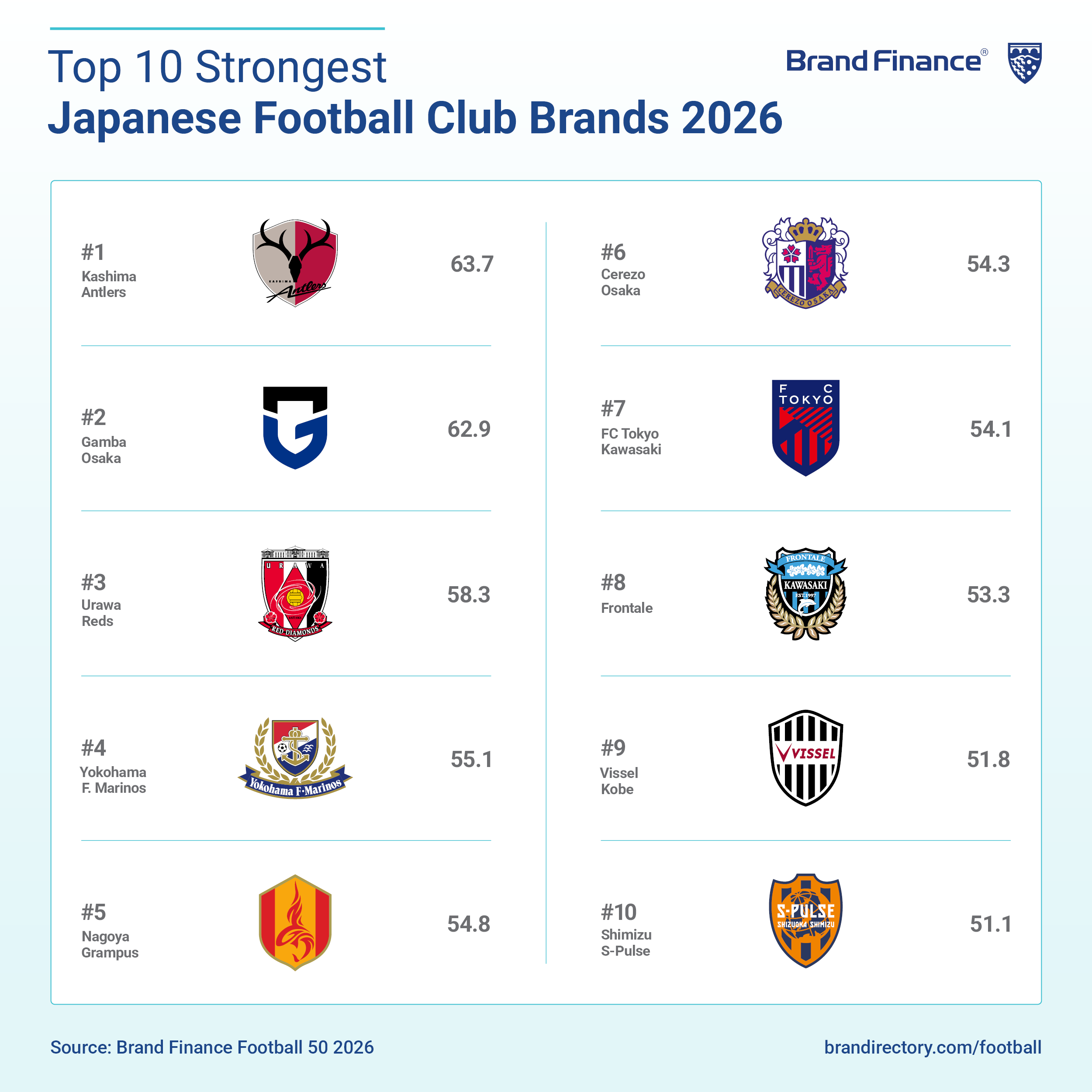
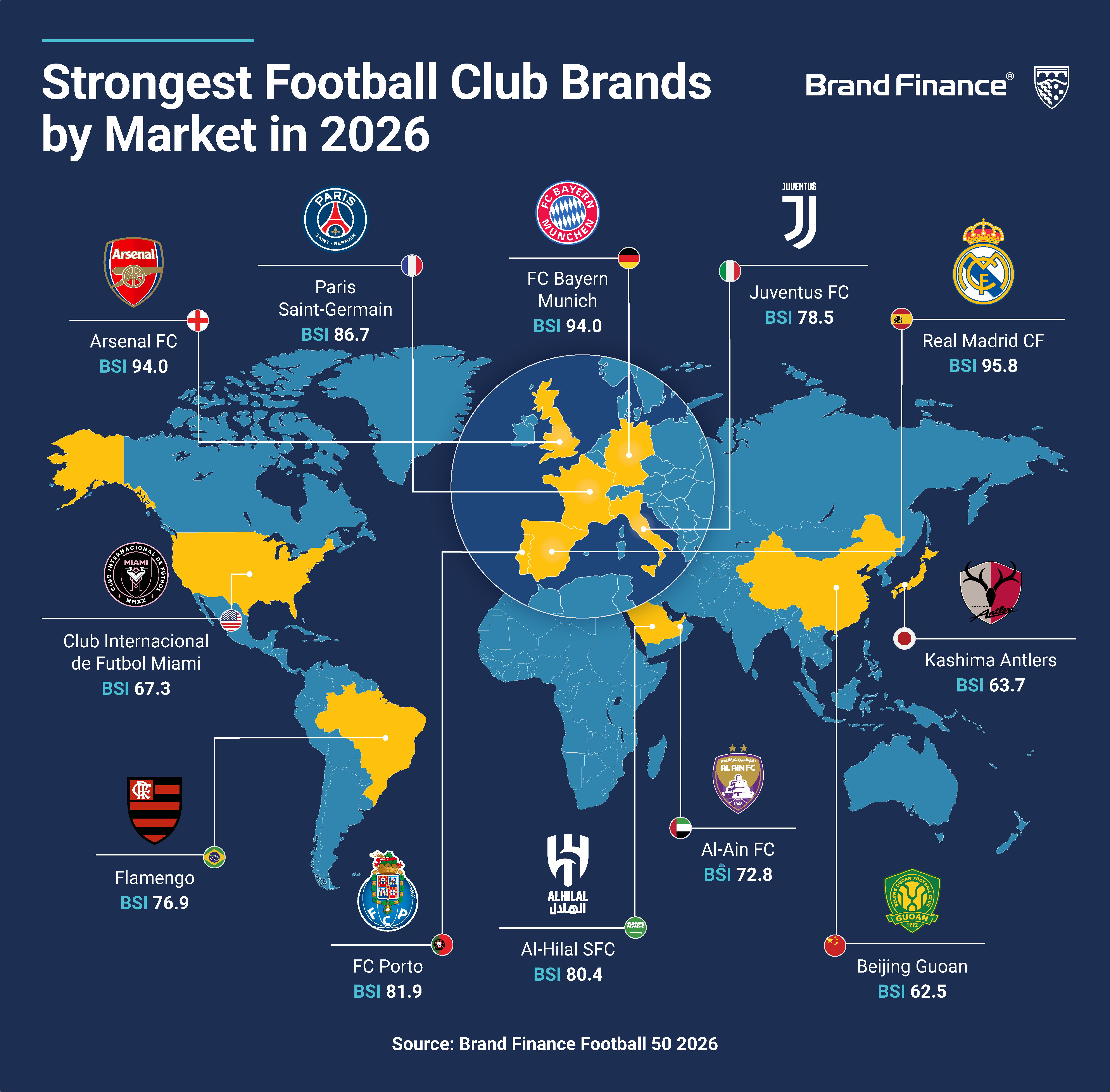
今年、日本で最もブランド力の高いサッカークラブは鹿島アントラーズで、ブランド力指数(BSI)は63.7/100、ブランド力評価はA+でした。鹿島アントラーズは2年連続で首位を維持しており、「ホームタウンデイズ」や「フレンドリータウンデイズ」などの取り組みが、そのブランド力を支えています。これらの取り組みでは、5つのホームタウンと13のフレンドリータウンに在住・在勤・在学する人を対象に、無料で試合を観戦できる機会を提供しています。さらに、5つのセグメントに分けたデジタル戦略によって、ファンのロイヤルティ向上を目的とした、ターゲットを絞ったコンテンツを提供しています。2025年の試合観客動員数は過去最高の520,615人で、1試合平均27,401人でした。
2位はガンバ大阪で、ブランド力指数(BSI)は62.9/100、ブランド力評価はA+でした。1試合平均の観客動員数は過去最高の30,007人に達しました。GAMBA Fan FestaやGAMBA EXPOなどのファンエンゲージメント施策に加え、物販や盆踊りを通じて地域とのつながりも強化されています。Brand Financeの市場調査データによると、ガンバ大阪は、日本のサッカーブランドの中で「クラブがファンを大切にしている」との項目で最も高い評価を得ています。
トップ3を締めくくるのは浦和レッズで、ブランド力指数(BSI)は58.3/100、ブランド力評価はAでした。前年の4位から3位に順位を上げ、「熱狂的なファンがいる」「エキサイティングで観戦が楽しい」という点で、日本のサッカークラブの中で最も高い評価を得ています。「レッズランド全力大運動会」や縁日などのクラブの取り組みが、浦和レッズの強いサポーター文化をさらに強固なものにしています。
Brand Finance アジア太平洋マネージングディレクター、アレックス・ヘイグ氏のコメント:
「日本のサッカー界では、クラブがいかにサポーターを理解し、関わっていくかが、ますます重要なテーマとなっています。鹿島アントラーズの安定したブランド力と、ガンバ大阪のファンとのエンゲージメント強化は、地域とのつながり、デジタルを活用した情報発信、そしてそれぞれの特色を活かした試合観戦体験によって、過去最高の観客動員数を永続的なファンとの関係につなげられることを示す好例です。」
その他の注目すべき日本のサッカーブランド
過去最高の観客動員数とメディア露出の拡大を背景に、日本のサッカークラブは、試合当日のエンゲージメントの高まりを長期的なブランド価値につなげる好機を迎えています。Jリーグが地域とのつながり、ターゲットを明確にしたファンとのエンゲージメント、そしてAIを活用した試合ハイライトやサポーター向けのパーソナライズドコンテンツなどのデジタルイノベーションに注力していることは、ファンとの関係構築において、よりデータを重視したアプローチへと進んでいることを示しています。
グローバル・インサイト
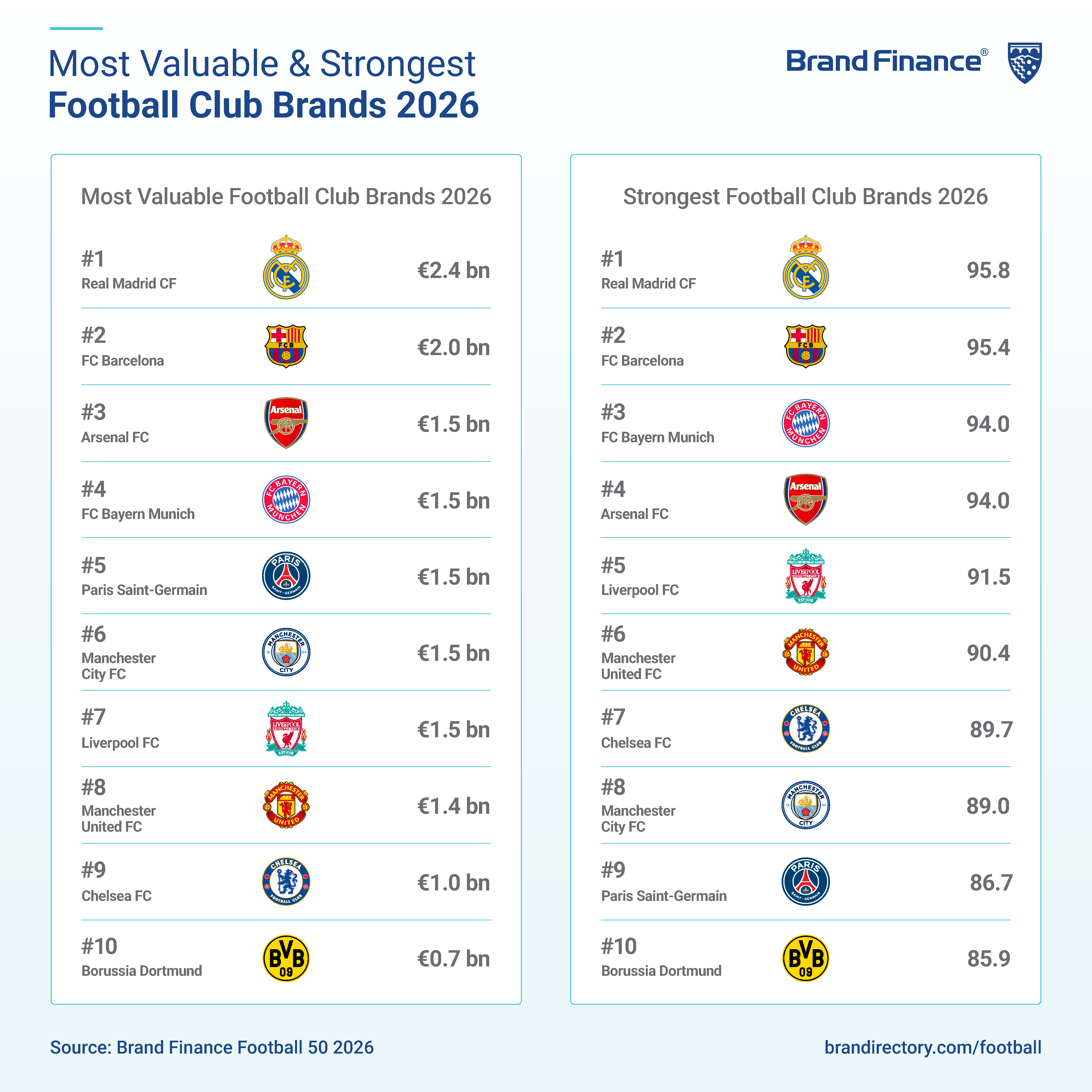
レアル・マドリードは、世界で最も価値の高いサッカークラブブランドとしての地位を維持し、ブランド価値は25%増加して24億ユーロとなりました。一方、FCバルセロナは2位を維持し、ブランド価値は15%増加して20億ユーロとなりました。
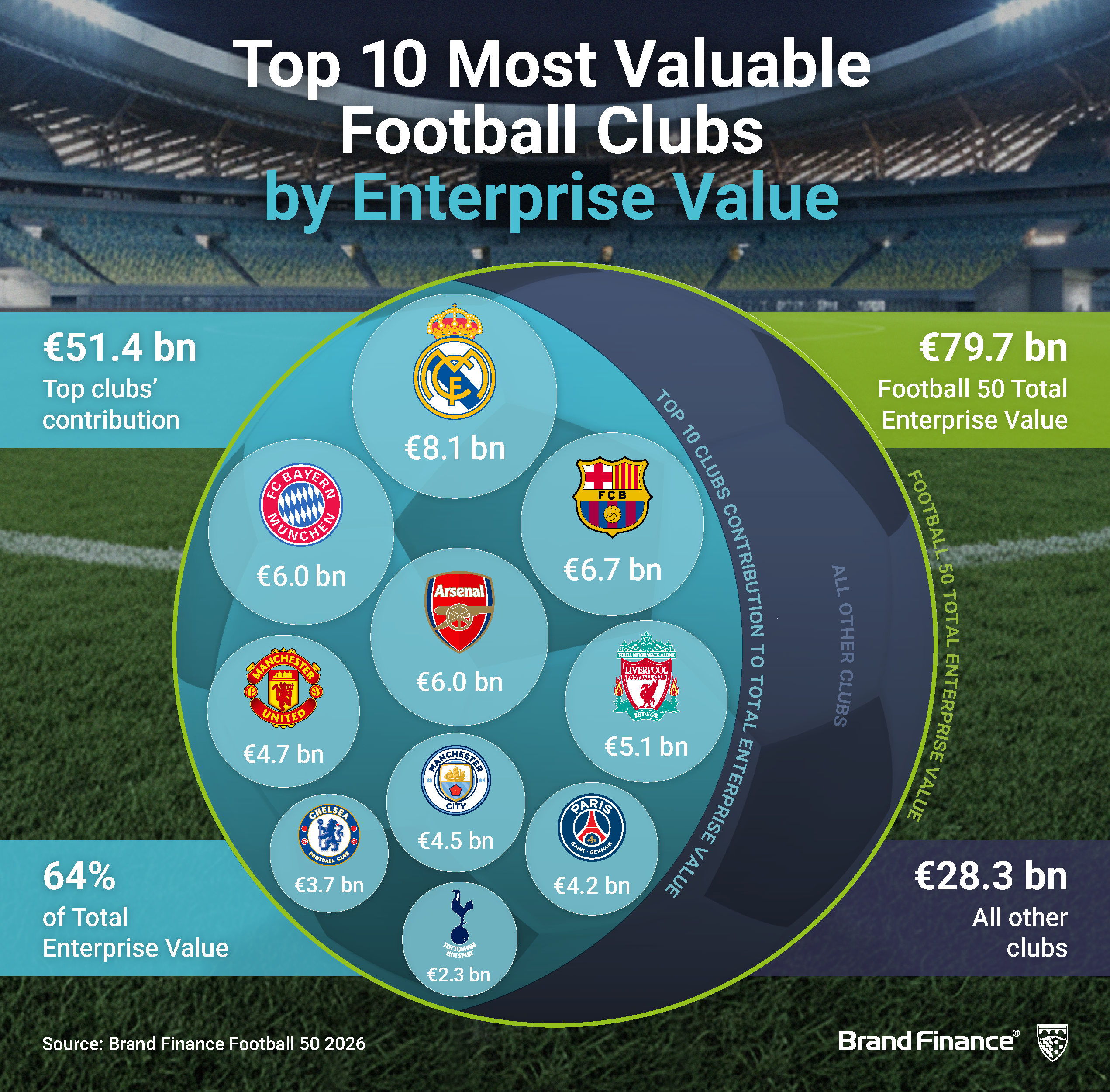
世界で最も価値の高いサッカークラブブランド上位50の合計ブランド価値は239億ユーロに達し、「Football 50」ランキング15年の歴史において、年間の増加率として過去最高を記録しました。





Brand Finance is the world’s leading brand valuation consultancy. Bridging the gap between marketing and finance, Brand Finance evaluates the strength of brands and quantifies their financial value to help organisations make strategic decisions.
Headquartered in London, Brand Finance operates in over 25 countries. Every year, Brand Finance conducts more than 6,000 brand valuations, supported by original market research, and publishes over 100 reports which rank brands across all sectors and countries.
Brand Finance also operates the Global Brand Equity Monitor, conducting original market research annually on 6,000 brands, surveying more than 175,000 respondents across 41 countries and 31 industry sectors. By combining perceptual data from the Global Brand Equity Monitor with data from its valuation database — the largest brand value database in the world — Brand Finance equips ambitious brand leaders with the data, analytics, and the strategic guidance they need to enhance brand and business value.
In addition to calculating brand value, Brand Finance also determines the relative strength of brands through a balanced scorecard of metrics, compliant with ISO 20671.
Brand Finance is a regulated accountancy firm and a committed leader in the standardisation of the brand valuation industry. Brand Finance was the first to be certified by independent auditors as compliant with both ISO 10668 and ISO 20671 and has received the official endorsement of the Marketing Accountability Standards Board (MASB) in the United States.
Brand is defined as a marketing-related intangible asset including, but not limited to, names, terms, signs, symbols, logos, and designs, intended to identify goods, services, or entities, creating distinctive images and associations in the minds of stakeholders, thereby generating economic benefits.
Brand strength is the efficacy of a brand’s performance on intangible measures relative to its competitors. Brand Finance evaluates brand strength in a process compliant with ISO 20671, looking at Marketing Investment, Stakeholder Equity, and the impact of those on Business Performance. The data used is derived from Brand Finance’s proprietary market research programme and from publicly available sources.
Each brand is assigned a Brand Strength Index (BSI) score out of 100, which feeds into the brand value calculation. Based on the score, each brand is assigned a corresponding Brand Rating up to AAA+ in a format similar to a credit rating.
Brand Finance calculates the values of brands in its rankings using the Royalty Relief approach – a brand valuation method compliant with the industry standards set in ISO 10668. It involves estimating the likely future revenues that are attributable to a brand by calculating a royalty rate that would be charged for its use, to arrive at a ‘brand value’ understood as a net economic benefit that a brand owner would achieve by licensing the brand in the open market.
The steps in this process are as follows:
1 Calculate brand strength using a balanced scorecard of metrics assessing Marketing Investment, Stakeholder Equity, and Business Performance. Brand strength is expressed as a Brand Strength Index (BSI) score on a scale of 0 to 100.
2 Determine royalty range for each industry, reflecting the importance of brand to purchasing decisions. In luxury, the maximum percentage is high, while in extractive industry, where goods are often commoditised, it is lower. This is done by reviewing comparable licensing agreements sourced from Brand Finance’s extensive database.
3 Calculate royalty rate. The BSI score is applied to the royalty range to arrive at a royalty rate. For example, if the royalty range in a sector is 0-5% and a brand has a BSI score of 80 out of 100, then an appropriate royalty rate for the use of this brand in the given sector will be 4%.
4 Determine brand-specific revenues by estimating a proportion of parent company revenues attributable to a brand.
5 Determine forecast revenues using a function of historic revenues, equity analyst forecasts, and economic growth rates.
6 Apply the royalty rate to the forecast revenues to derive brand revenues.
7 Discount post-tax brand revenues to a net present value which equals the brand value.
Brand Finance has produced this study with an independent and unbiased analysis. The values derived and opinions presented in this study are based on publicly available information and certain assumptions that Brand Finance used where such data was deficient or unclear. Brand Finance accepts no responsibility and will not be liable in the event that the publicly available information relied upon is subsequently found to be inaccurate. The opinions and financial analysis expressed in the study are not to be construed as providing investment or business advice. Brand Finance does not intend the study to be relied upon for any reason and excludes all liability to any body, government, or organisation.
The data presented in this study form part of Brand Finance's proprietary database, are provided for the benefit of the media, and are not to be used in part or in full for any commercial or technical purpose without written permission from Brand Finance.