Brand FinanceのLogistics 50 2026:日本の物流ブランドの総ブランド価値は200億米ドルに達する
東京、2026年9月10日 — 物流業界は、地政学的緊張や米国による新たな関税率の設定を含め、2025年2月以降、複数の逆風の影響を受けている。世界有数のブランド評価コンサルティング会社Brand FinanceによるLogistics 50 2026レポートによると、日本の物流ブランド5社は、こうした逆風の中でも強靱性を示し、合計200億米ドルの累積ブランド価値を記録した。
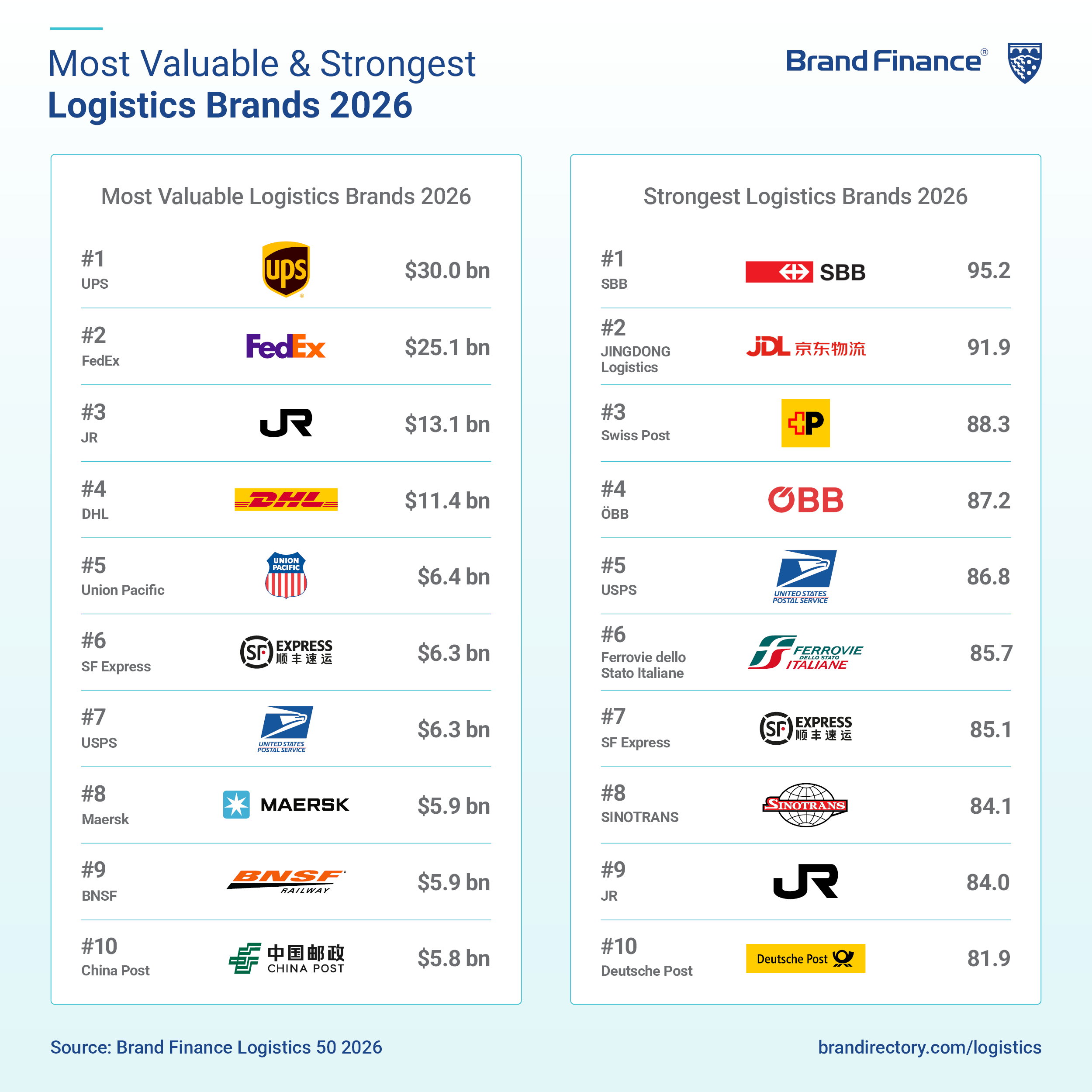
JR(ブランド価値131億米ドル)は、世界で3番目に価値のある物流ブランドとしての地位を維持し、日本の物流業界をリードしている。その好調なパフォーマンスを支えた要因の一つが、JRグループを構成する事業会社の一つであるJR東日本が2026年3月に実施した、37年ぶりとなる運賃改定である。この運賃改定により、ブランドの収益予測は820億円(約5億3,500万米ドル)押し上げられた。
この日本の鉄道ブランドのパフォーマンスは、同国の観光需要の拡大にも支えられている。JR西日本は、大阪・関西万博の効果もあり、5年連続で増収増益を達成した。一方、JR東海は、新幹線および在来線の各サービスにおいて、前年比で良好な運輸収入の増加を報告している。
JRは、ブランド強度指数(BSI)スコアが2025年の89.8/100から今年は84/100へと低下したものの、依然として日本で最も強い物流ブランドの地位を維持している。2026年2月、JR東日本ではインフラ改良工事中の停電トラブルにより列車の運行に支障が生じた。この停電により、山手線と京浜東北線が最大8時間にわたり運転を見合わせ、747本の列車が運休した。この障害は朝の通勤ラッシュ時間帯を直撃し、約67万人の乗客に影響が及んだ。
日本郵政は、日本で2番目に価値のある物流ブランドの地位を維持している。世界では、2025年から2ランク下落したものの、ブランド価値31億米ドルで世界20位にランクされている。同グループは、2025年3月期において増収を達成したものの、営業損失を計上した。2026年3月期には、郵便局窓口事業の当初の減益予測にもかかわらず、日本郵便が手がける郵便・国内物流事業の増益が主因となり、純利益は全体で増加した。同事業セグメントの営業純利益は前年比67%増の290億円(約1億8,200万米ドル)となった。
日本郵船(NYK)は、日本で3番目に価値のある物流ブランドとなり、世界46位、ブランド価値は横ばいの14億米ドルとなった。同ブランドの安定したパフォーマンスは、世界的な逆風の中での強靱性を反映しており、航空貨物および海上貨物輸送の取扱量増加と、2025年度に実施した欧州のヘルスケア物流事業の買収を背景に、売上高は1,267億円(約7億9,300万米ドル)増加した。加えて、経常利益の伸びも今年のパフォーマンスを支えた。ドライバルク事業セグメントでは、各船種の市況改善、円安の進行、そしてホルムズ海峡の閉鎖に伴う燃料価格の急騰による影響が重なり、前年比で増益となった。
Brand Finance アジア太平洋地域マネージングディレクターのアレックス・ヘイグ氏は次のようにコメントしている:
「日本でランクインした5つの物流ブランドの合計価値は200億米ドルに上りますが、その稼ぎ方は大きく二極化しています。JRは国内の観光需要の拡大と、長らく見送られてきた運賃是正を収益化している一方、NYKはホルムズ海峡の閉鎖に伴う運賃・燃料価格の変動を吸収しています。日本郵政はその中間に位置し、郵便局窓口事業が重荷となる中でも、国内の小包・郵便事業の強さを背景に純利益成長へと回帰しています。世界的なショックからの遮断性が、今やこの業界を左右する決定的な変数となっており、それが日本国内で鉄道系ブランドが先行している理由を説明しています。」
Brand Finance Logistics 50 2026レポートに掲載されているその他の注目すべきブランド:
グローバルの洞察
世界の物流業界は、回復基調の中で総ブランド価値2,168億米ドルを記録しており、米国が42%(908億米ドル)で最大のシェアを維持している。
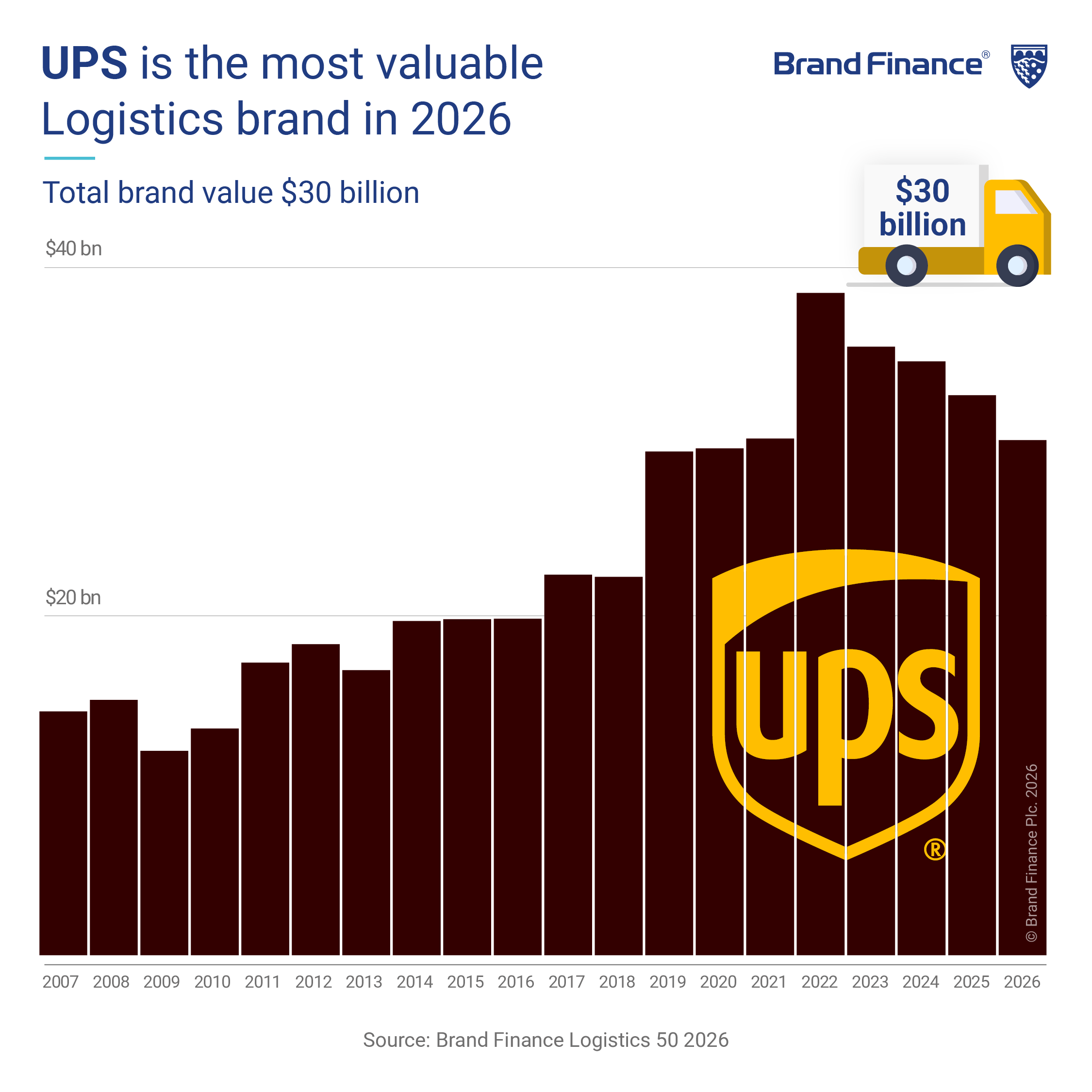
UPSは、ブランド価値が8%減の300億米ドルとなったものの、12年連続で世界で最も価値のある物流ブランドの座を維持した。FedEx(ブランド価値10%増の251億米ドル)とJR(ブランド価値131億米ドル)がそれぞれ2位、3位に続いている。
CEVA(ブランド価値129%増の21億米ドル)は、最も急成長しているブランドとなった。これは、Borusan Lojistikの買収により、トルコにおけるプレゼンスを強化し、事業運営の専門性を統合するとともに、欧州、中東、アジアを戦略的に結ぶ地域における足場を築いたことによるものである。 新規参入のSBBは、BSIスコア95.2/100、AAA+のブランド強度評価を獲得し、今年最も強い物流ブランドにランクされた。このスイスの鉄道ブランドの強さは、顧客満足度と快適性の向上に焦点を当てた60のプロジェクトから成るプログラム「Expansion Step 2025」に支えられている。





Brand Finance is the world’s leading brand valuation consultancy. Bridging the gap between marketing and finance, Brand Finance evaluates the strength of brands and quantifies their financial value to help organisations make strategic decisions.
Headquartered in London, Brand Finance operates in over 25 countries. Every year, Brand Finance conducts more than 6,000 brand valuations, supported by original market research, and publishes over 100 reports which rank brands across all sectors and countries.
Brand Finance also operates the Global Brand Equity Monitor, conducting original market research annually on 6,000 brands, surveying more than 175,000 respondents across 41 countries and 31 industry sectors. By combining perceptual data from the Global Brand Equity Monitor with data from its valuation database — the largest brand value database in the world — Brand Finance equips ambitious brand leaders with the data, analytics, and the strategic guidance they need to enhance brand and business value.
In addition to calculating brand value, Brand Finance also determines the relative strength of brands through a balanced scorecard of metrics, compliant with ISO 20671.
Brand Finance is a regulated accountancy firm and a committed leader in the standardisation of the brand valuation industry. Brand Finance was the first to be certified by independent auditors as compliant with both ISO 10668 and ISO 20671 and has received the official endorsement of the Marketing Accountability Standards Board (MASB) in the United States.
Brand is defined as a marketing-related intangible asset including, but not limited to, names, terms, signs, symbols, logos, and designs, intended to identify goods, services, or entities, creating distinctive images and associations in the minds of stakeholders, thereby generating economic benefits.
Brand strength is the efficacy of a brand’s performance on intangible measures relative to its competitors. Brand Finance evaluates brand strength in a process compliant with ISO 20671, looking at Marketing Investment, Stakeholder Equity, and the impact of those on Business Performance. The data used is derived from Brand Finance’s proprietary market research programme and from publicly available sources.
Each brand is assigned a Brand Strength Index (BSI) score out of 100, which feeds into the brand value calculation. Based on the score, each brand is assigned a corresponding Brand Rating up to AAA+ in a format similar to a credit rating.
Brand Finance calculates the values of brands in its rankings using the Royalty Relief approach – a brand valuation method compliant with the industry standards set in ISO 10668. It involves estimating the likely future revenues that are attributable to a brand by calculating a royalty rate that would be charged for its use, to arrive at a ‘brand value’ understood as a net economic benefit that a brand owner would achieve by licensing the brand in the open market.
The steps in this process are as follows:
1 Calculate brand strength using a balanced scorecard of metrics assessing Marketing Investment, Stakeholder Equity, and Business Performance. Brand strength is expressed as a Brand Strength Index (BSI) score on a scale of 0 to 100.
2 Determine royalty range for each industry, reflecting the importance of brand to purchasing decisions. In luxury, the maximum percentage is high, while in extractive industry, where goods are often commoditised, it is lower. This is done by reviewing comparable licensing agreements sourced from Brand Finance’s extensive database.
3 Calculate royalty rate. The BSI score is applied to the royalty range to arrive at a royalty rate. For example, if the royalty range in a sector is 0-5% and a brand has a BSI score of 80 out of 100, then an appropriate royalty rate for the use of this brand in the given sector will be 4%.
4 Determine brand-specific revenues by estimating a proportion of parent company revenues attributable to a brand.
5 Determine forecast revenues using a function of historic revenues, equity analyst forecasts, and economic growth rates.
6 Apply the royalty rate to the forecast revenues to derive brand revenues.
7 Discount post-tax brand revenues to a net present value which equals the brand value.
Brand Finance has produced this study with an independent and unbiased analysis. The values derived and opinions presented in this study are based on publicly available information and certain assumptions that Brand Finance used where such data was deficient or unclear. Brand Finance accepts no responsibility and will not be liable in the event that the publicly available information relied upon is subsequently found to be inaccurate. The opinions and financial analysis expressed in the study are not to be construed as providing investment or business advice. Brand Finance does not intend the study to be relied upon for any reason and excludes all liability to any body, government, or organisation.
The data presented in this study form part of Brand Finance's proprietary database, are provided for the benefit of the media, and are not to be used in part or in full for any commercial or technical purpose without written permission from Brand Finance.