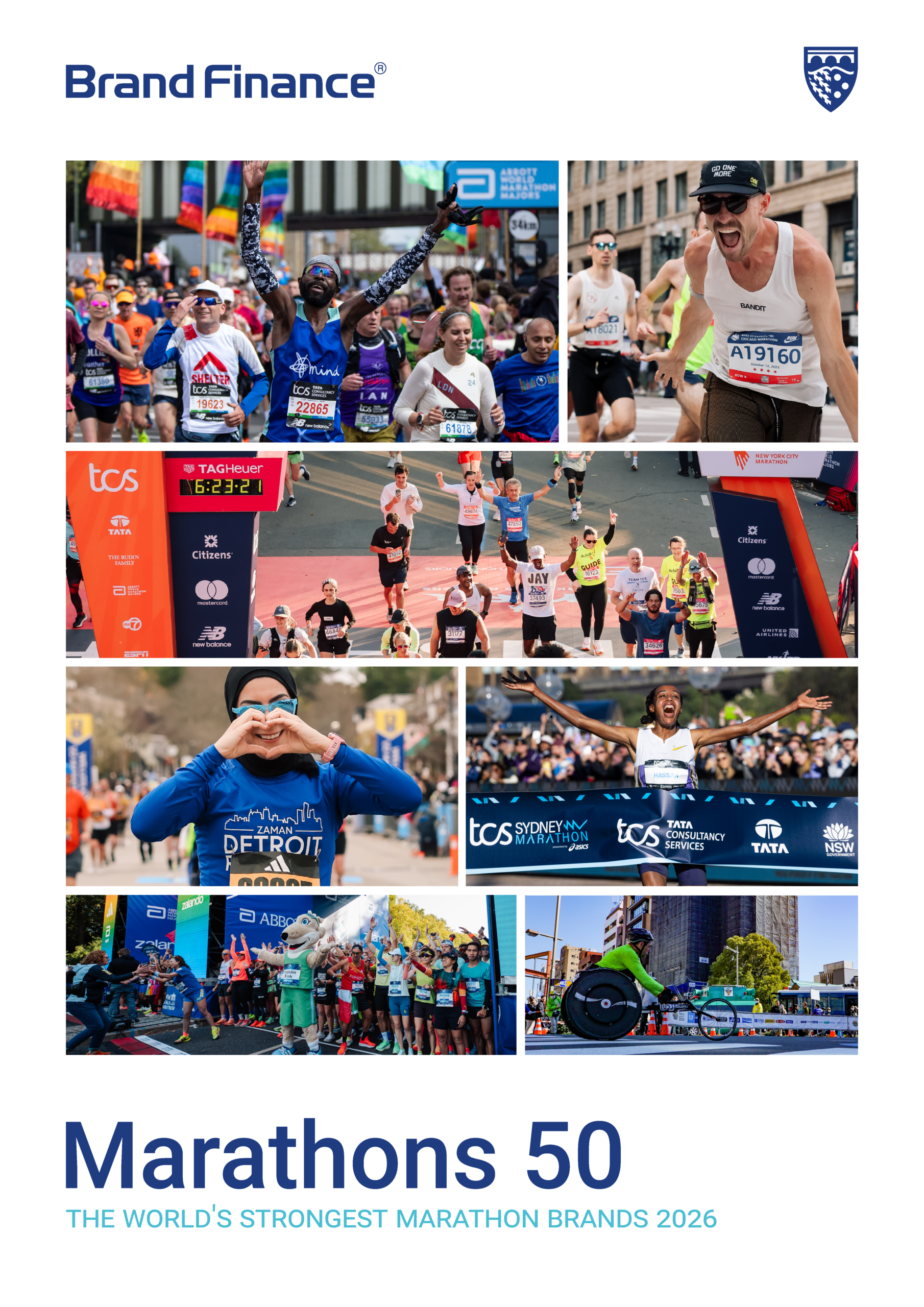
This article was originally published in the Brand Finance Marathons 50 2026 report.
What is driving the growth in marathon tourism and international travel?

President,
Marathon Tours & Travel
I wouldn't describe what's happening as a boom. The foundation of running just keeps getting bigger. Each generation brings new participants into the sport, while previous generations continue running. Baby Boomers helped popularise jogging in the 1970s, women's participation has grown significantly, and younger generations increasingly embrace running as part of a healthier lifestyle.
One of the biggest drivers is the expansion of the Abbott World Marathon Majors. Sydney, Cape Town and potentially Shanghai are introducing runners from entire regions to international marathon travel. Interestingly, this growth isn't coming at the expense of existing events. Sydney's emergence as a Major hasn't taken runners away from Melbourne or the Gold Coast, which are selling out faster than ever. The expansion is activating more runners across the region, rather than redistributing existing participants.
We're also seeing this through our Seven Continents Club®, which recognises runners who complete a marathon on every continent. The Majors and Seven Continents journeys increasingly complement one another, giving runners new goals and reasons to travel.
How can marathon organisers attract more international runners while maximising the economic benefits for their host cities?
The leading races have recognised that selling a journey is more effective than selling a single event. If we sell someone a London Marathon package, we might secure one trip. But if we help them complete the World Marathon Majors, we're building a longer-term relationship around shared goals and experiences.
Organisers also need to think beyond race day and consider the entire visitor experience. Sydney is a great example. We manage more than 60 hotels alongside its international tour operator programme, drawing on over 30 years of experience managing Boston's hotel programme.
Average hotel stays have increased from two nights to five. Welcome receptions, pre-race dinners and post-race celebrations encourage visitors to stay longer, generating additional spending across the local economy. The hotel programme also generates revenue that can be reinvested into the event and its charitable causes. It demonstrates how organisers can improve the visitor experience while capturing more of the economic value their events generate.
Other races, including Toronto, are now interested in similar approaches. The opportunity isn't simply to attract more international runners, but to encourage them to stay longer and experience more of the destination.
Beyond the race itself, what makes an international marathon trip memorable, and how are runners' expectations changing?
The marathon determines where and when we travel, but it's often the camaraderie and cultural experience that people remember most. We survey customers after every race, and their feedback shapes our itineraries. Getting someone to the start line isn't enough anymore. Runners want to explore new places, meet like-minded people and feel part of something bigger.
One of our fastest-growing demographics is women aged 25 to 40. At our recent Peruvian Amazon race, many participants had always wanted to visit the Amazon or Machu Picchu but felt more comfortable travelling in an organised group. The appeal was not just the race, but the reassurance of travelling with others and having the logistics taken care of.
Experiences also need to reflect different motivations. In South America, Rio offers an urban marathon experience, Mendoza appeals to food and wine enthusiasts, while Patagonia offers dramatic landscapes. Our Amazon race takes runners into the rainforest, with opportunities to visit Machu Picchu.
We're also finding creative ways to overcome travel barriers. With Sydney, runners expressed concerns about the long flight and time difference. So we acquired the Kangaroo Island Marathon and scheduled it for the week before Sydney, allowing participants to complete two races while acclimatising. At Berlin, around 35–40% of our customers were running their first international race, although few were running their first marathon. Once they've experienced travelling with like-minded people, many want to continue.
Twenty years from now, you might not remember crossing the finish line, but you'll remember standing above Machu Picchu. That's what makes these journeys special.
Looking ahead five to 10 years, where do you see the biggest opportunities for marathon tourism, and what could unlock the next wave of growth?
I expect further globalisation, particularly as more runners in China and India gain access to international events. I ran the Mumbai race earlier this year and met accomplished runners who had completed numerous races across India and regularly travelled abroad for holidays. Yet many had never travelled internationally for a marathon. The barrier wasn't a lack of interest; they simply didn't know how to organise it.
That's a significant opportunity. These markets have established running communities but often lack specialist travel infrastructure. Our Seven Continents Club® already has members from 117 countries, and I'd like to see that reach 140 or 150. Generational changes should also support growth. Running clubs are becoming important social communities, while remote and hybrid working makes combining international travel with professional commitments easier.
Family travel is another interesting development. We're seeing more parents and children participating together. At our Antarctica Marathon® race this year, a mother and daughter ran the entire event together, with the daughter ultimately winning. Our revenue is now four times its pre-pandemic peak, with much of that growth coming from listening to runners and creating experiences they want to share.
Word of mouth is incredibly powerful. People return and introduce friends, families and running communities to the experience. They're not simply ticking another marathon off a list; they're becoming ambassadors for the sport. Ultimately, the greatest opportunity is making international marathon travel accessible to more people. The appetite is already there. We just need to create more ways for runners to participate.