






Why talk about trust?
Across markets, there is a growing sense that the world has become harder to interpret. People are dealing with more information, more rapidly, within an environment that feels increasingly unsettled. Political tensions are emerging in new places, economic pressures continue to weigh on households, and social divisions are becoming more pronounced. Environmental risks are intensifying, and questions about resources are becoming a regular part of public debate. At the same time, technology is once more reshaping how information is produced and circulated, making it harder than ever to judge what is reliable.
All this taken together has left many people feeling as though long-standing points of stability are no longer as dependable as they once were. Confidence in traditional institutions has weakened and scepticism has grown.
Studies demonstrate how unsettled people feel. The 2025 Edelman Trust Barometer reports that six in 10 now experience a moderate to high sense of grievance, driven by the belief that government and business serve narrow interests while ordinary people struggle. Almost seven in 10 worry that institutional leaders deliberately mislead them, and 63% say it has become harder to judge whether information is credible.
Similarly, OECD data shows that more people now report low trust than high trust in their national government, with trust particularly weak among those who feel financially insecure. The latest Global Risks Report from the World Economic Forum also identifies misinformation and disinformation among the leading short-term global risks, underscoring how fragile trust in information and in the institutions that provide it has become.
Against this backdrop, trust has become both more fragile and more important. People want clarity and reassurance, and they increasingly expect the organisations they deal with to consistently make responsible choices and support them through uncertainty by addressing their needs.
This creates a clear opportunity for businesses. Brands that deliver reliably, act with transparency and respond to the issues people care about can provide a sense of stability when it is most needed. In doing so, they build stronger relationships with stakeholders and strengthen their resilience in a more demanding environment.
How trust is built – a simple framework for brands
Trust is the foundation on which every brand is built. A brand exists to codify a promise about what people can expect, creating a sense of confidence even before the experience itself. When that promise is delivered consistently, trust begins to take shape, but delivery alone is not enough to sustain it.
At a macro level, trust is shaped by three main dimensions: functional, relational and integrity. Functional performance remains essential, though the specific expectations vary by sector. In business-to-business (B2B) sectors for example, such as engineering, Brand Finance research shows that building trust relies mostly on functional proof points e.g. proven expertise, strong project governance and ability to deliver complex projects on time and on budget. Other considerations still apply; however, given the high-budget and high-risk environment, demonstrated capability and expertise carries the most weight. If delivered consistently, over time the brand becomes a proxy for this capability.
Beyond functional drivers, the quality of the relationship matters: whether the organisation feels attuned to their needs, how people are treated, and whether interactions feel fair and respectful. According to Brand Finance’s Global Brand Equity Monitor (GBEM) study, this is especially true in consumer sectors such as insurance where trust is heavily shaped by relational experiences such as providing great customer service, putting customers first and handling claims in a way that feels fair and straightforward. Given consumers often only meaningfully engage with their insurer at moments of distress, trust becomes closely tied to how they feel supported.
The third layer relates to integrity. In our Sustainability Perceptions Index, related attributes such as fairness, reliability, transparency and responsible behaviour play a significant role in shaping how people view a brand. Across sectors such as luxury cosmetics and insurance, perceptions account for more than 15% of brand consideration. Integrity can account for almost 30% in sectors such as real estate and luxury auto, reflecting the extent to which responsible corporate citizenship influences trust at a broader level.
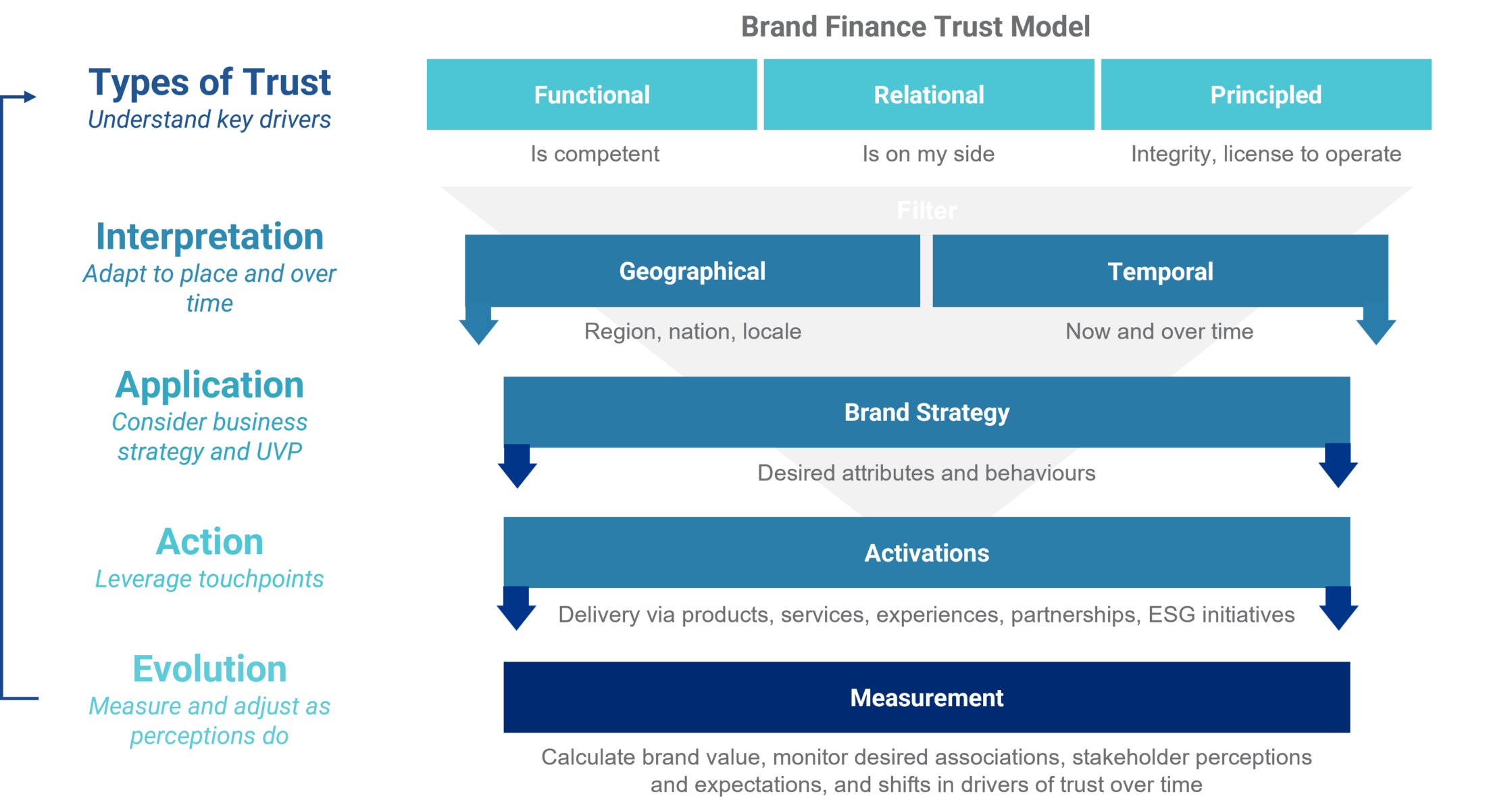
Stakeholders pay close attention to whether a business delivers products and services that perform as expected, treats people fairly and with respect, and behaves with integrity by acting responsibly and using its influence in ways that align with its stated values. Together, these functional, relational and integrity-related factors shape people’s overall assessment of a brand’s trustworthiness.
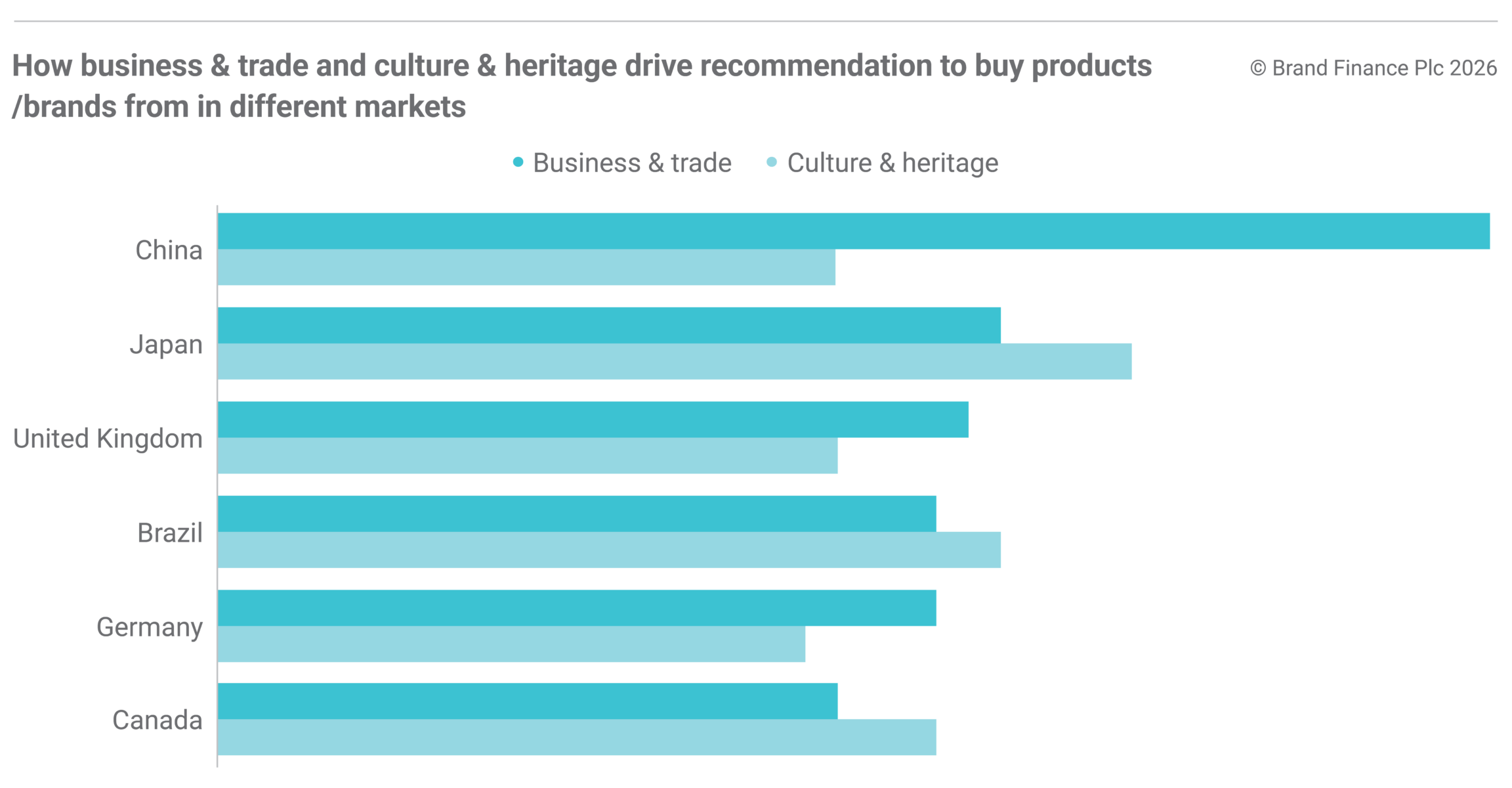
But what earns trust in one context may not hold the same weight in another. Geography, culture, personal upbringing and the issues dominating public conversation all shape what people look for. For example, our Global Soft Power Index 2026 study shows that in the UK, Germany and China, the main driver of recommendation to buy products and services from a particular country is the perception of how well that country performs in terms of business and trade; whereas in the Canada, Brazil and Japan, culture and heritage play a bigger role. Trust also shifts over time as expectations evolve. Brands, therefore, need a clear understanding of the environment in which they operate, the signals they send through different channels, and the geographical and time-based nuances that influence how their actions are interpreted.
A clear sense of purpose helps bring coherence to how a brand builds trust. Strategy sets out the promise it is making, but that promise only carries weight when it is reflected consistently in how the organisation behaves. The experience people have with products, services, communications and day-to-day interactions all need to point in the same direction for the promise to feel credible. Openness plays an important role here too, as people increasingly expect dialogue, responsiveness and a willingness to explain decisions, particularly when scrutiny is high.
Taken together, these elements form a practical framework for understanding how trust is built and maintained and for informing and prioritising brand experience principles and activation across all touchpoints. Brands that align their promise, behaviour and purpose, and adapt these thoughtfully to their context, create the conditions for trust to grow.
Measuring trust and impact on brand value
Measuring trust matters because it shows what is actually shaping people’s perceptions and how those perceptions influence behaviour. Organisations, places and countries need a clear view of which experiences build trust, which undermine it, and how changes in trust affect the choices people make. Without that evidence, it becomes difficult to prioritise investment or understand whether an activity is delivering the impact intended.
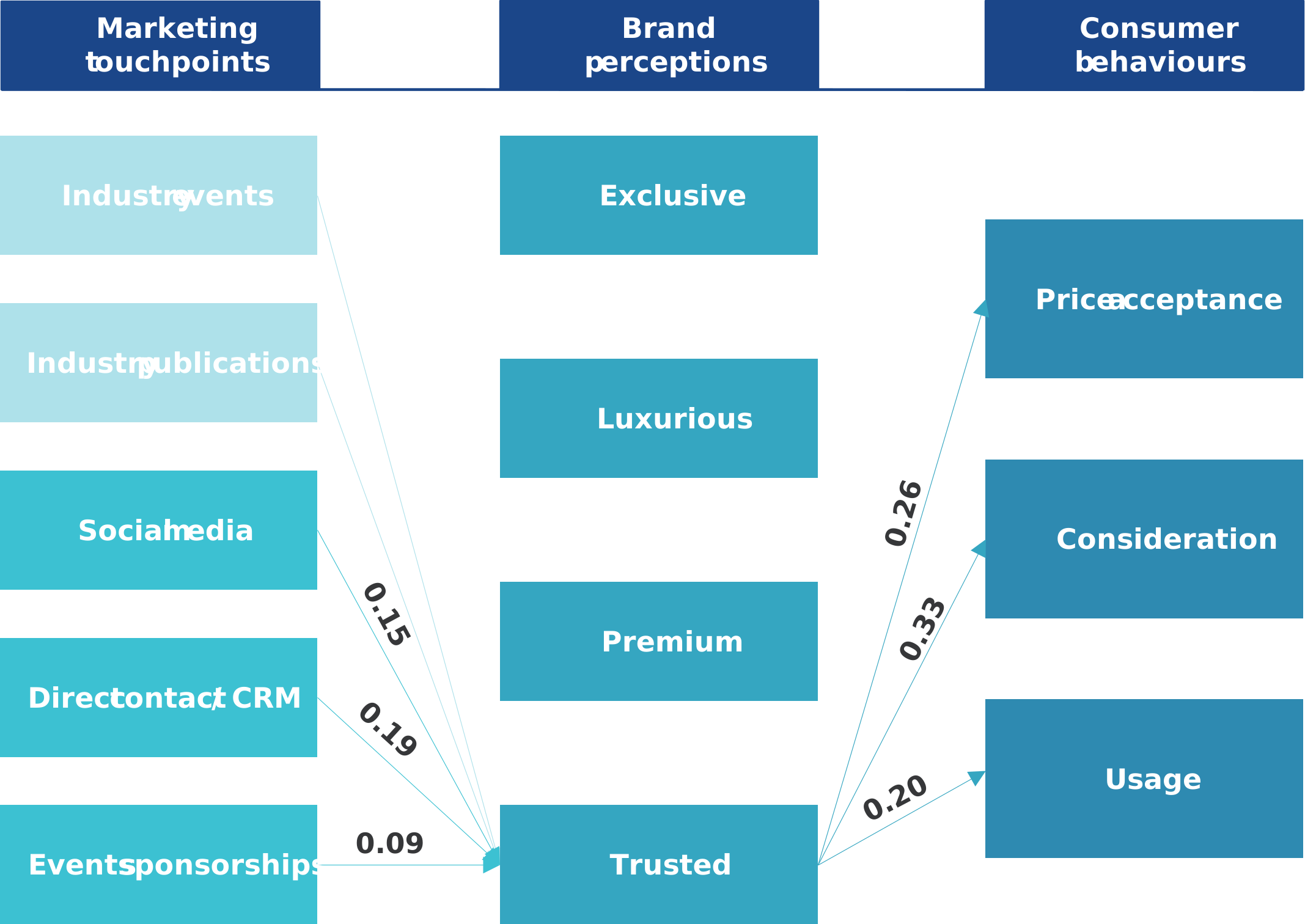
Brand Finance’s work shows that trust can be analysed in a structured way. Our Trust ModelTM links the experiences people have across a range of touchpoints to the perceptions that feed into functional, relational and principled trust. These touchpoints span everything from service interactions and customer support to digital experience, product performance and the way a company communicates. Their influence differs depending on the context. Interactions that involve direct contact are more likely to shape relational trust, while aspects such as product reliability or technical performance tend to have a stronger effect on perceptions of competence.
Once perceptions are formed, they begin to shape behaviour. Structural Equation Modelling (SEM) helps quantify these relationships by showing how different aspects of a brand’s image influence outcomes such as consideration, usage, advocacy and price premium acceptance. Across our work, we routinely see that certain perceptions exert a stronger pull than others. Signals of quality or distinctiveness tend to be powerful drivers of consideration, while the attributes people associate with trust often play a meaningful role in price acceptance and loyalty. The precise mix varies by category and market, but the pattern is consistent: what people believe about a brand materially affects how they behave toward it.
However, touchpoints contribute to these perceptions unevenly. Some channels and experiences build positive associations reliably, while others have limited or even counterproductive effects depending on the sector. For example, our modelling in the luxury sector shows that more direct forms of interaction often have a stronger influence on trust-related perceptions than broader broadcast channels. In contrast, activities that introduce ambiguity about what a brand stands for can weaken attributes that are core to its value. Understanding these variations is essential, because it highlights where investment supports long-term brand strength and where it may unintentionally erode it.
These insights become particularly valuable when linked to brand value. In Brand Finance’s methodology, credibility sits at the centre of our Brand Strength Index (BSI) framework. It is influenced by what people know about a brand and the confidence they have in its ability to deliver. Stronger credibility increases a brand’s appeal, which in turn drives selection, usage, price acceptance and advocacy. When trust enhances credibility, the effects compound across the entire customer journey. SEM makes this relationship visible by tracing the path from experience to perception, from perception to behaviour, and from behaviour to financial performance.
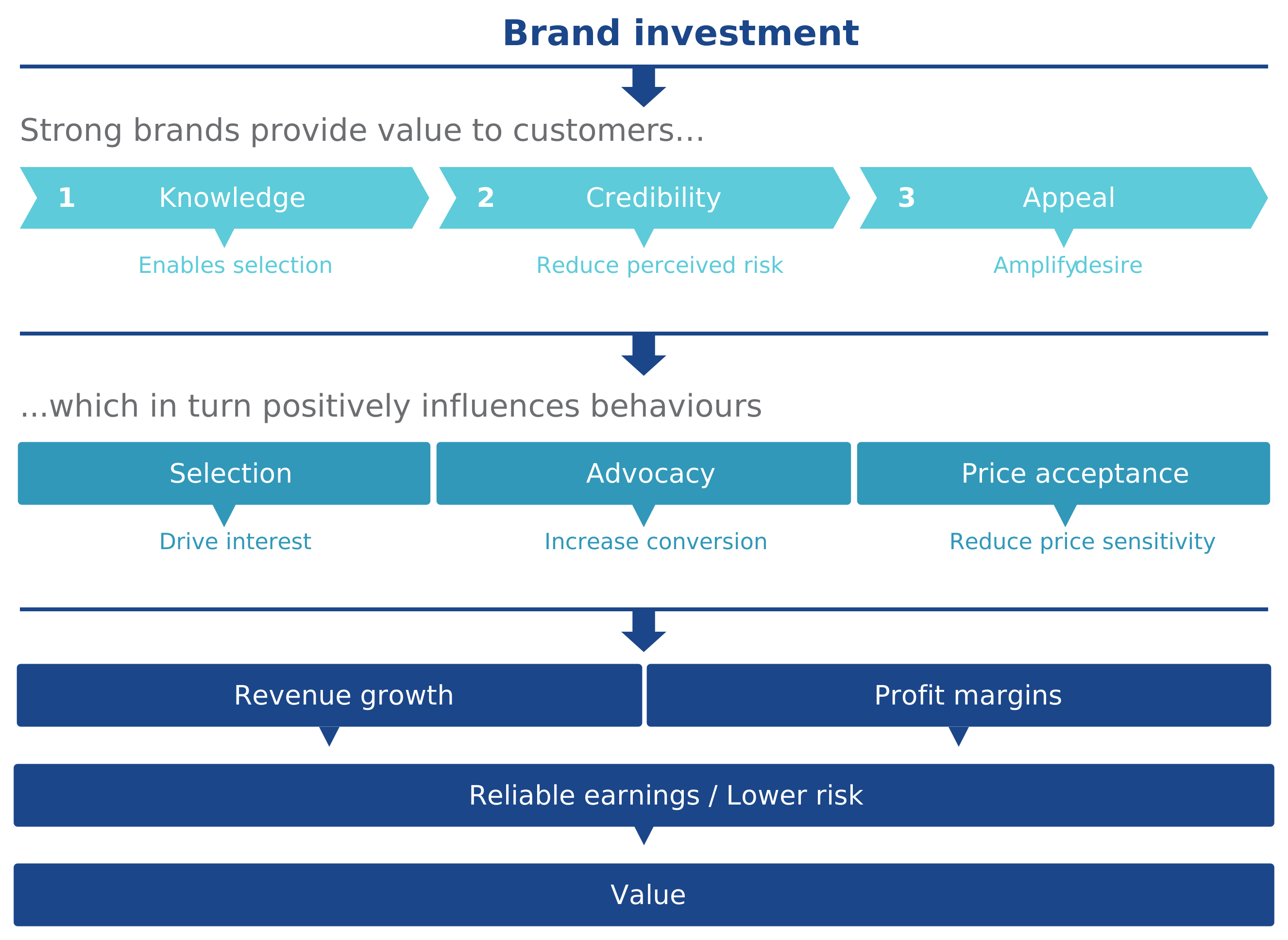
An approach that connects touchpoints, perceptions, trust and outcomes provides organisations with a practical basis for decision-making. It clarifies where trust is being created, where it is being strained and which interventions will have the greatest effect. Most importantly, it enables trust to be managed deliberately rather than assumed, turning it into a measurable contributor to brand and business value.
Conclusion
People are looking for reassurance in a world that feels increasingly uncertain. Trust has become more valuable precisely because it is harder to earn, and it shifts as expectations, contexts and experiences change. Brands that understand what drives trust - and how it influences behaviour - are better placed to offer people a sense of steadiness amid this uncertainty, building stronger relationships with their stakeholders and generating lasting business value. The organisations that invest in delivering high-quality products and services, anchored in understanding and addressing customers’ needs with fairness, respect and excellence, alongside clarity, consistency and responsible action will be the ones best equipped to restore confidence and strengthen their position as trust becomes a defining factor in competitive advantage and value creation.