





This article was originally published in the Brand Finance South Africa 100 2026.
For more than 45 years, Shoprite has held its position as South Africa's low-price champion, keeping everyday essentials within reach of millions of households. Shoprite discusses how a price promise held since 1979, the decision to treat ESG as a competitive edge rather than compliance, and community programmes have repositioned the brand as an enabler of household resilience rather than a retailer.
In a highly competitive retail environment, how does Shoprite differentiate itself from other players, and how does this strengthen its brand positioning?
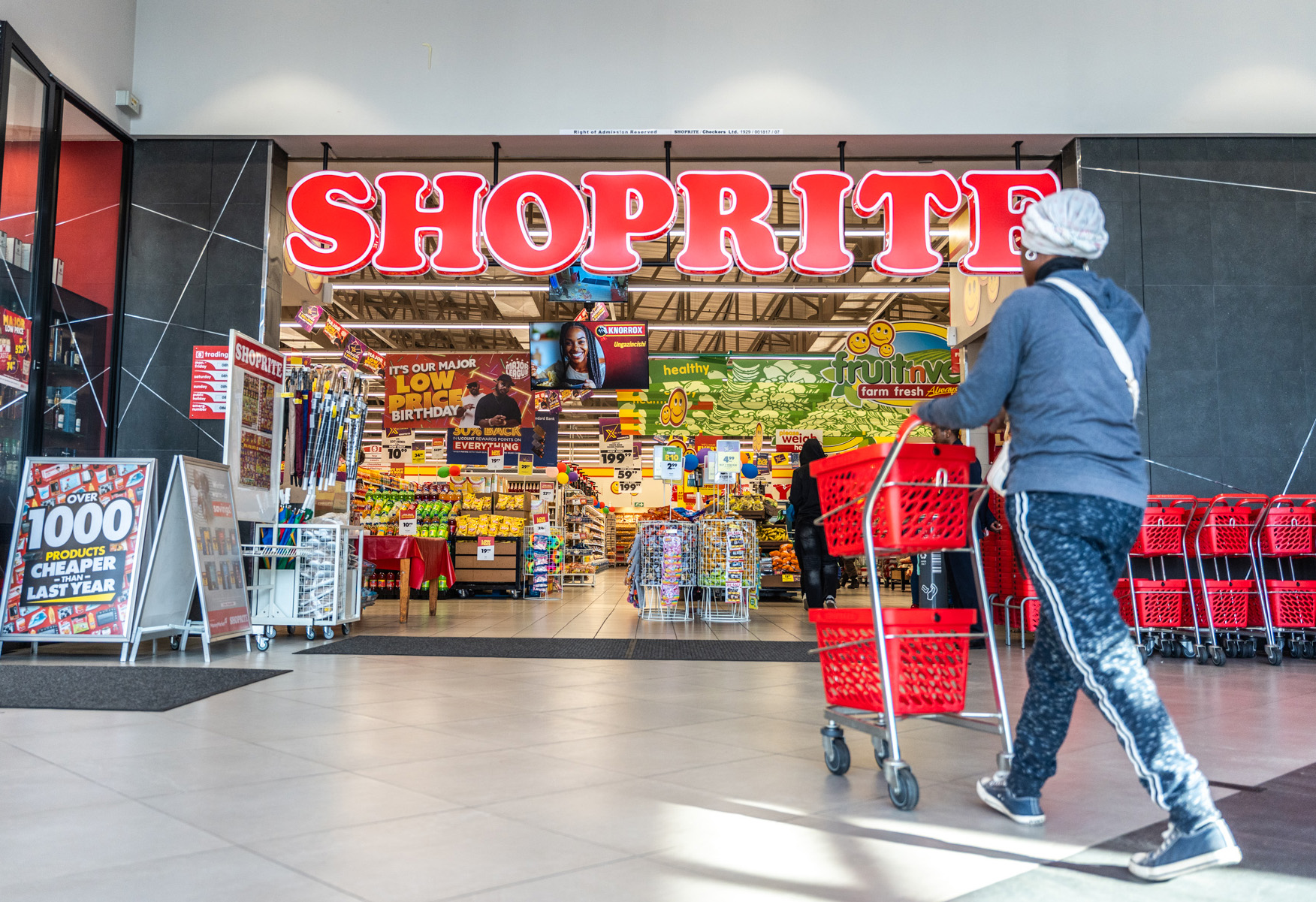
For more than 45 years, Shoprite has built its reputation as South Africa’s trusted low-price champion, ensuring that everyday essentials remain accessible to millions of households. This commitment is anchored in a simple but powerful promise: consistently providing affordable prices on the products that matter most to our customers.
At the heart of this commitment is Shoprite’s ‘R5 basket of goods’. Since its introduction in April 2016, our 600g loaf of brown bread has remained at just R5, with more than half a million loaves sold weekly. The R5 offering also includes subsidised deli meals – such as a protein-rich ox liver burger – as well as essential hygiene products, including locally manufactured sanitary pads, a 2-in-1 shampoo and conditioner, and body wash. Available daily from more than 700 Shoprite supermarkets nationwide, Shoprite subsidises close to 2 million R5 products every week to protect household budgets and support food security.
In the current economic climate, Shoprite continues to pass meaningful savings directly on to customers. In December 2025, a record 14,400 items were cheaper than in December 2024. Over the six months from July to December 2025, Shoprite’s internal inflation measured –0.1% (compared with 4.7% official food inflation reported by Statistics South Africa) and reflects our ongoing efforts to absorb cost pressures and shield customers from rising prices.
By continuously expanding and refining its private label product ranges, Shoprite can offer customers greater choice while delivering reliable quality at more affordable prices. With approximately 18% of our offering comprising private label, Shoprite has greater control over product development, sourcing and pricing. This enables us to influence the cost and value of thousands of food products.
Our scale and reach further reinforces Shoprite’s competitive advantage. With the largest supermarket footprint in Africa, we leverage our buying power, strong supplier partnerships and advanced distribution networks to keep prices low. More than 15,000 products are price-checked weekly to ensure customers pay the lowest possible prices, while relevant promotional mechanics – such as the R99 and R199 combo deals on staples like maize meal, rice and sugar – help families stretch their budgets even further.
Through this combination of price leadership, scale and disciplined cost management, Shoprite continues to strengthen its position as South Africa’s low price champion.
How does the Shoprite brand build trust among its stakeholders?
Shoprite has earned customer trust by keeping a promise for more than 45 years: to provide essential goods at the lowest possible prices, regardless of economic pressures. Since opening in 1979, this commitment has remained the foundation of every decision we make.
Trust is built through action and measures such as our R5 bread, which has remained priced at R5 since April 2016 despite rising costs, demonstrating our long-term focus on affordability.
Transparency and tangible savings further reinforce this trust. Through our Xtra Savings rewards programme, customers receive instant savings at the till, with customers collectively saving R16.5 billion in the last financial year alone (and more than R55 billion since the Xtra Savings rewards programme was launched in 2019).
Our promise also extends beyond our supermarkets. Shoprite’s Mobile Soup Kitchens serve nearly 9 million meals annually, while nearly 300 supported community food gardens help contribute to long-term food resilience. When disaster strikes, Shoprite is often among the first responders to support affected communities.
What role does sustainability / ESG play in your industry and for your brand?
Our purpose is to uplift lives every day by pioneering access to the most affordable goods and services, creating economic opportunity and protecting our planet. Sustainability is therefore central to our long-term value creation strategy.
At Shoprite, ESG is integrated into our everyday operations – from our supermarkets and distribution centres to our supply chain and community programmes. ESG is viewed not as compliance, but as a competitive edge and a foundation for long-term stakeholder trust.
A key focus area is local sourcing and supplier development. With 98% of procurement sourced locally, Shoprite supports job creation, reduces transport-related emissions and strengthens local economies.
We leverage our scale and geographic reach to support suppliers – particularly small and emerging businesses – to access retail markets. In the past financial year, R11 million was invested in enterprise and supplier development through Shoprite Next Capital.
Food security remains another major focus area. Through its fleet of 33 Mobile Soup Kitchens and an extensive community food garden programme, Shoprite helps address both immediate hunger and longer-term food resilience. The soup kitchens provide millions of meals annually to vulnerable communities across South Africa, while the food garden programme focusses on strengthening local food production and skills development. Nearly 300 supported gardens enable communities to grow their own food. In the last financial year, these gardens produced an estimated 106.5 tonnes of fresh produce and have indirectly benefitted approximately 92,367 people. In addition, 3,593 community members received training in food gardening techniques, equipping them with practical skills,
We also maintain a strong focus on climate change, energy efficiency and waste reduction. The Group recently marked its 100th solar photovoltaic (PV) installation – at Shoprite Morula in Mabopane, North West – generating renewable energy equivalent to powering approximately 12,300 households annually. Investments in energy-efficient refrigeration, LED lighting, improved forecasting and food waste diversion programmes help reduce both environmental impact and operational costs.
Packaging innovation is another priority. Shoprite introduced South Africa’s first fully recyclable potato bag and has committed to ensuring 100% of private label packaging is reusable, recyclable or compostable. Through a design-for-sustainability approach and the introduction of On-Pack Recycling Labels (OPRLs), we enable customers to make informed recycling choices and support the circular economy.
Our sustainability efforts have received industry recognition, including the inaugural Grand Prix: Sustainability honour at the 15th annal Brand Africa 100 | South Africa’s Best Brands rankings. Ultimately, sustainability at Shoprite is about responsible growth - phasing in plans or programmes where they have the greatest impact, leveraging innovation and continuously balancing environmental responsibility with our core mandate of affordability and access.