


Most people only think about their energy supplier when the bill arrives, and few love the brand that sends it. Of the 29 UK sectors in our research, utilities rank 27th on brand love, ahead of only banks and telecoms, and 19 of the 20 UK utility brands we track have more detractors than promoters among people who have used them. Meanwhile, the pressure on bills is growing: Ofgem's energy price cap is up 4% for the final quarter of 2026, and the Autumn Budget put energy at the centre, with a £100 winter payment for 20 million households and the end of standing charges on household gas bills from 2027. Help with bills may ease the strain, but it does little to change how people feel about their supplier.
One challenger has broken that pattern. Barely a decade after launch, Octopus is now Britain's largest supplier, with around 26% of the home energy market, and by some distance the most loved. British Gas, the long-established supplier we compare it with, holds its own on the service basics but trails well behind on love.
How Octopus went from challenger to market leader holds lessons for any brand in a category people would rather not think about.
A category short on goodwill
Strong feelings about an energy supplier are rare, and when they surface, they are rarely positive. Across the eight UK energy suppliers in our Global Brand Equity Monitor, the average Net Promoter Score among people who have used the brand is −36. British Gas sits at −46.
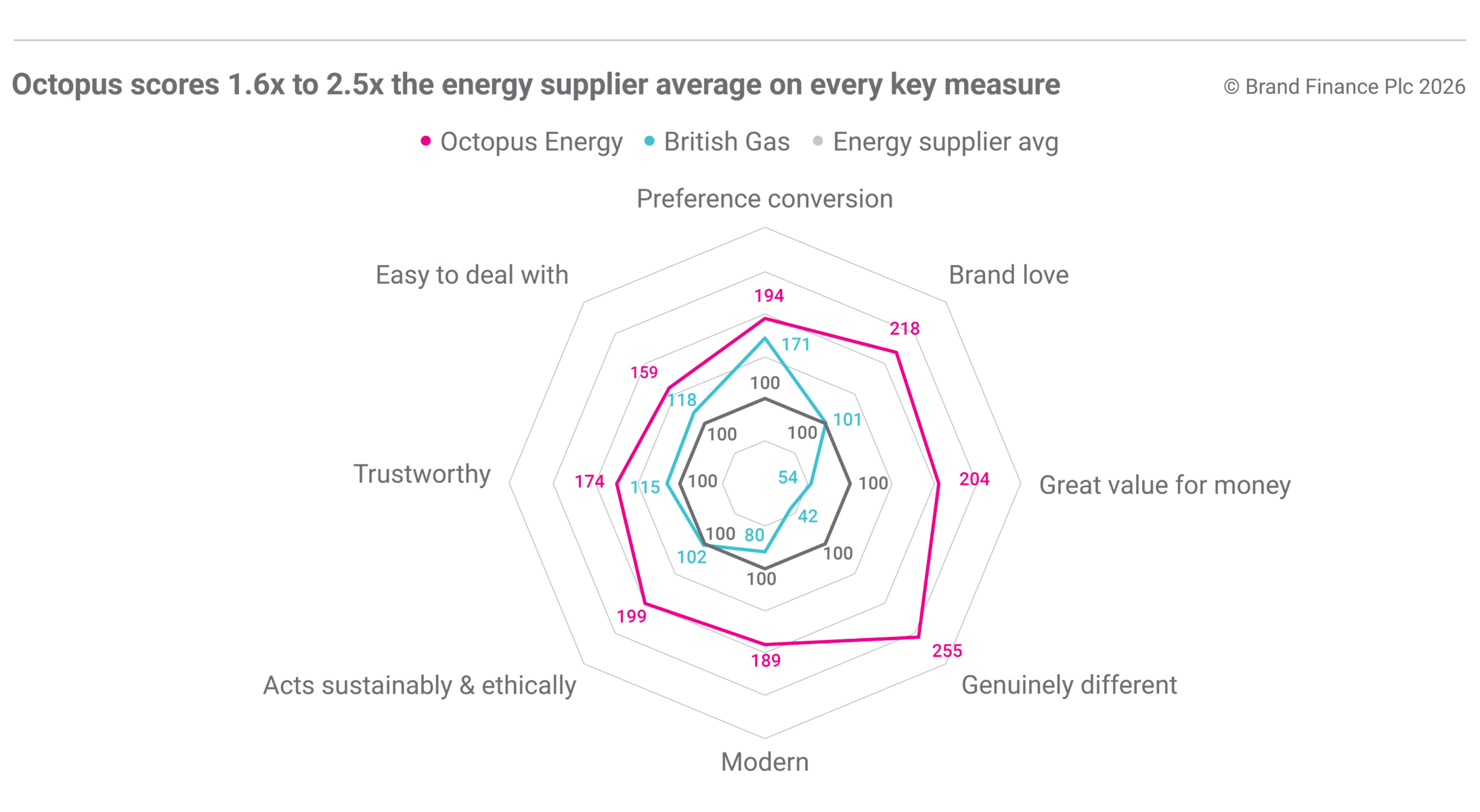
Octopus is the only one with a positive score, at +7. Almost one in five people who know it says it's a brand they love, more than twice the level of the average supplier. In a category defined by indifference, that is a meaningful asset.
Love is earned in experience and shaped by the brand
It is tempting to assume that affection for a brand is created by advertising alone. Our drivers analysis of "brand I love" among UK consumers tells a different story.
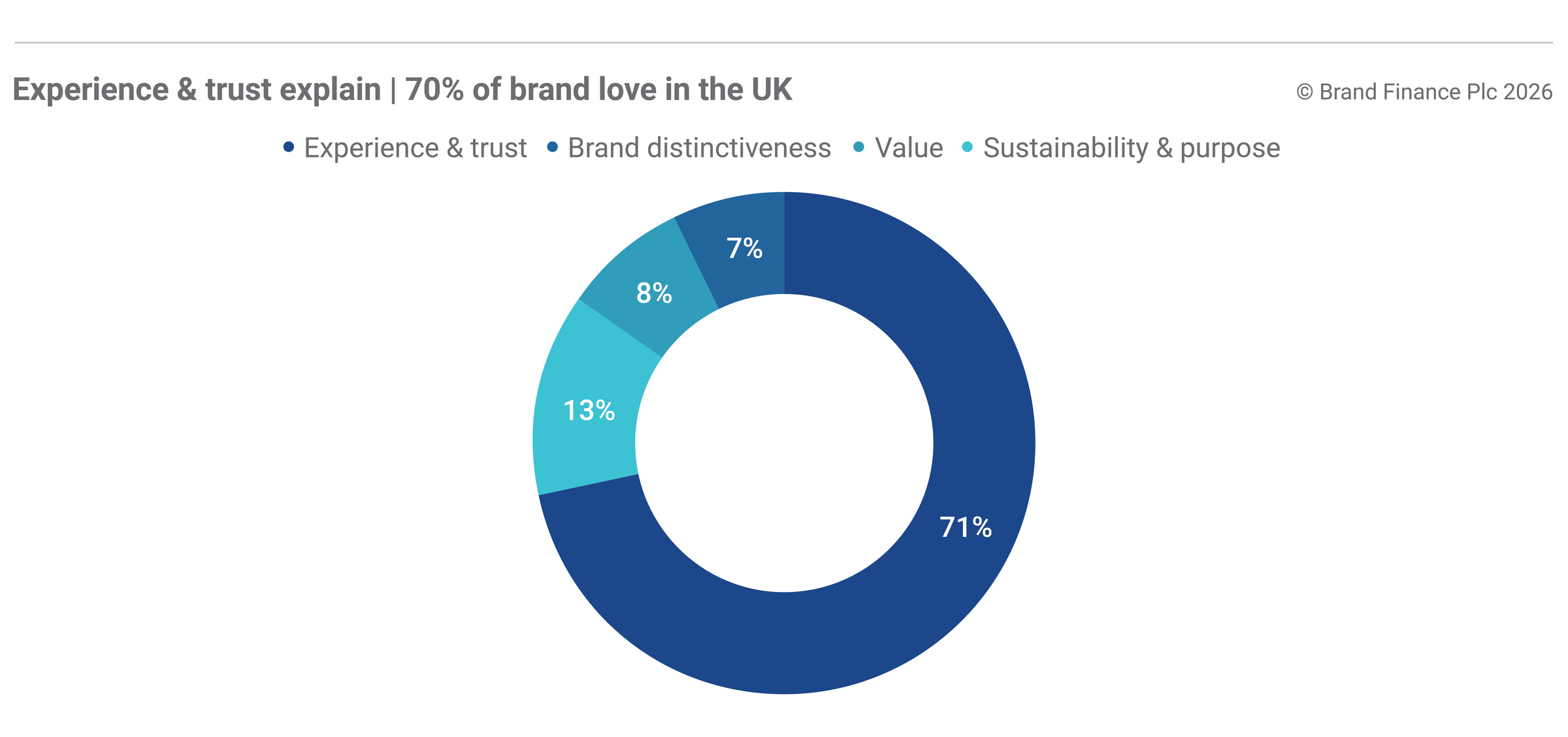
Experience and trust account for around 70% of brand love: being reliable, easy to deal with, offering good customer service and being trustworthy. Price matters, and so does sustainability, but they sit further down the list. These are the foundations, but they are also where suppliers start to look alike. Becoming a brand people love depends on what comes next.
Two suppliers with similar service levels can be seen very differently. How clearly a brand explains a bill, how it sounds when something goes wrong and whether its promises feel credible all play a part. Tone of voice, simple communication and making good service visible also help shape whether reliability turns into trust, and trust into affection. The brands that win tend to be those where marketing helps define the customer experience, not just advertise it.
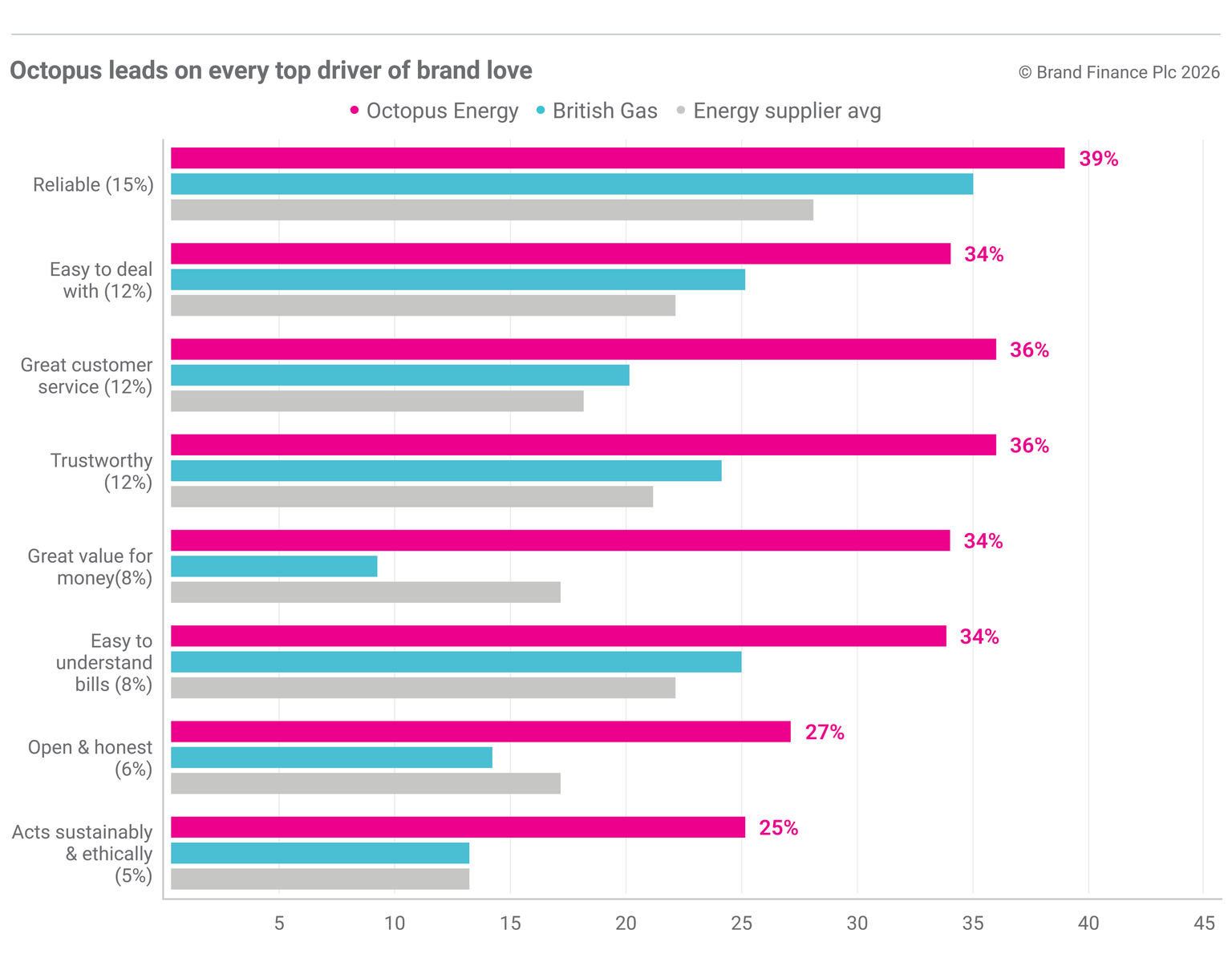
Getting the basics right is necessary, but it is not what sets Octopus apart. On the experience drivers that matter most, British Gas holds its own. It ranks second only to Octopus on reliability, being easy to deal with, customer service and having easy to understand bills. Where Octopus pulls away is on the perceptions where brand and communication make the biggest difference: being modern, genuinely different, open and honest, and seen as fair value. Its lead over British Gas on 'modern' and 'genuinely different' is around 20 percentage points, against just 4 points on reliability. Matching rivals on the basics buys parity; the gap in love opens up on how the brand makes people feel.
Green is a value signal, not a premium
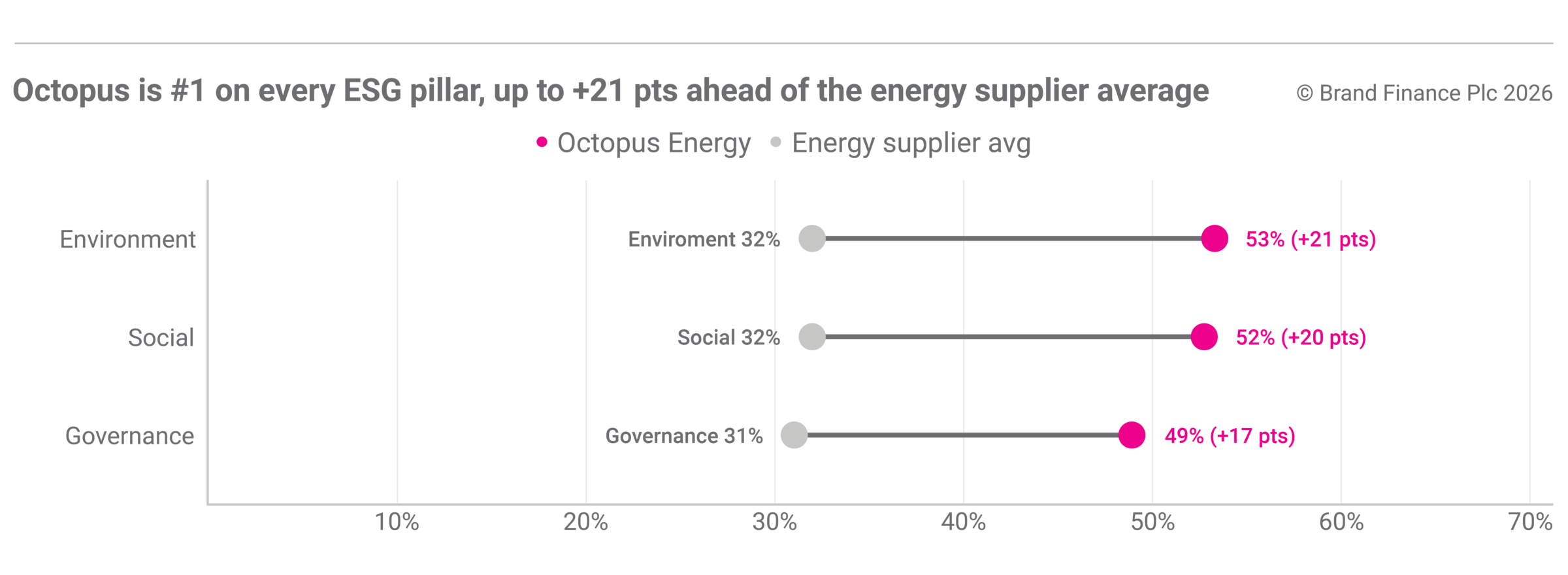
Two of the clearest gaps between the brands are on value and sustainability. Neither is among the biggest drivers of love on its own, but value is where Octopus's lead over British Gas is widest, and sustainability is closely tied to trust and value perception.
Sustainability is often treated as something customers pay extra for, but across the 20 UK utility brands in our study, the data suggests the opposite. Brands seen as acting sustainably are also seen as better value (r = 0.71), and fewer people consider them overpriced. Perceived sustainability also moves closely with trust and recommendation. That is an association rather than proof of cause, but the pattern is consistent across the category.
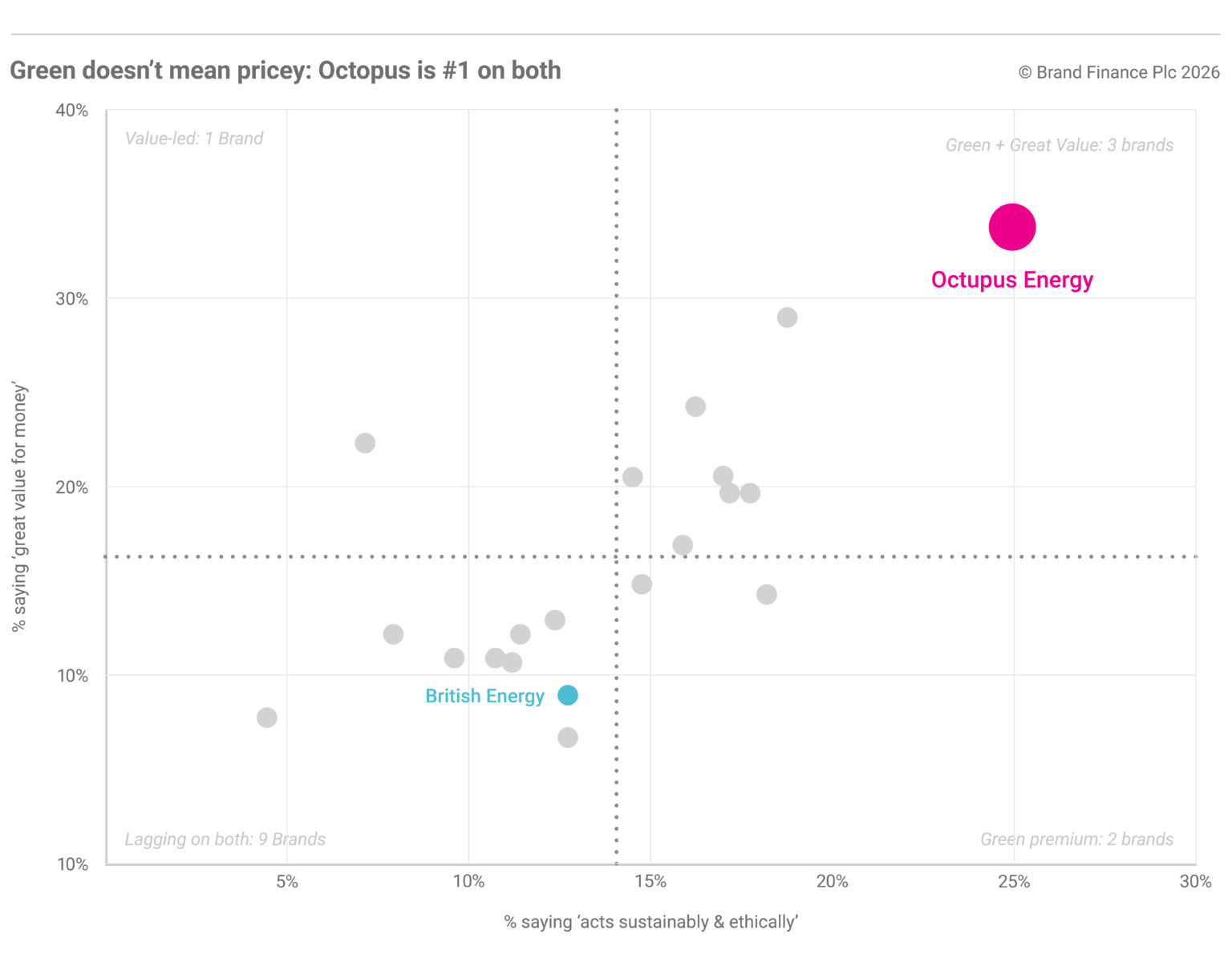
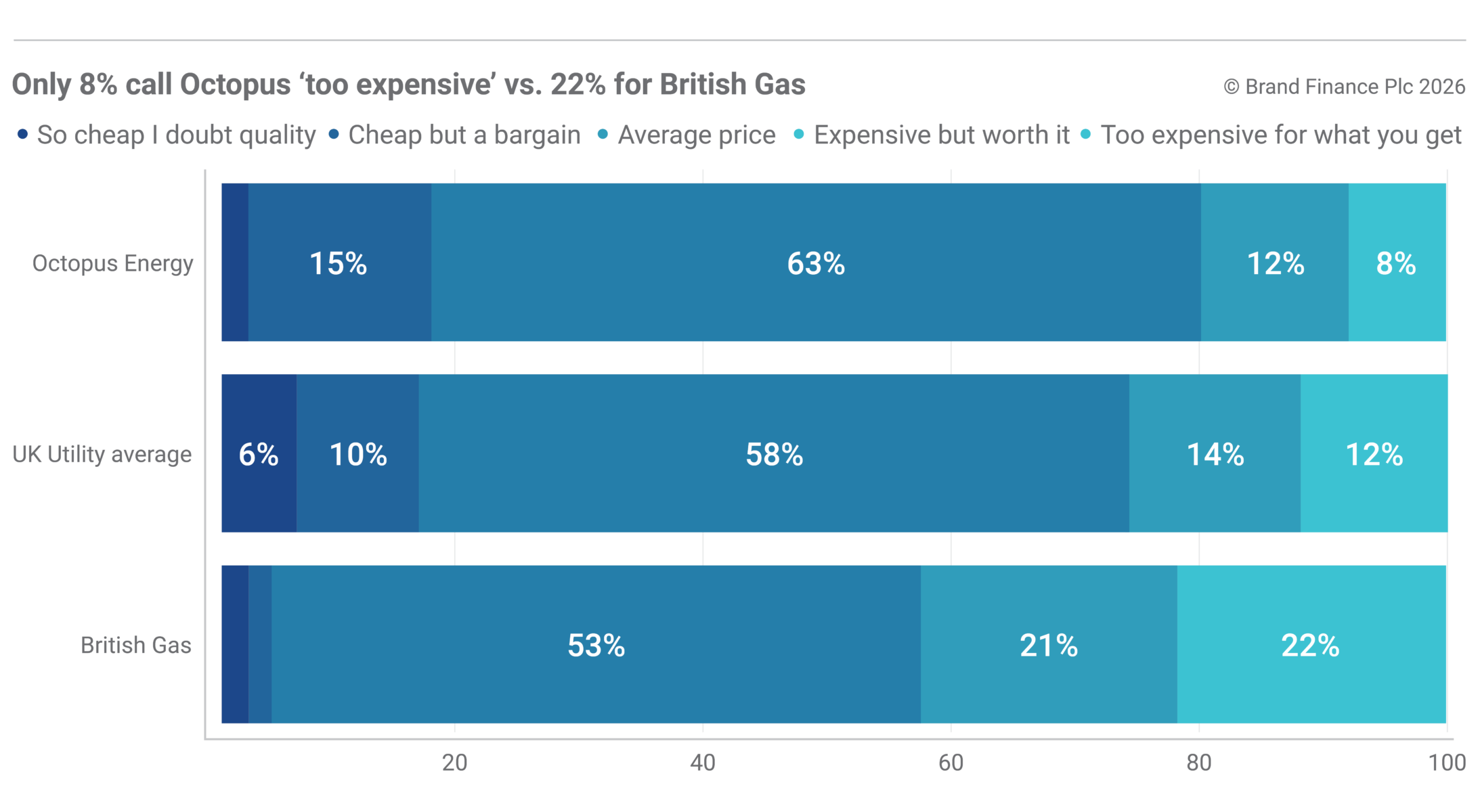
Octopus sits furthest into the "green and great value" corner. A third of people who know the brand see it as great value for money, against 9% for British Gas, which ranks last of the eight suppliers on this measure. Only 8% think Octopus is too expensive for what it offers, compared with 22% for British Gas.
UK consumers give sustainability more weight in brand love than the global average does (5% of what drives it, against 3% globally). But its bigger effect is indirect, through the value and trust perceptions it travels with. That makes sustainability a brand issue, not only a corporate one. What matters is turning real commitments into specific, credible proof points that people can see in their bills and tariffs. When sustainability is felt in fairer prices and lower bills, it reinforces exactly the perceptions that matter most when money is tight.
What this means beyond energy
Energy is not the only category where most brands are tolerated rather than loved. Telecoms, banking, insurance and water share many of the same traits: essential services, low engagement and deep scepticism about price. The lessons travel.
- For challengers: compete on the perceptions established brands neglect. Getting the basics right earns a place in the market, but Octopus's advantage lies in being seen as modern, different, honest and fair value, the areas where brand and communication can make the most difference.
- For established brands: holding your own on service is not enough. British Gas comes close to Octopus on reliability and customer service but trails on value and openness, and a brand people rely on but don't feel good about is exposed when bills rise. The gaps on value perception and sustainability are where that risk is most visible.
- For everyone: brand love is built by the whole business. The perceptions that drive it are delivered by operations, pricing and sustainability as much as by communications. The strongest brands treat those teams as part of the brand, and track how people feel about the brand, not just how many people know it.
Octopus shows that a challenger can win hearts in one of the least-loved categories in the UK. It did so not by out-serving its rivals on the basics, but by standing out where the brand does the work: being seen as modern, different and honest, making value obvious and linking sustainability to value rather than a premium.