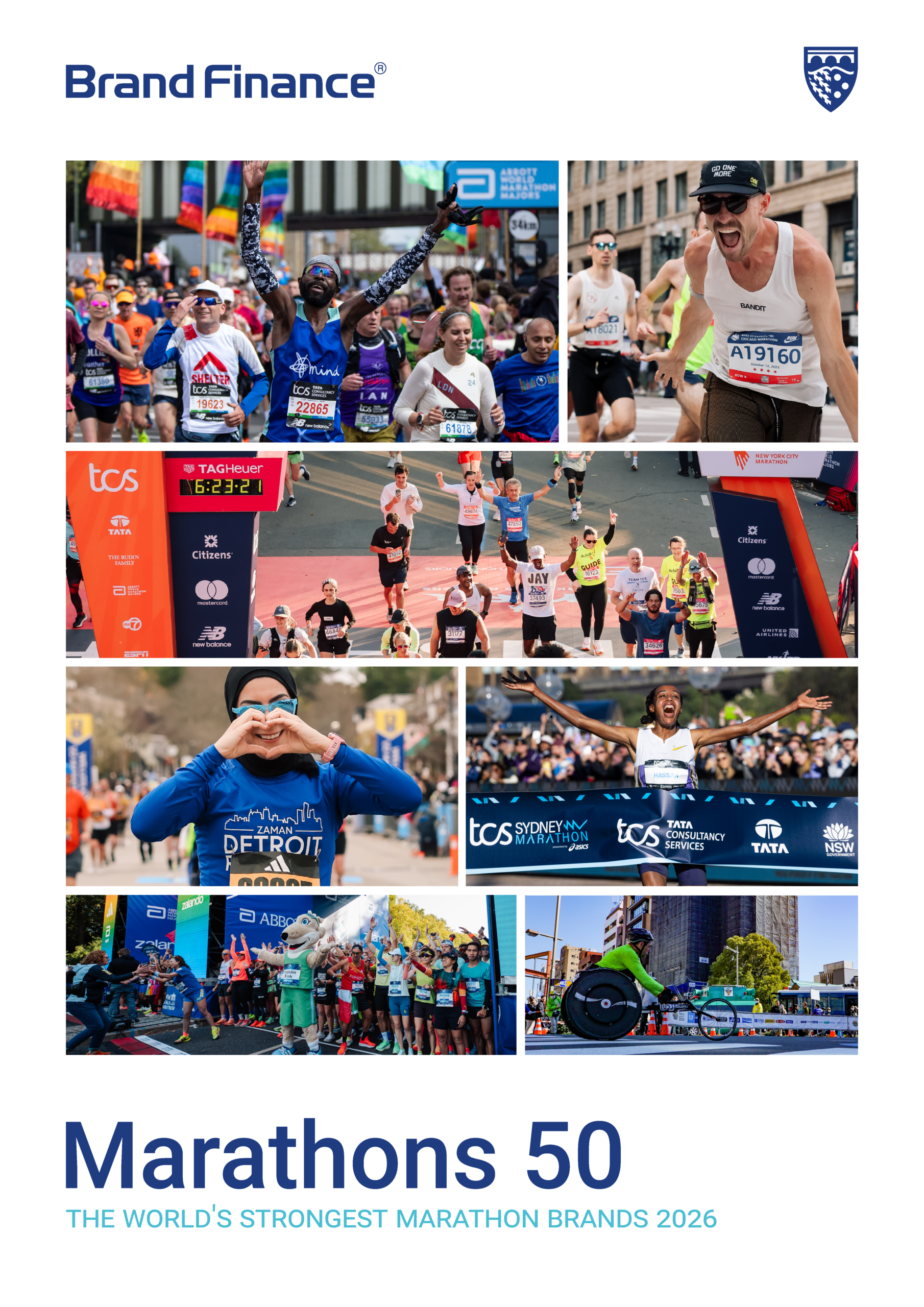
This article was originally published in the Brand Finance Marathons 50 2026 report.
The marathon is growing everywhere. It is not growing for the same reason anywhere.

Head of Product Research
and Development,
World Athletics
Ballots are oversubscribed, fields are bigger and more international than ever, and the sport has never had more participants. But the headline hides the more interesting story - the reasons behind the growth vary a great deal from place to place.
In North America, the pull leans more towards achievement and a premium experience, often wrapped into a trip. In much of Europe, the race has become a kind of cultural and civic tourism. At some events, up to half the field travels in from abroad, and what they are really buying is the city rather than the race. In parts of Asia, public-health campaigns with state backing do much of the work.
South America has become something of a home for social running, built around crews and group runs. In Africa, a fast-growing urban middle class may be the start of the next big wave, even if mass races there are still young.
Participation, tourism, sponsorship, media and charity all matter, but how much depends on where you are. A race director who expects what works in London to work in Jaipur, or the Boston model to transfer neatly to Naples, risks misreading the map. The better approach is to borrow selectively. British marathons have perfected the charity model, the Majors know destination design, and newer Asian events have shown how to frame running as public health. Helping that knowledge travel is part of what World Athletics is for.
One shift I would single out is the move in many countries from material security towards self-expression and wellbeing. The Nordic countries have been ahead of this curve for decades. They combine high everyday activity with a strong club culture, and their runners care less about the medal than about community and experience. Markets going through the same shift should look closely at the Nordics, not to copy them, but for an early look at what their own runners may come to need.
A boom or pent-up demand?
It is still too soon to tell whether the post-COVID surge is pent-up demand that will settle, or whether the sport has moved permanently into a bigger era. We don't know with certainty yet, so we watch the signals. We look at how many runners come back and how many drop away, at a runner's lifetime value, at the sub-elite and club layer below the headline fields, and at how young people spend their free time. Finisher numbers flatter everyone. The leading indicators are at times less comfortable, but more honest.
The most important signal may well be generational. The Gen Z runners arriving now went through their formative years during the pandemic. They are more sceptical of institutions, very comfortable sharing what they do, and hungry for the in-person community they missed. Right behind them, though, is a group whose formative years came after COVID, and their relationship with community and physical activity could look quite different. What explains today's young runners may not explain tomorrow's.
From X to Alpha
Further ahead, the industry will meet its first Generation Alpha runners. Over time they will replace Generation X, until recently the backbone of many marathon fields, and it will not be a one-for-one swap. The generations differ in size, behaviour and spending power, not to mention how they find and pay for experiences. Organisers would be wise to learn everything they can about how this group consumes and plays, starting now.
This is part of why World Athletics has changed the way it works. In October 2026 we set up a department dedicated to running and mass participation. Historically, our instinct as a governing body has been to oversee, to set the rules and certify. That still matters, but it is only half of what a modern federation owes the sport.
The other half is helping – making events better, speaking up for the road-running industry, and acting as an honest broker in a sector that has grown very fast. In practice, this means working closely with organisers, platforms, sponsors and member federations, instead of turning up only to inspect. It starts with running, but I don't think the idea of a governing body that facilitates as well as governs will stay unique to our sport.
On regulations, our aim is to have standards that are logical, sensible and worth meeting. Organisers are far more likely to apply standards they helped write, and consulting them is one of the main reasons the new department exists.
We also need a fuller picture of what our events do to the places that host them. The benefits are by now well documented. We know much less about how inner-city races can weigh on local people, who at times might feel the event is done to them rather than for them. We want to study this properly and make sure organisers are equipped to solve potential issues.
My expectation for the next three to five years is that headline growth continues but slows gradually, and that the winners will be the markets and events that treat mass participation as the heart of what they offer rather than the backdrop to an elite race.
The emotional and economic value of this sport lies with the 99% who will never stand on a podium.
We cannot unlock that alone, and fortunately no one knows how to do this better than the organisers themselves. A big part of our job will therefore be to consult, guide and assist, so that the coming years are as exciting as these.