





Brand Finance ranks five Indian brands among the world's leading food and dairy names, led by Amul, Mother Dairy, Britannia and Nandini
MUMBAI, 1 September 2026 – India’s leading food and dairy brands are strengthening their place in the global food and drinks sector, according to the Food & Drinks 2026 report by Brand Finance, the world’s leading brand valuation consultancy.
Across the Food 100 and Dairy 10 rankings, five Indian brands now hold a combined brand value of USD9.9 billion, reflecting the growing global relevance of brands built on trust, affordability, scale and everyday household usage.
The latest results point to a clear India story, trusted household brands are using familiarity to move into new occasions across dairy, packaged foods, nutrition, snacking and staples.
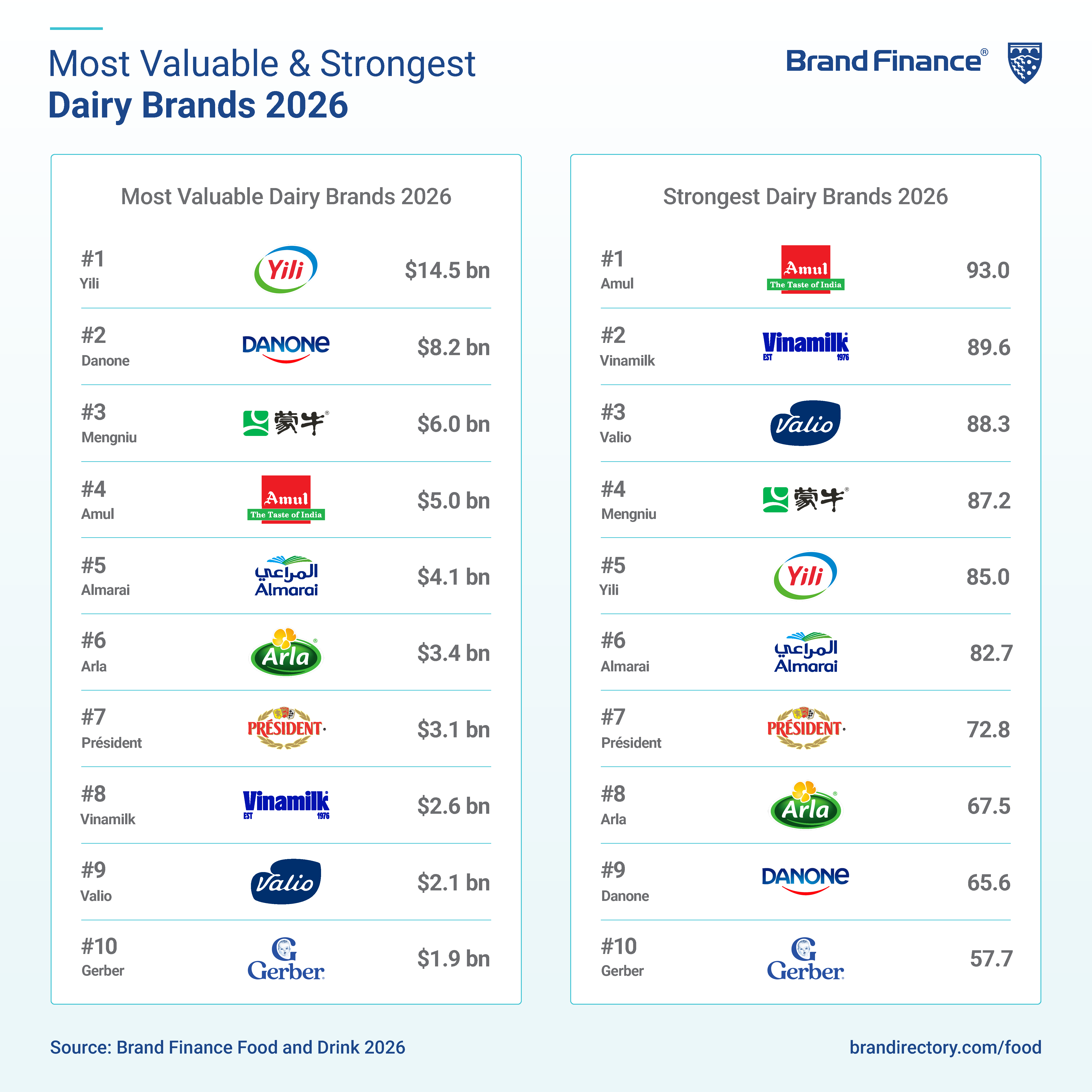
Amul anchors India’s performance in the rankings, rising 22% in brand value to USD5 billion and placing fourth in the Dairy 10 and 13th in the Food 100 rankings respectively. More notably, it is the world’s strongest dairy brand, with a Brand Strength Index (BSI) score of 93/100 and an AAA+ brand strength rating. Its farmer-owned cooperative model, broad portfolio and cross-generational familiarity have made it one of India’s most trusted household names. That trust is now being stretched into new spaces, with reports this year citing nearly 100 launches across protein beverages, frozen foods, cookies, organic staples and premium chocolates, alongside domestic and international expansion plans, especially the launch of dairy products in key US markets.
For Mother Dairy, the story is one of moving everyday dairy into higher-value occasions. The brand rises to 60th in the Food 100 ranking as brand value increases 22% to USD1.4 billion, while its BSI score improves from 70.6/100 (2025) to 72.8/100, maintaining an AA brand strength rating. Its 2026 product push spans more than 30 value-added formats, including high-protein curd and paneer under its Pro range, reflecting growing demand for dairy products that combine familiarity with health and convenience.
Britannia brings a packaged-food dimension to India’s momentum. Ranking 63rd in the Food 100 line-up with its brand value up 17% to USD1.3 billion and an AAA- brand strength rating, the brand continues to refresh familiar categories rather than rely on heritage alone. Recent results commentary points to innovation-led growth across biscuits and adjacent categories, including 50-50 Dipped, vegetarian cake variants and Doodh Marie Gold.
The rise of Nandini shows how regional dairy brands are also building wider visibility. Ranking 71st in the Food 100, with brand value up 4% to USD1.1 billion, the brand is extending beyond its strong local base through nutrition-focused dairy products, including high-protein milk, probiotic curd and lassi. Its IPL partnership with Royal Challengers Bengaluru also brings the cooperative brand into a more mainstream consumer and cultural space.
Ajimon Francis, Managing Director India, Brand Finance, commented:
“India’s food and dairy brands are proving that global brand strength can be a combination of domestic market strength as well as growing presence in global markets with good quality and good value propositions.. What stands out this year is the power of brands that are deeply embedded in everyday life. Amul’s position as the world’s strongest dairy brand reflects a rare combination of societal good, co-operative ecosystem, trust, affordability, quality consistency, reach and emotional relevance, while the performances of Mother Dairy, Britannia and Nandini show how Indian brands are increasingly converting domestic consumer relationships into global brand value. As India’s food and dairy market becomes more organised, more digital and more value-added, these brands are well placed to define the next phase of growth.”
Together, these performances suggest that India’s food and dairy brands are entering a new phase of brand-led growth. Their strength is still rooted in familiarity, affordability and household trust, but increasingly reinforced by innovation, value-added products and broader consumer occasions. As Indian food consumption becomes more organised, digital and convenience-driven, these brands are well placed to convert domestic relevance into stronger global visibility.
Global Insights
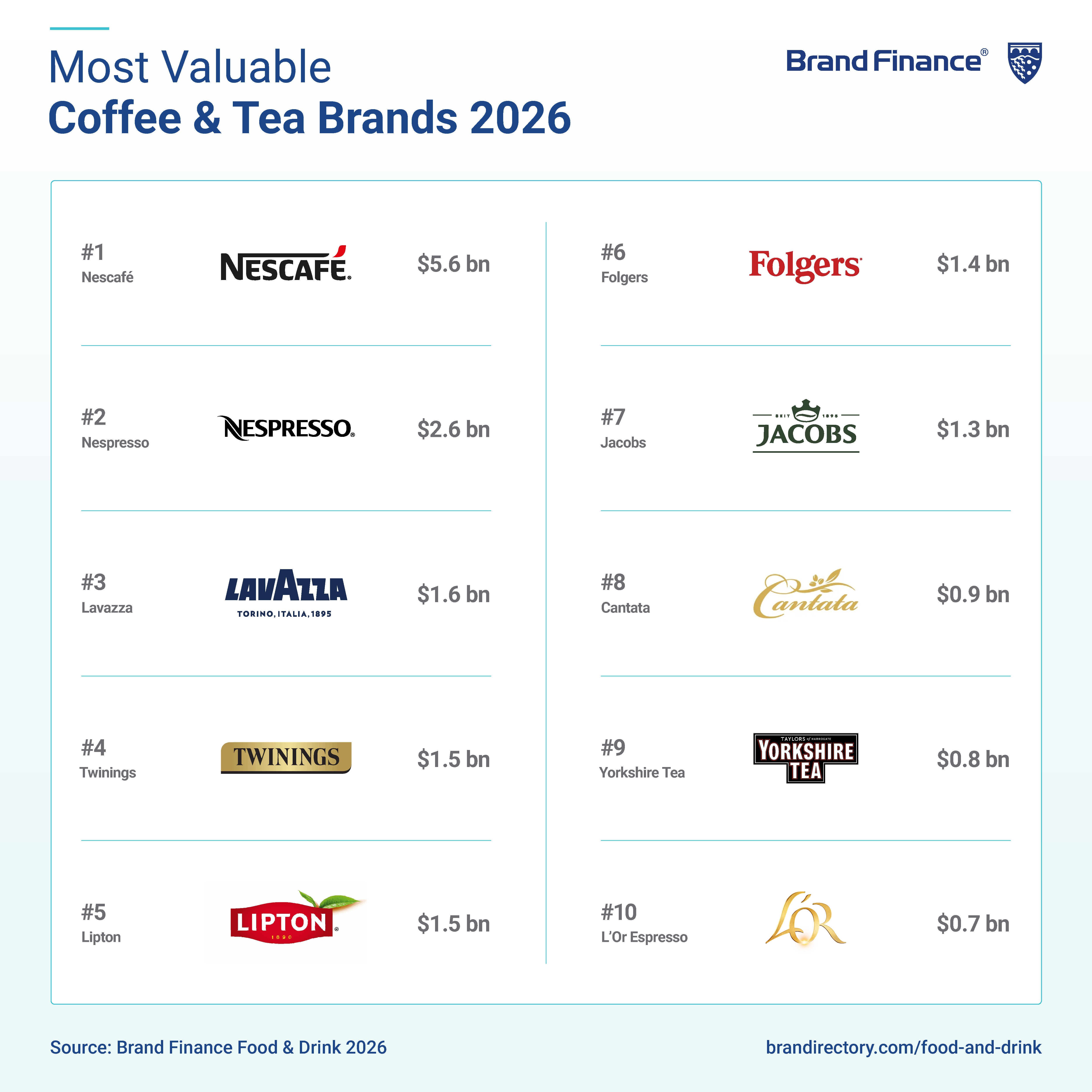
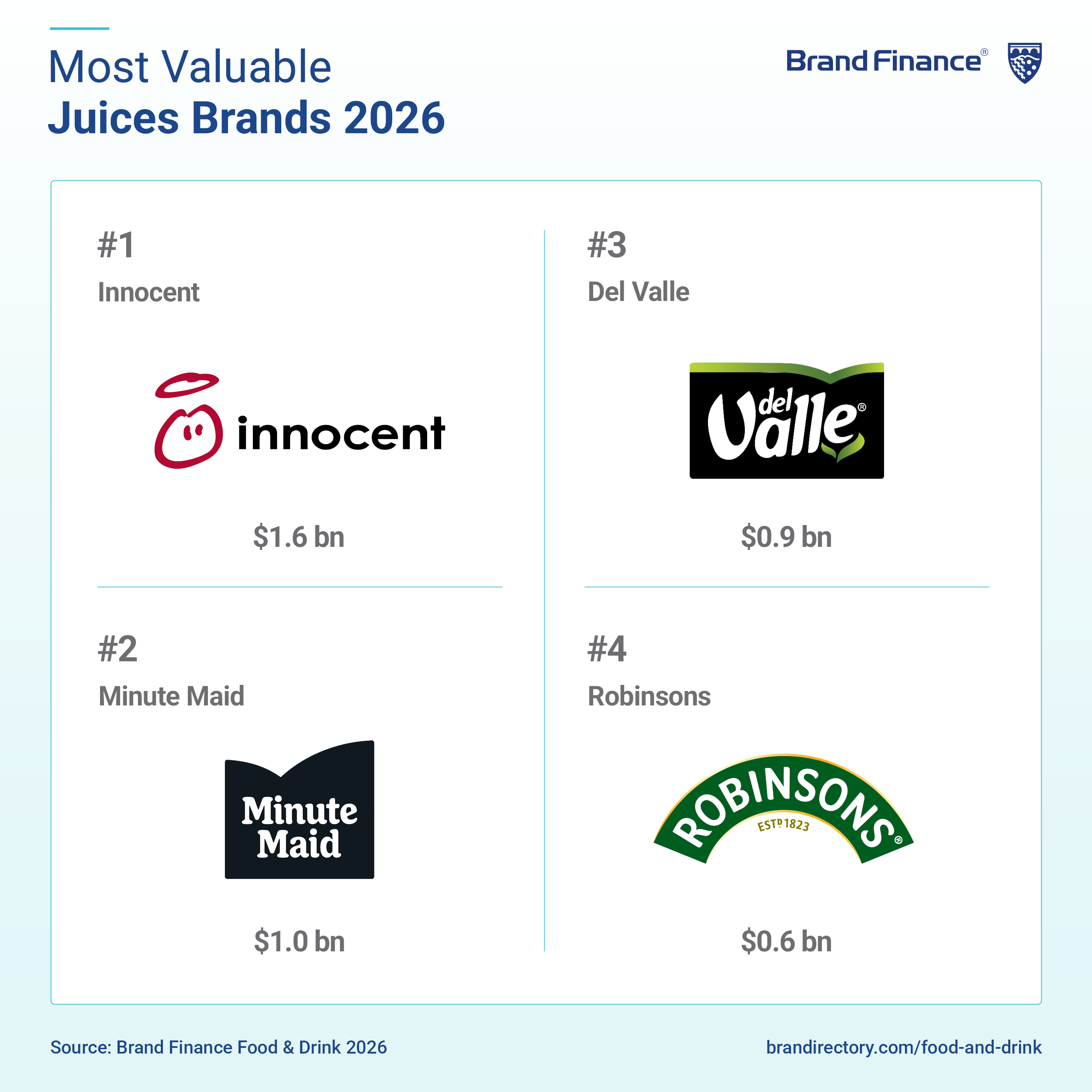
The global food and drinks sector records a combined brand value of USD448.7 billion in 2026, as growth across food, non-alcoholic drinks, and dairy brands continues despite a shift away from inflation-led price increases. The world’s 100 most valuable food brands are collectively worth USD278.3 billion, while the top 50 non-alcoholic drinks brands account for USD170.4 billion and the top 10 dairy brands for USD50.8 billion.
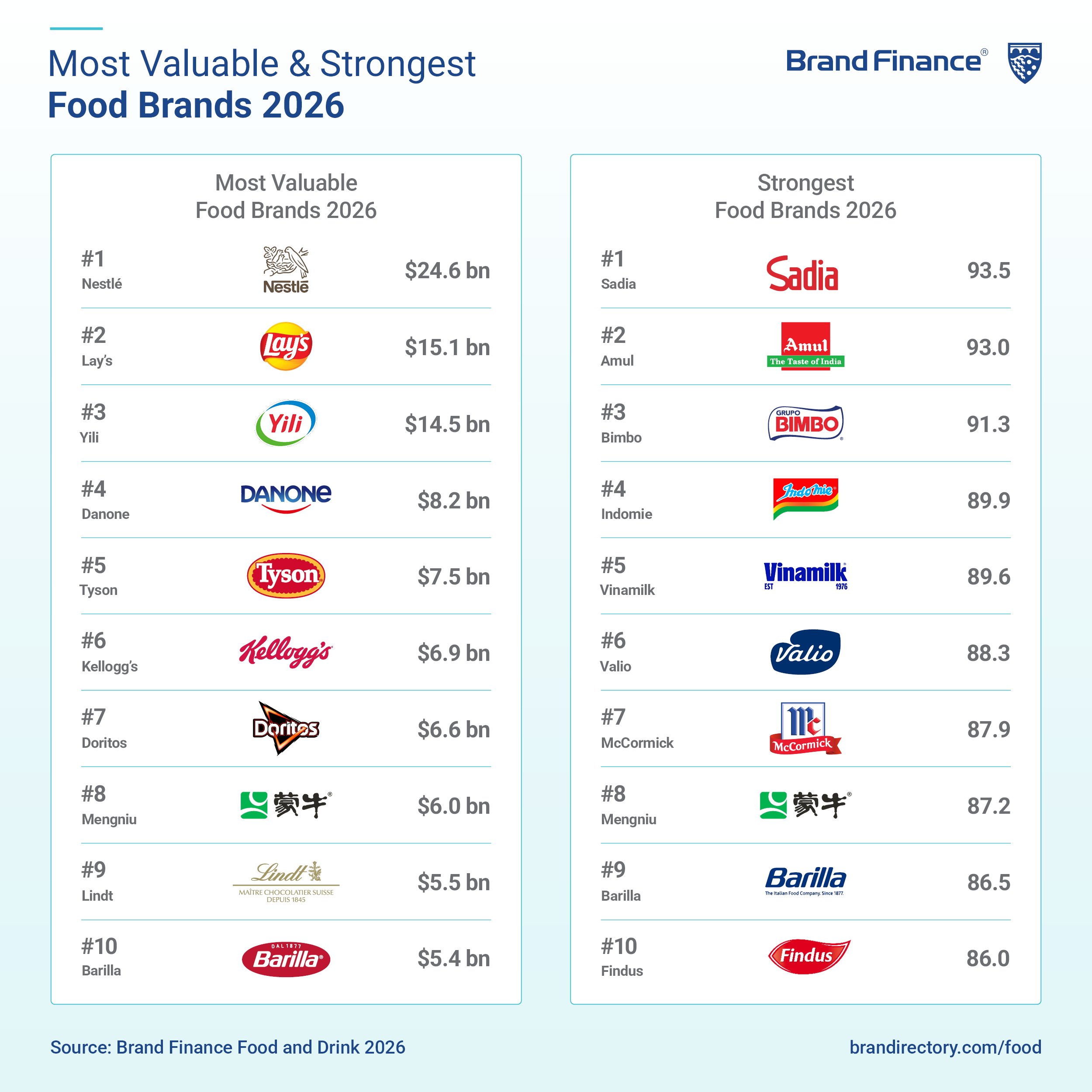
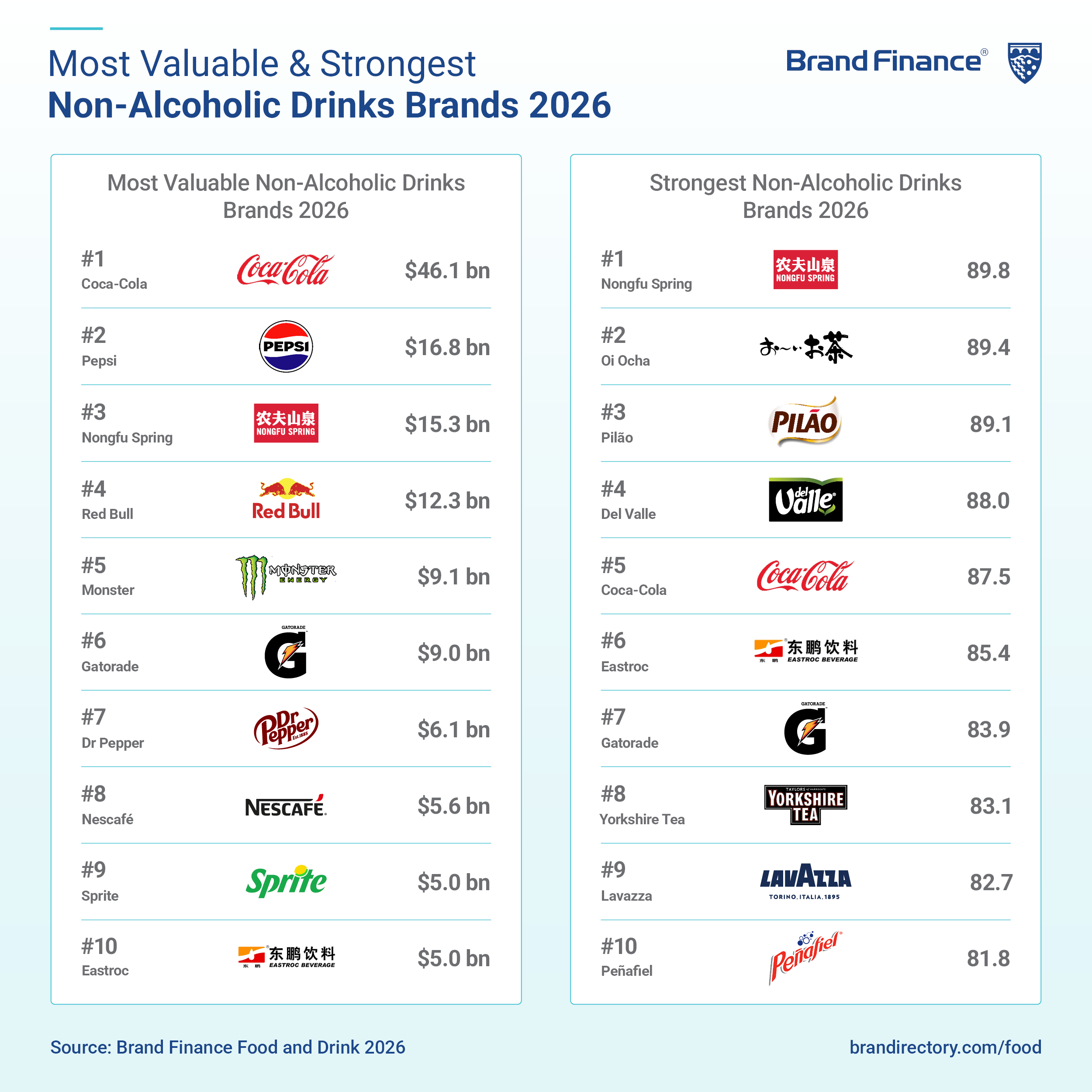
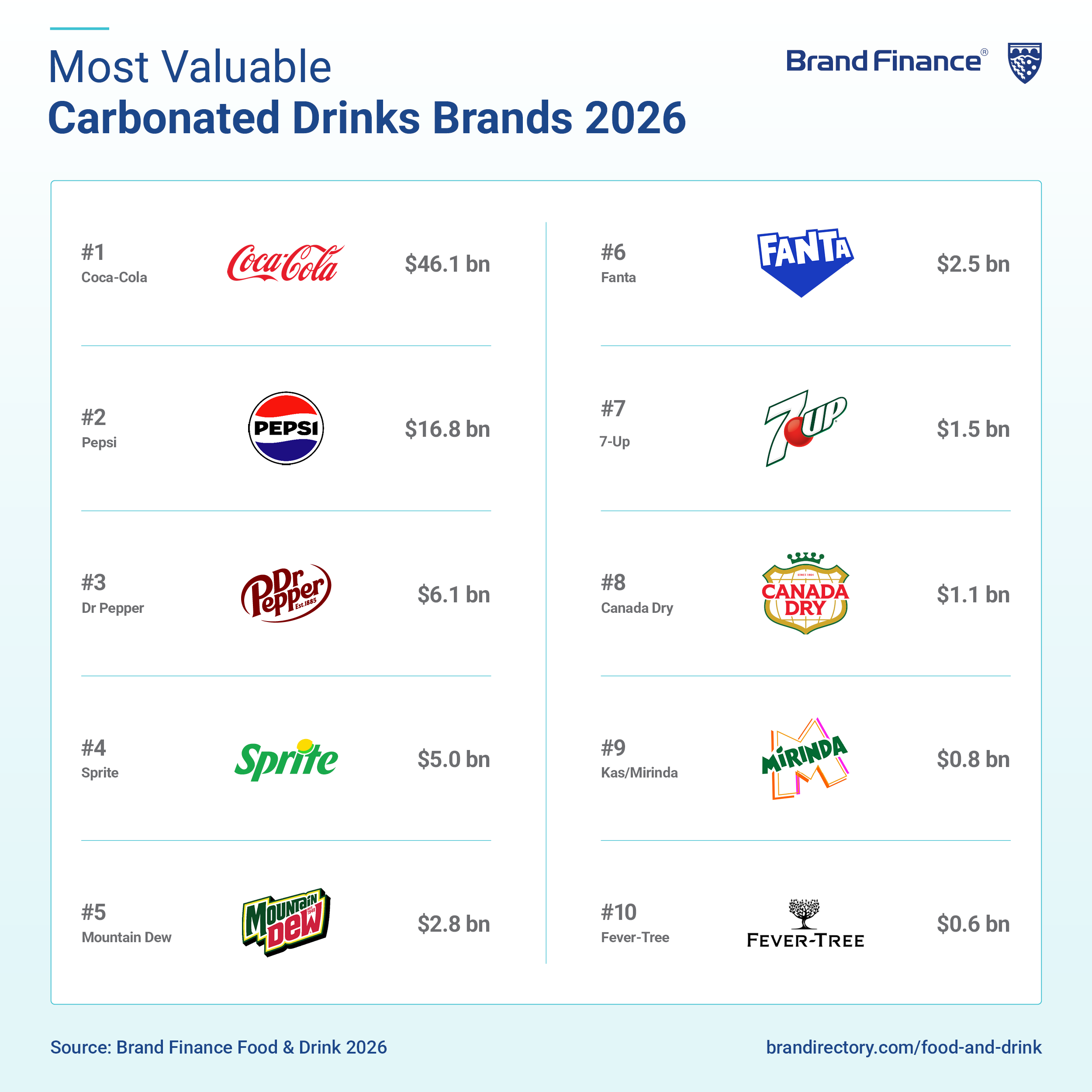
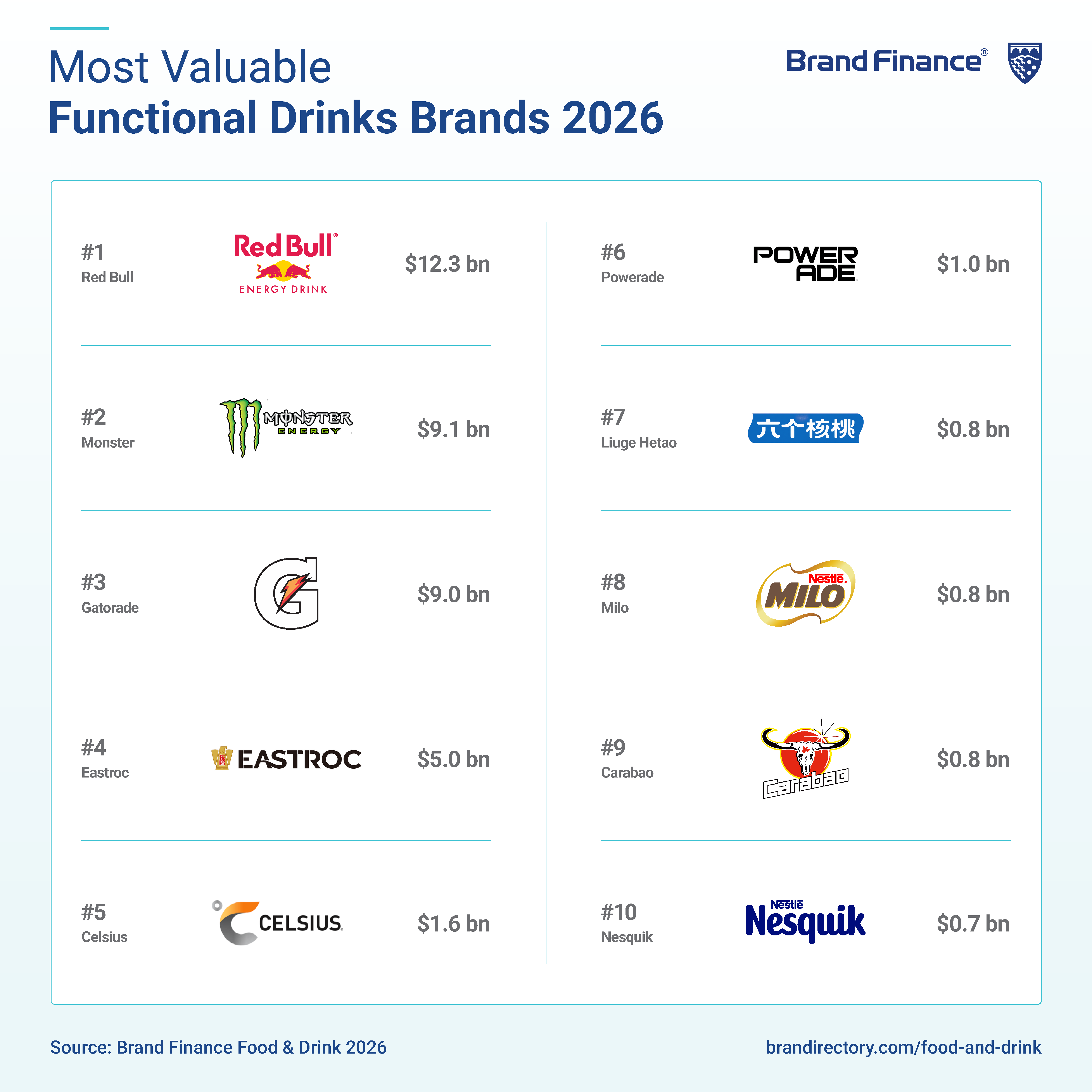
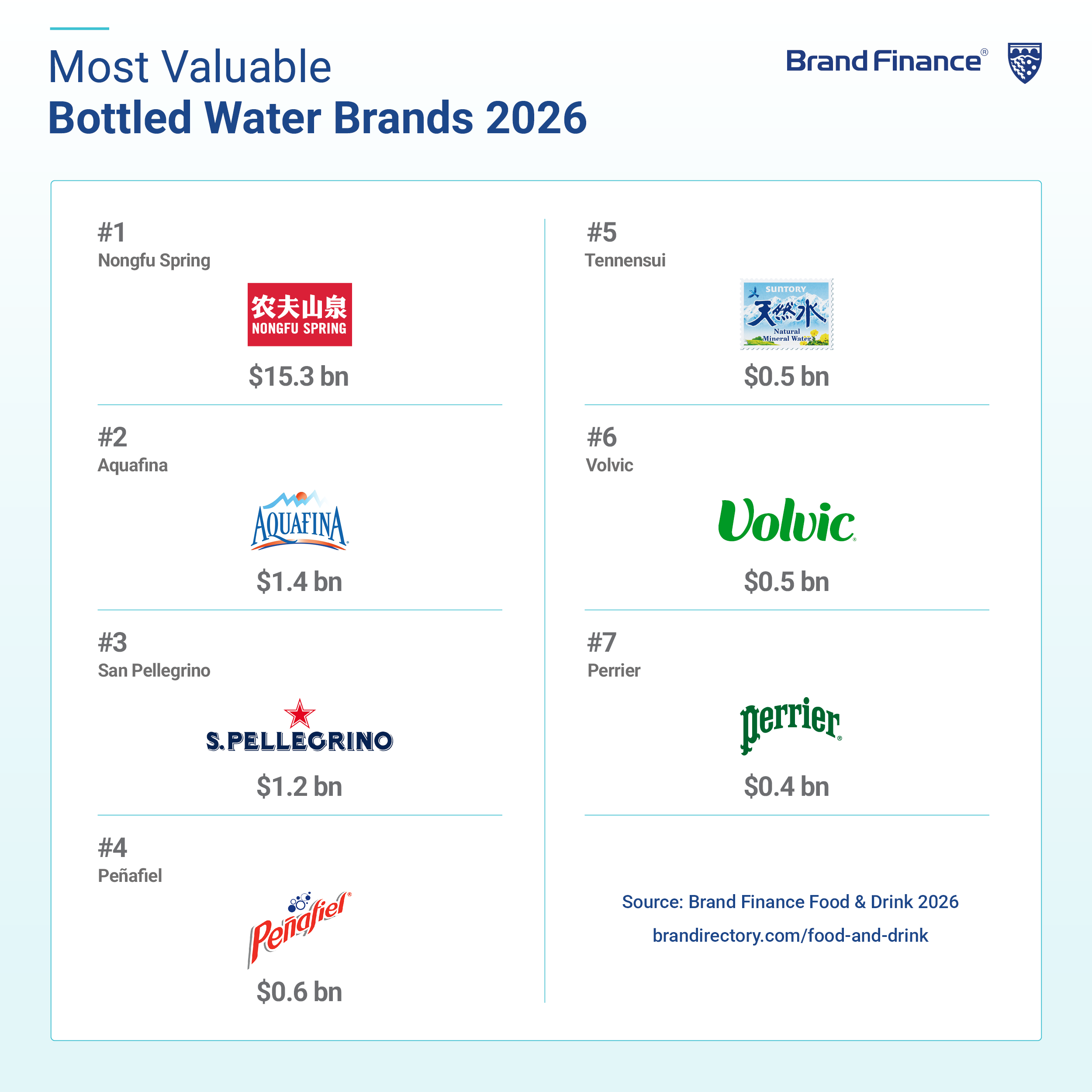
Incumbent category leaders continue to hold their ground: Nestlé remains the world’s most valuable food brand, following a 23% increase in brand value to USD24.6 billion; Coca-Cola retains its position as the world’s most valuable non-alcoholic drinks brand, despite a slight 1% decline in brand value to USD46.1 billion; and Yili remains the world’s most valuable dairy brand, with brand value rising 29% to USD14.5 billion. However, the rankings also highlight shifting dynamics in brand strength and growth, with Nongfu Spring overtaking Coca-Cola as the world’s strongest non-alcoholic drinks brand, Sadia ranking as the world’s strongest food brand, and Amul leading the dairy ranking for brand strength. Growth is increasingly being driven by innovation, health-led positioning, and portfolio diversification, with Canada Dry emerging as the fastest-growing non-alcoholic drinks brand, Eastroc rising strongly as it expands into electrolyte and functional beverages, and functional drinks now accounting for a combined USD33.4 billion in brand value.




Brand Finance is the world’s leading brand valuation consultancy. Bridging the gap between marketing and finance, Brand Finance evaluates the strength of brands and quantifies their financial value to help organisations make strategic decisions.
Headquartered in London, Brand Finance operates in over 25 countries. Every year, Brand Finance conducts more than 6,000 brand valuations, supported by original market research, and publishes over 100 reports which rank brands across all sectors and countries.
Brand Finance also operates the Global Brand Equity Monitor, conducting original market research annually on 6,000 brands, surveying more than 175,000 respondents across 41 countries and 31 industry sectors. By combining perceptual data from the Global Brand Equity Monitor with data from its valuation database — the largest brand value database in the world — Brand Finance equips ambitious brand leaders with the data, analytics, and the strategic guidance they need to enhance brand and business value.
In addition to calculating brand value, Brand Finance also determines the relative strength of brands through a balanced scorecard of metrics, compliant with ISO 20671.
Brand Finance is a regulated accountancy firm and a committed leader in the standardisation of the brand valuation industry. Brand Finance was the first to be certified by independent auditors as compliant with both ISO 10668 and ISO 20671 and has received the official endorsement of the Marketing Accountability Standards Board (MASB) in the United States.
Brand is defined as a marketing-related intangible asset including, but not limited to, names, terms, signs, symbols, logos, and designs, intended to identify goods, services, or entities, creating distinctive images and associations in the minds of stakeholders, thereby generating economic benefits.
Brand strength is the efficacy of a brand’s performance on intangible measures relative to its competitors. Brand Finance evaluates brand strength in a process compliant with ISO 20671, looking at Marketing Investment, Stakeholder Equity, and the impact of those on Business Performance. The data used is derived from Brand Finance’s proprietary market research programme and from publicly available sources.
Each brand is assigned a Brand Strength Index (BSI) score out of 100, which feeds into the brand value calculation. Based on the score, each brand is assigned a corresponding Brand Rating up to AAA+ in a format similar to a credit rating.
Brand Finance calculates the values of brands in its rankings using the Royalty Relief approach – a brand valuation method compliant with the industry standards set in ISO 10668. It involves estimating the likely future revenues that are attributable to a brand by calculating a royalty rate that would be charged for its use, to arrive at a ‘brand value’ understood as a net economic benefit that a brand owner would achieve by licensing the brand in the open market.
The steps in this process are as follows:
1 Calculate brand strength using a balanced scorecard of metrics assessing Marketing Investment, Stakeholder Equity, and Business Performance. Brand strength is expressed as a Brand Strength Index (BSI) score on a scale of 0 to 100.
2 Determine royalty range for each industry, reflecting the importance of brand to purchasing decisions. In luxury, the maximum percentage is high, while in extractive industry, where goods are often commoditised, it is lower. This is done by reviewing comparable licensing agreements sourced from Brand Finance’s extensive database.
3 Calculate royalty rate. The BSI score is applied to the royalty range to arrive at a royalty rate. For example, if the royalty range in a sector is 0-5% and a brand has a BSI score of 80 out of 100, then an appropriate royalty rate for the use of this brand in the given sector will be 4%.
4 Determine brand-specific revenues by estimating a proportion of parent company revenues attributable to a brand.
5 Determine forecast revenues using a function of historic revenues, equity analyst forecasts, and economic growth rates.
6 Apply the royalty rate to the forecast revenues to derive brand revenues.
7 Discount post-tax brand revenues to a net present value which equals the brand value.
Brand Finance has produced this study with an independent and unbiased analysis. The values derived and opinions presented in this study are based on publicly available information and certain assumptions that Brand Finance used where such data was deficient or unclear. Brand Finance accepts no responsibility and will not be liable in the event that the publicly available information relied upon is subsequently found to be inaccurate. The opinions and financial analysis expressed in the study are not to be construed as providing investment or business advice. Brand Finance does not intend the study to be relied upon for any reason and excludes all liability to any body, government, or organisation.
The data presented in this study form part of Brand Finance's proprietary database, are provided for the benefit of the media, and are not to be used in part or in full for any commercial or technical purpose without written permission from Brand Finance.