


New Brand Finance data shows DBS remains ASEAN’s most valuable brand at $18.6 billion, while Singapore’s 88 ranked brands account for 27% of the region’s top 500 brands
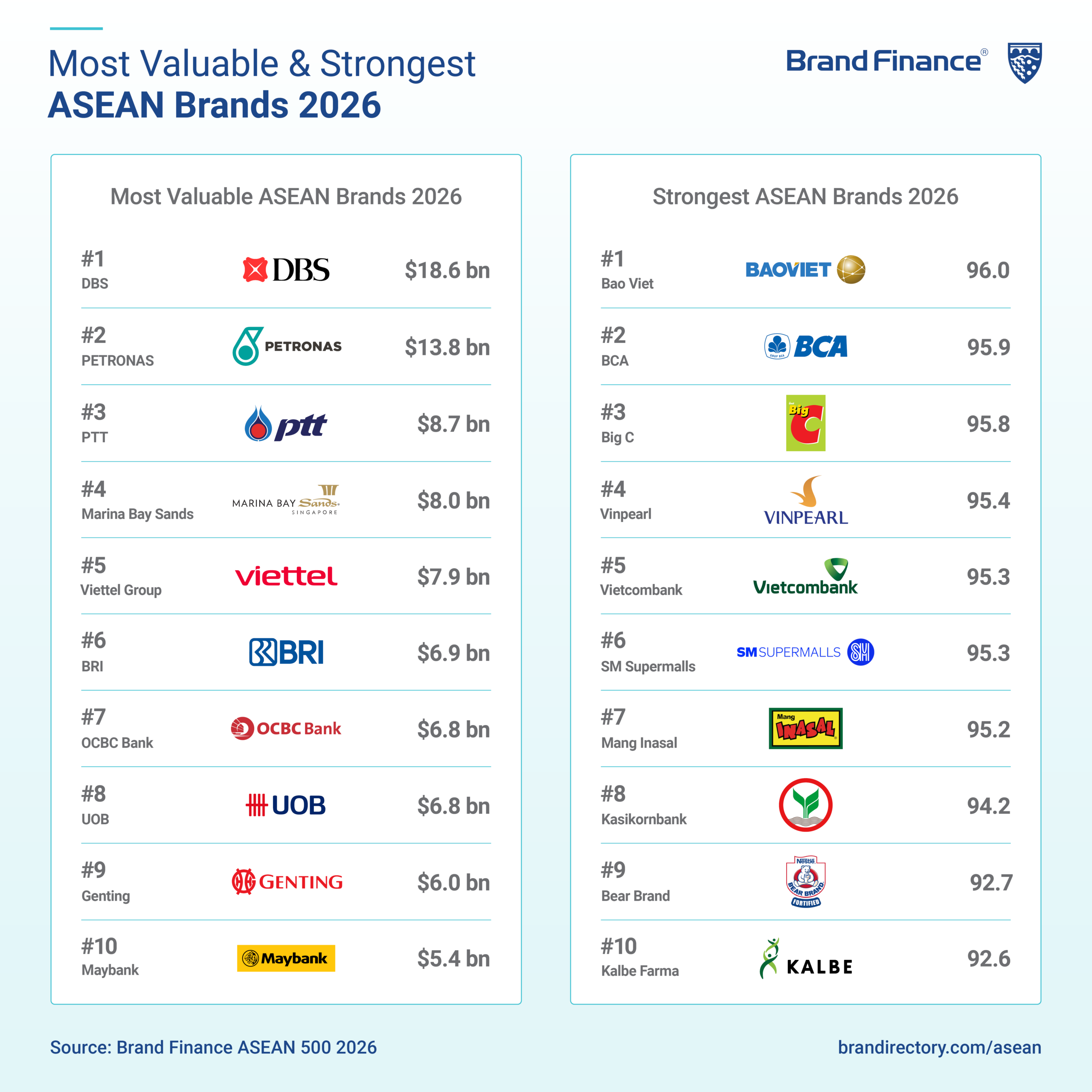
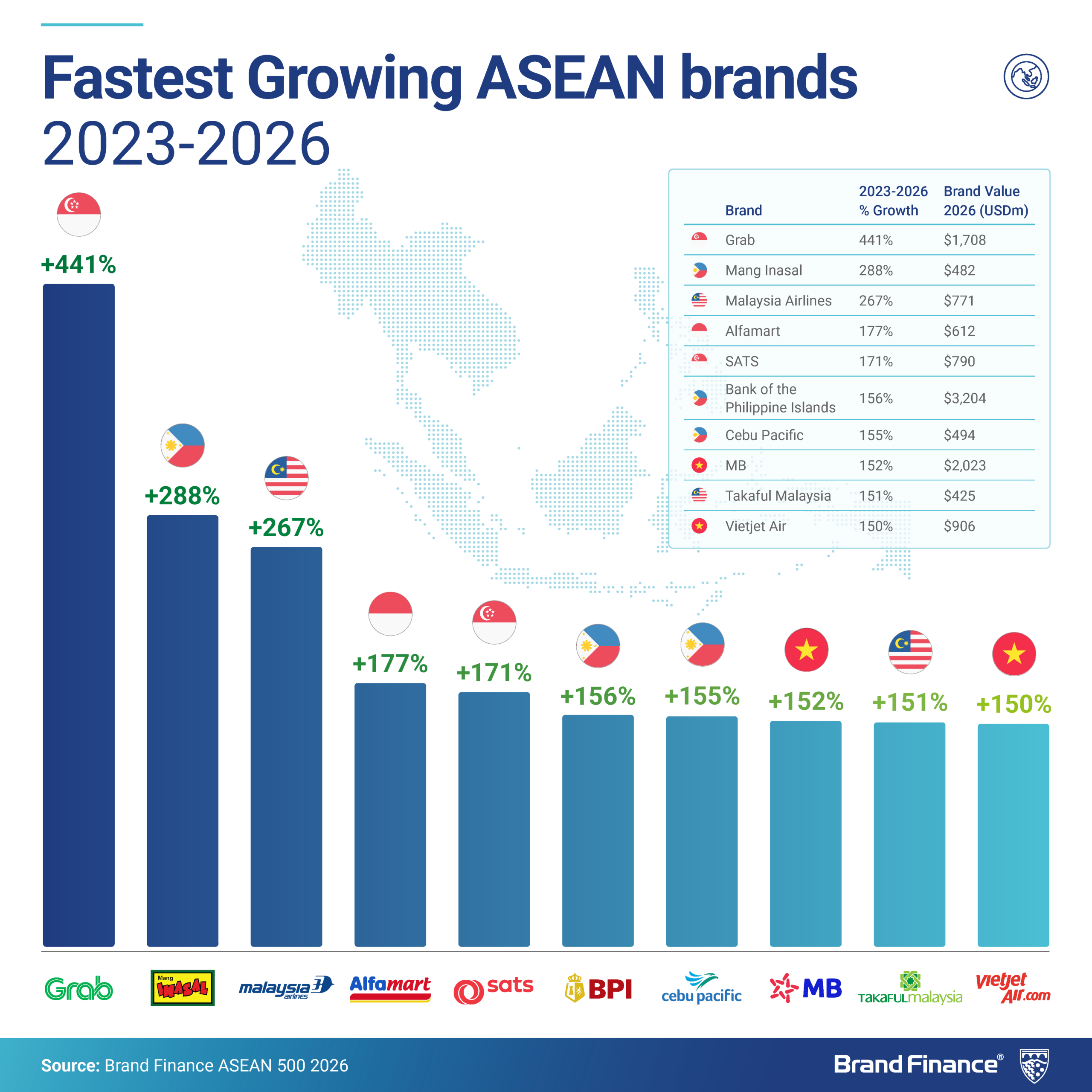
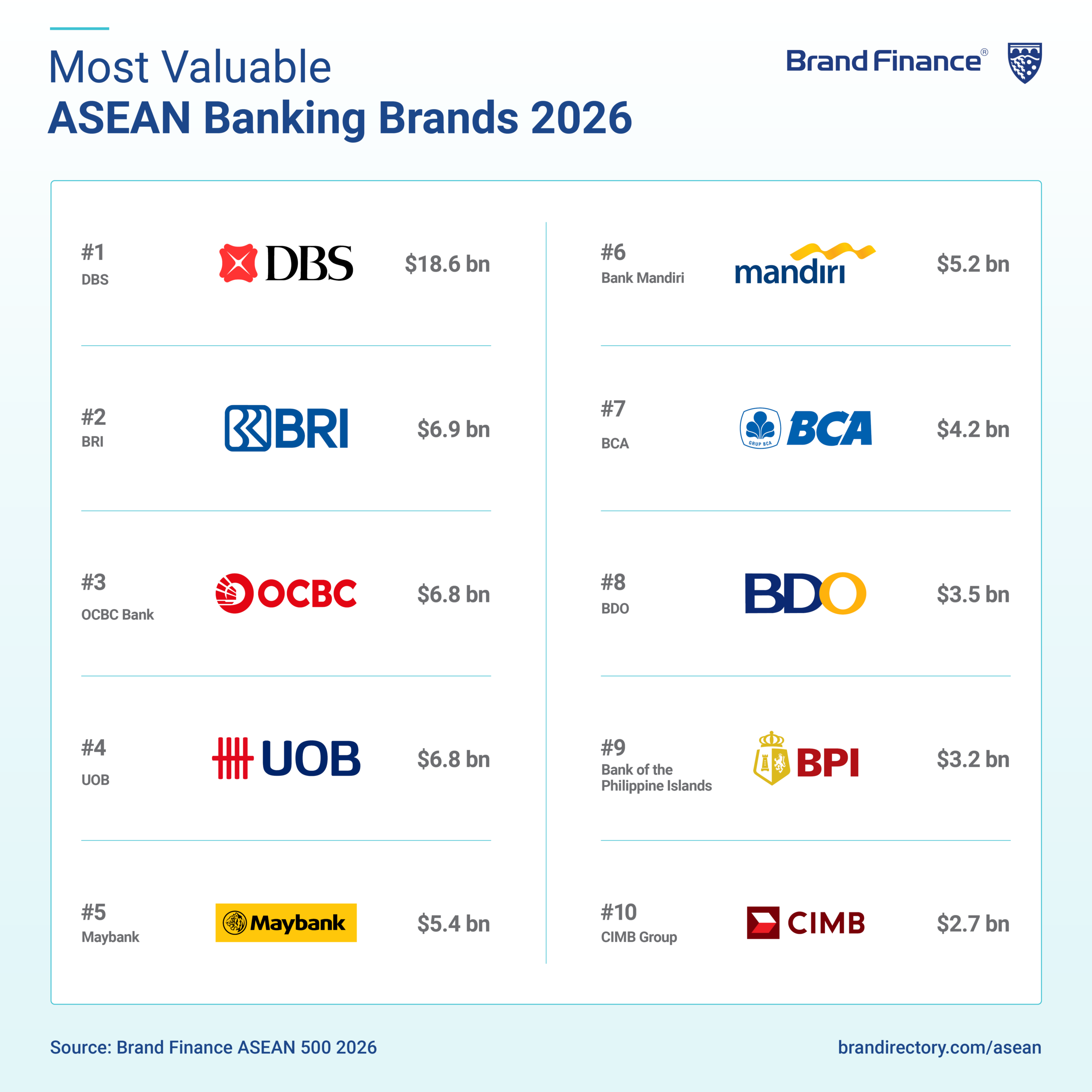
SINGAPORE, 30 October 2026 – Singapore leads ASEAN by total brand value, with 88 of its brands now worth USD84.1 billion, according to the ASEAN 500 2026 report from Brand Finance, the world's leading brand valuation consultancy. Grab records the region’s fastest brand value growth over the past three years, surging 441%, while DBS remains ASEAN’s most valuable brand at USD18.6 billion since 2025.
Across ASEAN, the combined value of the region’s 500 most valuable brands rose 8% to USD315.6 billion in 2026. Singapore’s presence is particularly strong at the upper end of the ranking, with 23 brands in the top 100, more than any other ASEAN market.
Grab (brand value up 53% to USD1.7 billion) climbs from 69th to 41st in the region’s 2026 ranking as the company’s growth how a brand can extend its reach beyond its original category. Having established a strong presence in ride-hailing and food delivery, Grab has expanded into financial services, including payments, lending and digital banking. In addition, Grab noted a Brand Strength Index (BSI) score of 76.4/100 and an AA+ brand strength rating. Its continued expansion demonstrates how brand strength can support growth beyond a business’s established markets and services, creating opportunities to increase brand value.
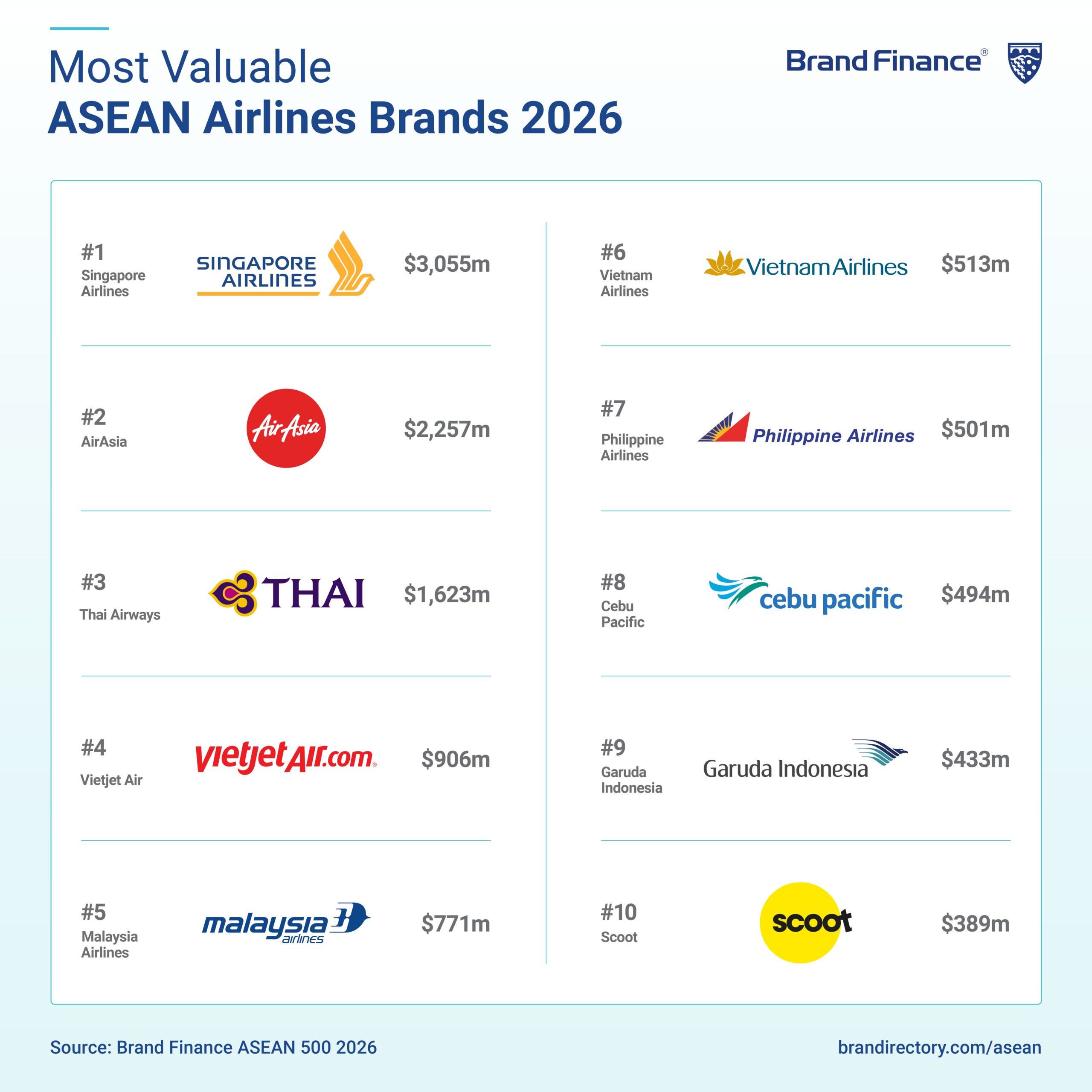
Growth in regional travel is supporting Singapore’s aviation and travel brands, as ASEAN airline brand value rises 26% to USD11.3 billion. Singapore Airlines (brand value up 12% to USD3.1 billion) remains ASEAN’s most valuable airline brand, while Changi Airport (brand value up 16% to USD889 million) is the region’s most valuable and strongest airport brand, with a BSI score of 91.2/100 and an AAA+ rating. Scoot (brand value up 9% to USD389 million) also records growth.
The gains extend across the aviation ecosystem as SATS (brand value up 15% to USD790 million) rises from 101st to 93rd, emerging as ASEAN’s fifth-fastest-growing brand over three years (brand value up 171% since 2023). SIA Engineering (brand value up 31% to USD245 million) climbs 30 places to 213th this year.
Travel demand is also benefiting Agoda (brand value up 19% to USD1.8 billion), which rises from 50th to 39th as travel bookings increasingly cross-national borders.
Alex Haigh, Managing Director, Brand Finance Asia Pacific, commented:
“Twenty-three of ASEAN’s 100 most valuable brands are Singaporean, more than from any other market, which shows that the country’s lead rests on depth rather than a handful of national champions. That depth is clearest in travel, where gains stretch from Singapore Airlines and Changi Airport to ground handling, engineering, hotels and integrated resorts, so the whole ecosystem benefits as regional demand grows. Grab offers a different lesson: by extending a trusted brand from ride-hailing into payments and lending, it has grown its brand value more than fivefold in three years.”
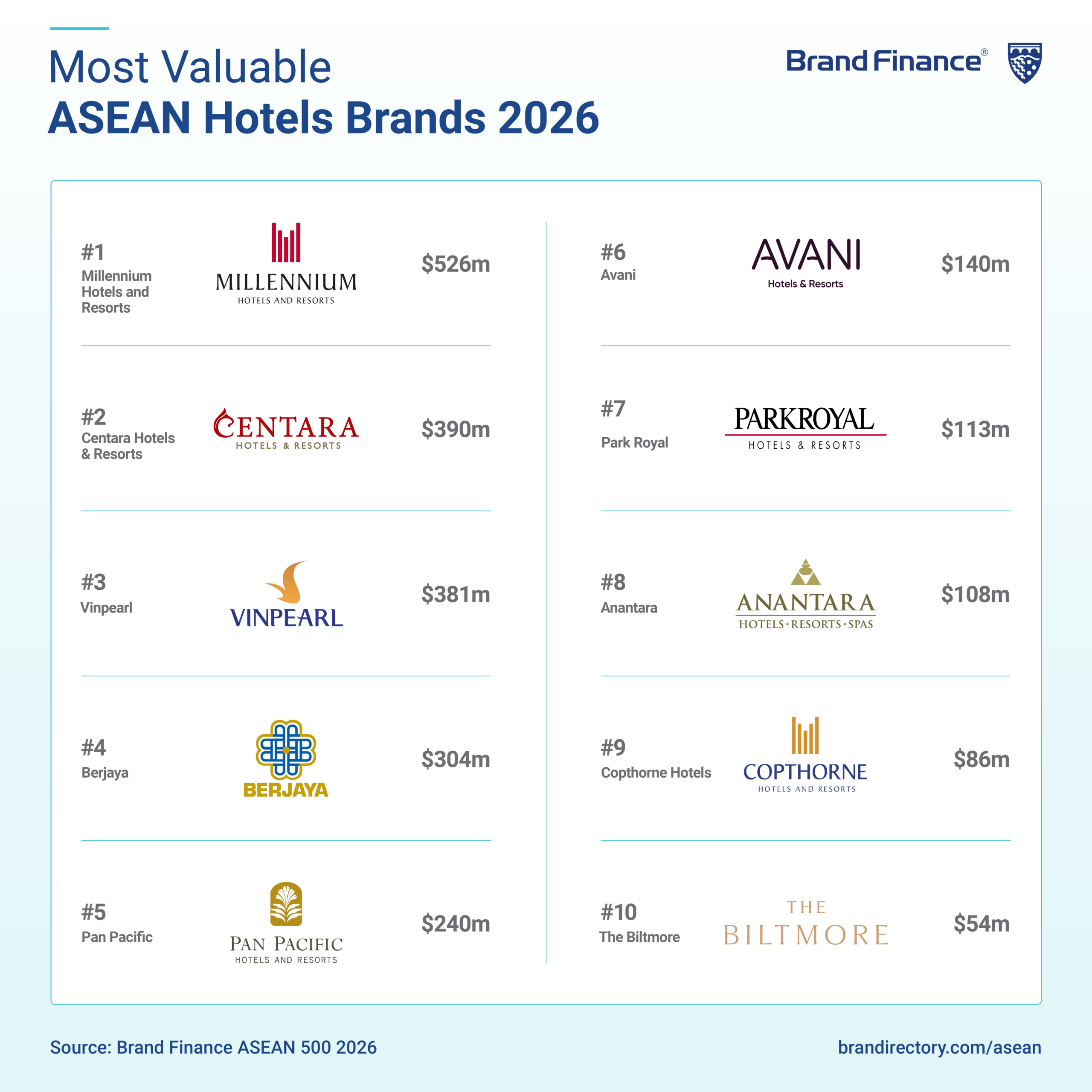
Singapore also leads ASEAN’s hotel sector, with seven of the 13 ranked hotel brands worth USD1.1 billion, or 45% of the sector’s USD2.5 billion total. Millennium Hotels and Resorts (brand value up 25% to USD526 million) is ASEAN’s most valuable hotel brand, climbing from 139th to 125th this year. Pan Pacific (brand value up 7% to USD240 million) is the region’s third-strongest hotel brand, with a BSI score of 79.3/100 and an AA+ brand strength rating.
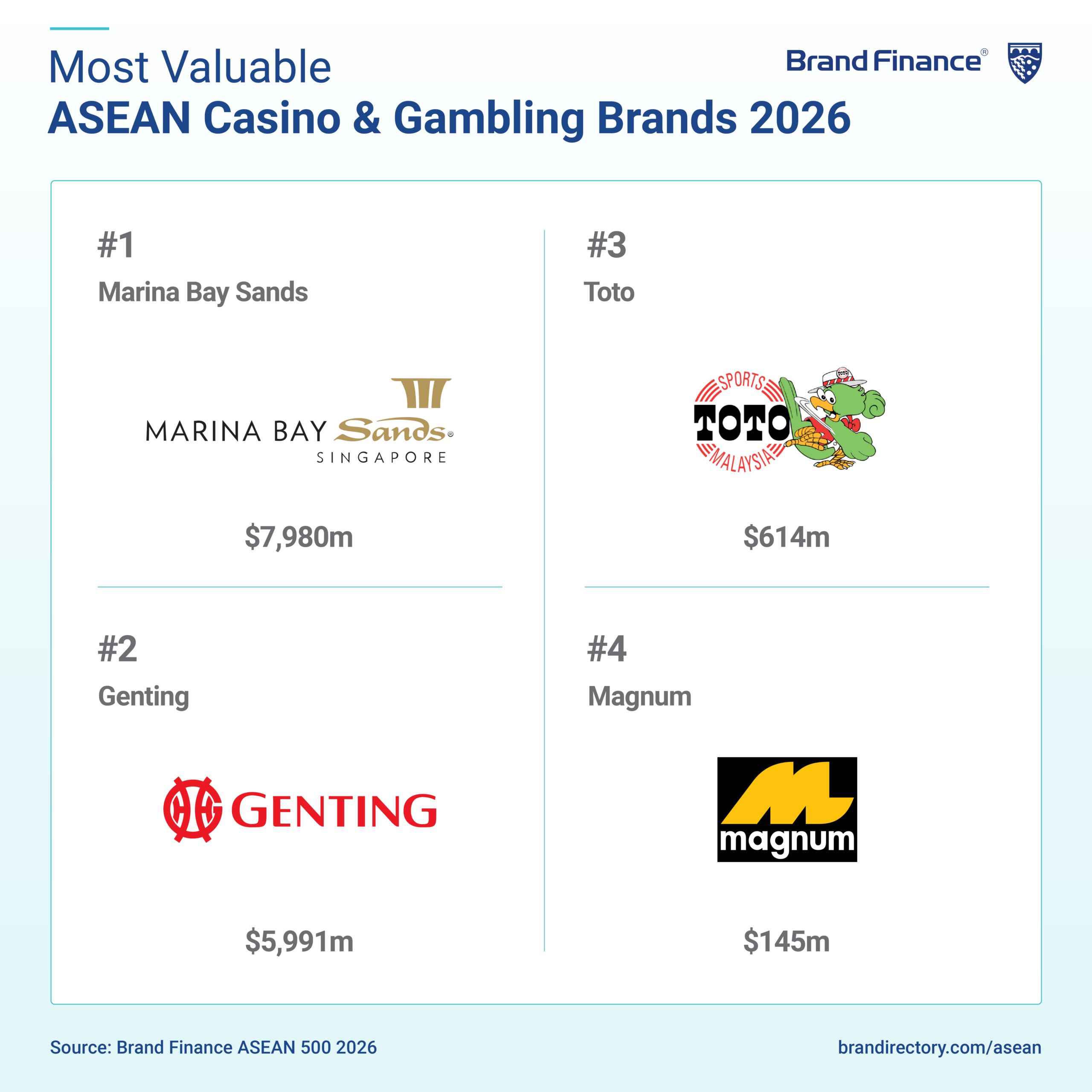
Marina Bay Sands (brand value up 35% to USD8 billion) rises from eighth to fourth among ASEAN’s most valuable brands, adding USD2.1 billion, the largest absolute brand value gain in the 2026 ranking. Its planned USD8 billion resort and entertainment development supports Singapore’s push for higher-value tourism.
Beyond tourism, TeleChoice International is ASEAN’s fastest-growing brand in 2026, with brand value surging 288% to USD53 million and placing 431st. The Singapore-based group operates across consumer technology, enterprise digitalisation and telecommunications infrastructure.
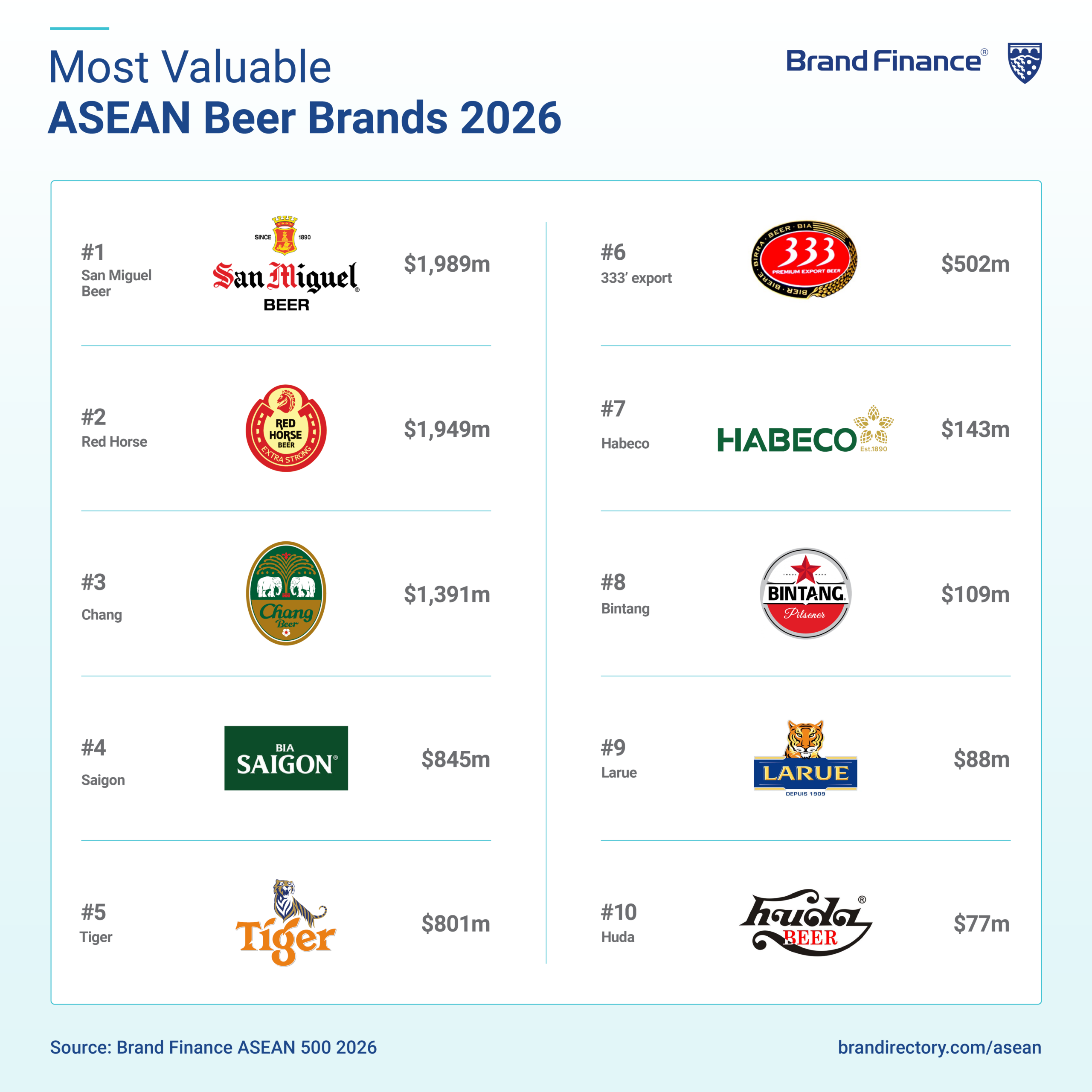
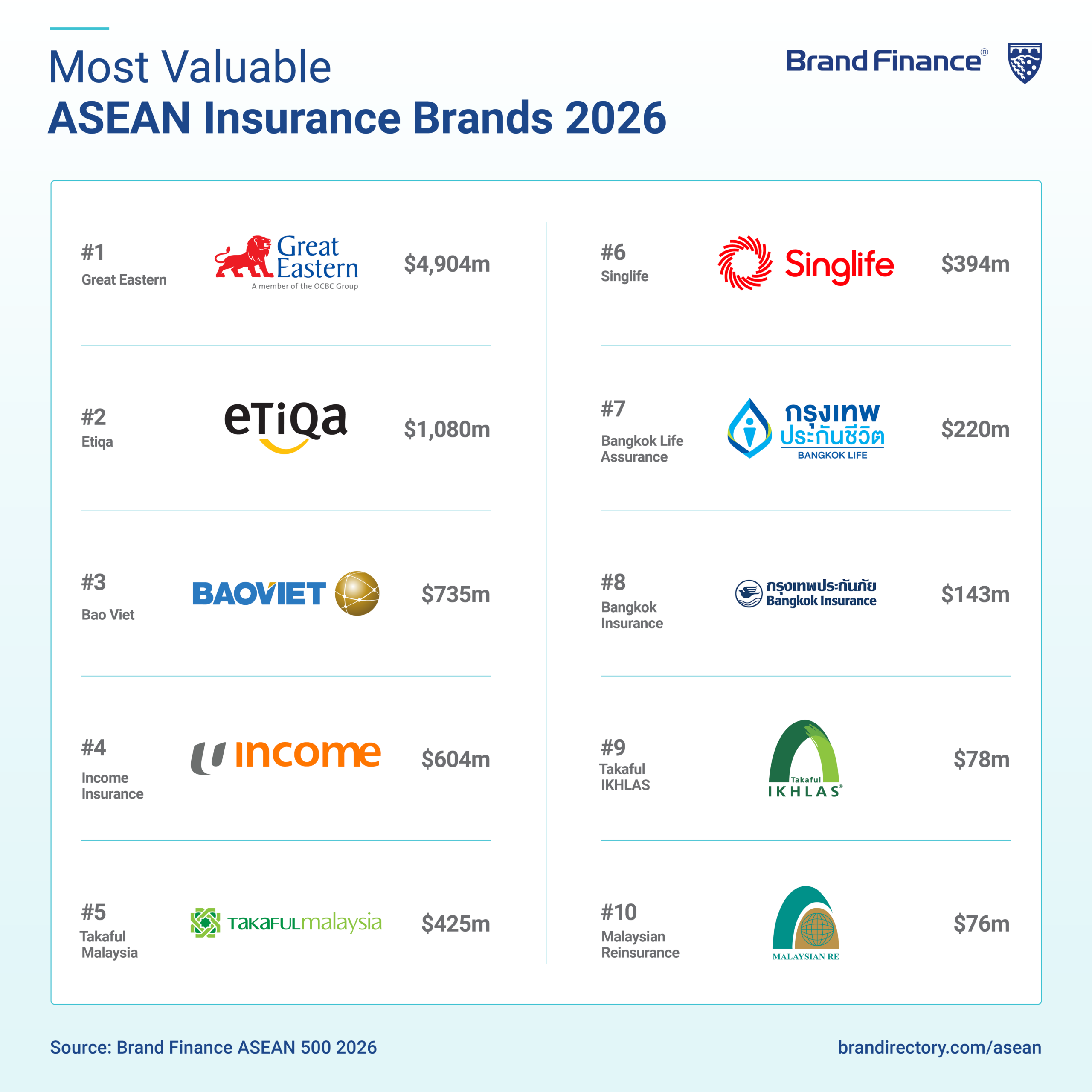
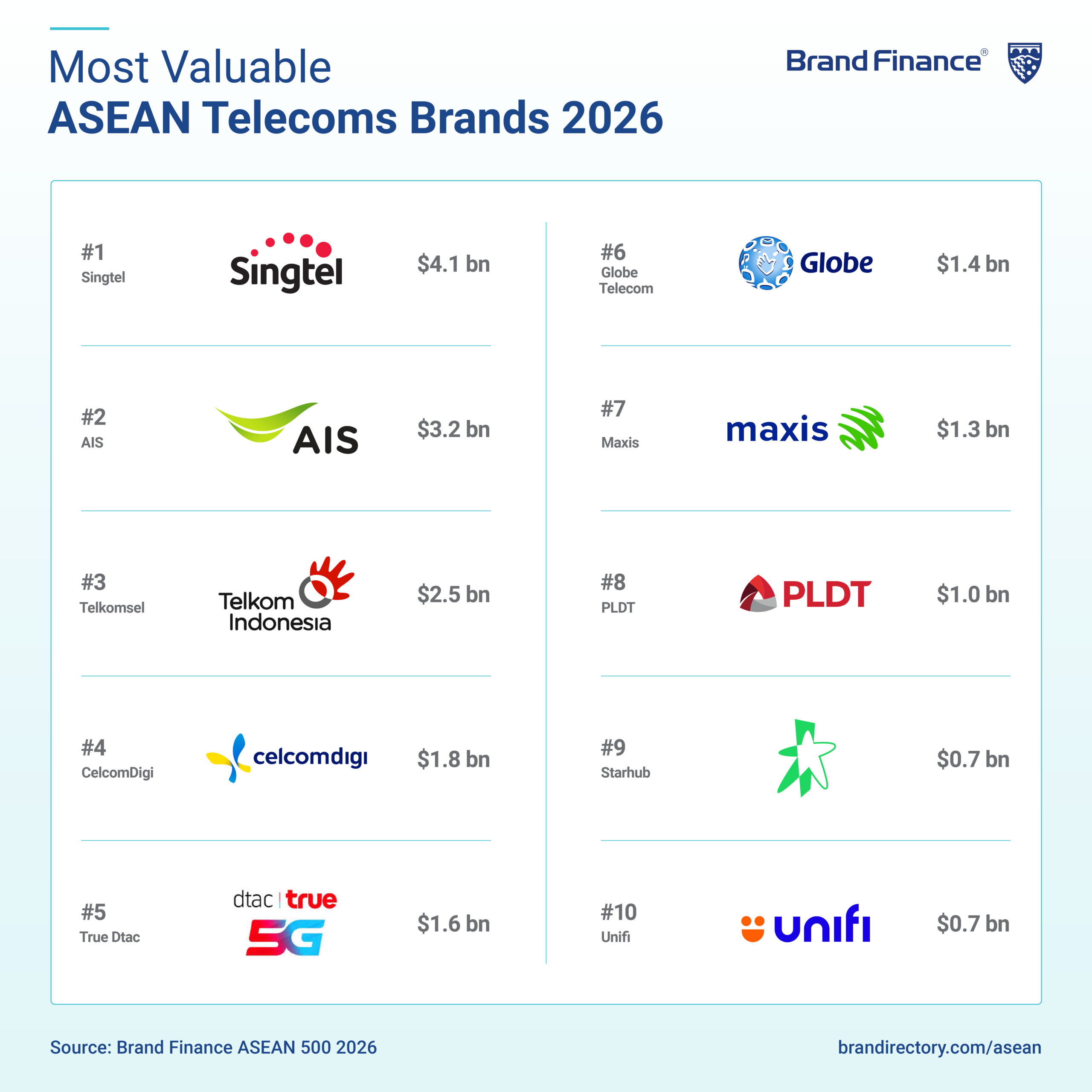
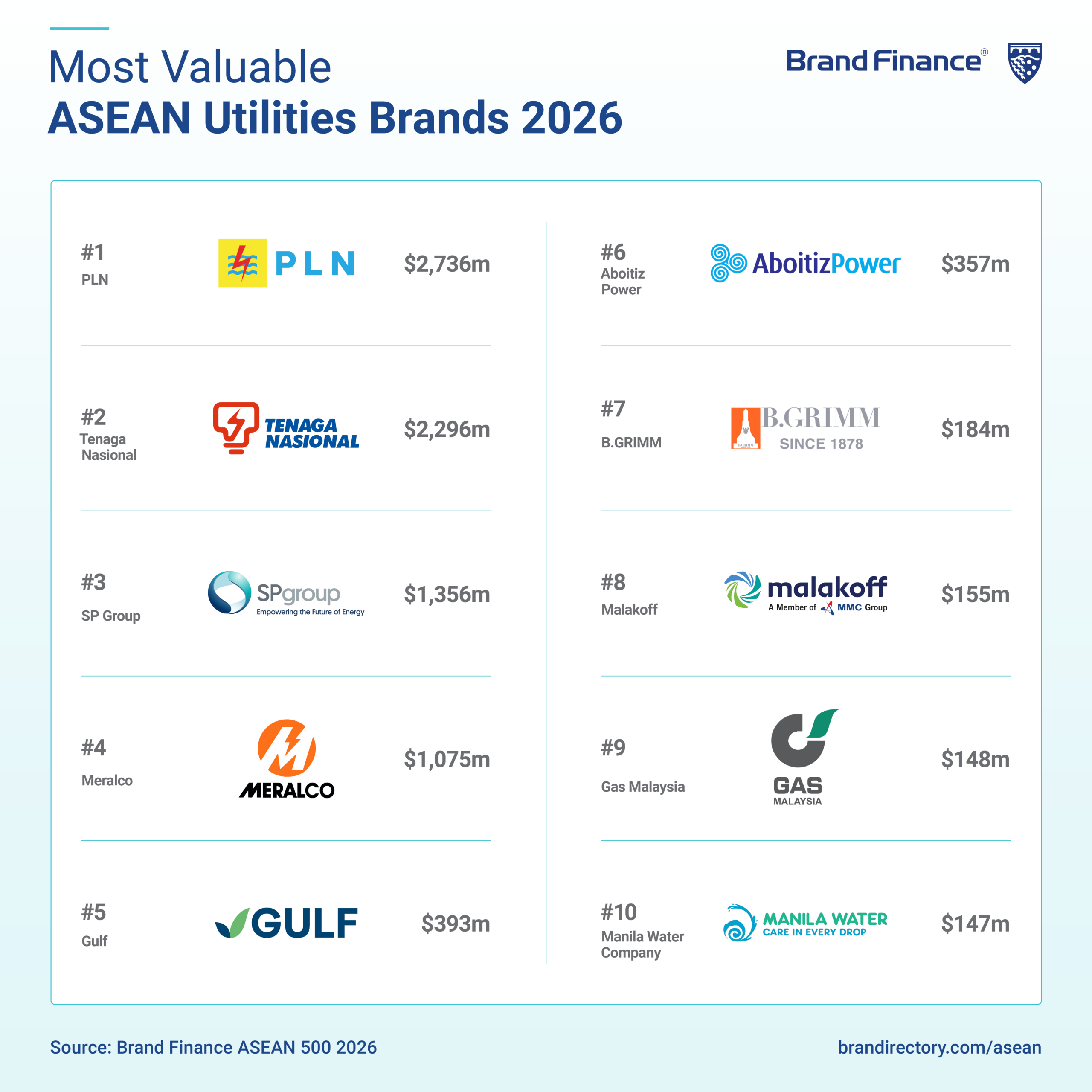
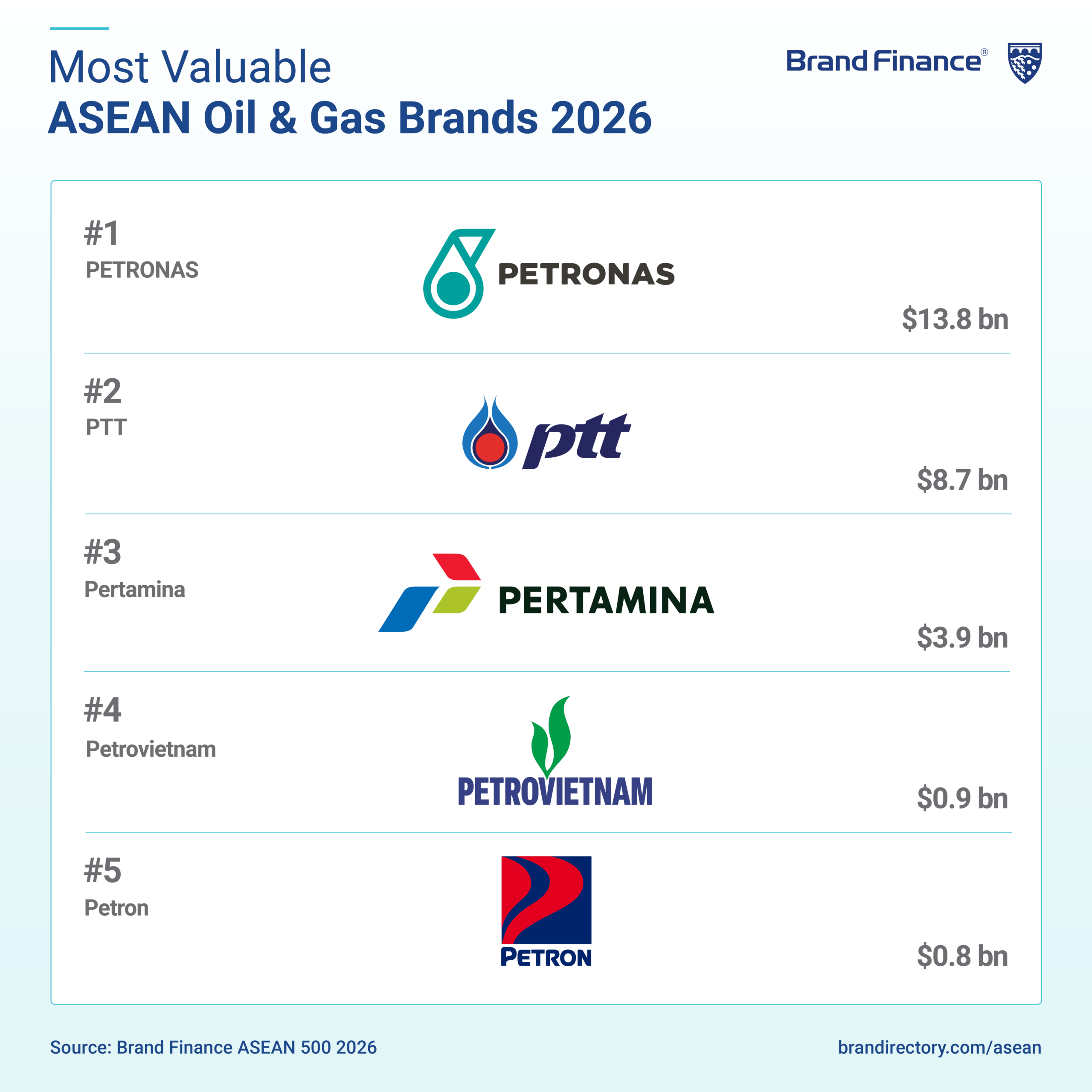
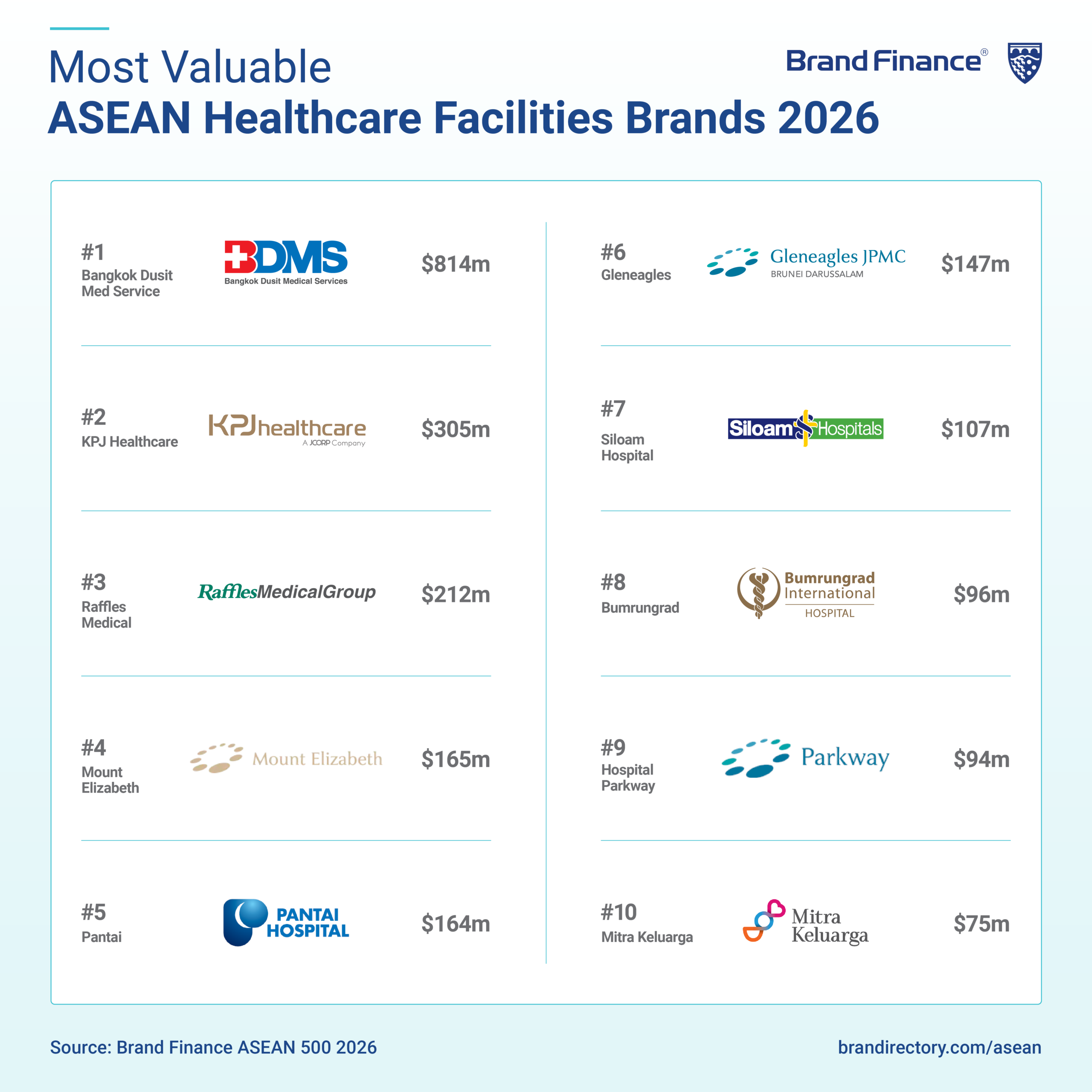
Other notable Singaporean brands featured in the ASEAN 500 2026 report include:


Brand Finance is the world’s leading brand valuation consultancy. Bridging the gap between marketing and finance, Brand Finance evaluates the strength of brands and quantifies their financial value to help organisations make strategic decisions.
Headquartered in London, Brand Finance operates in over 25 countries. Every year, Brand Finance conducts more than 6,000 brand valuations, supported by original market research, and publishes over 100 reports which rank brands across all sectors and countries.
Brand Finance also operates the Global Brand Equity Monitor, conducting original market research annually on 6,000 brands, surveying more than 175,000 respondents across 41 countries and 31 industry sectors. By combining perceptual data from the Global Brand Equity Monitor with data from its valuation database — the largest brand value database in the world — Brand Finance equips ambitious brand leaders with the data, analytics, and the strategic guidance they need to enhance brand and business value.
In addition to calculating brand value, Brand Finance also determines the relative strength of brands through a balanced scorecard of metrics, compliant with ISO 20671.
Brand Finance is a regulated accountancy firm and a committed leader in the standardisation of the brand valuation industry. Brand Finance was the first to be certified by independent auditors as compliant with both ISO 10668 and ISO 20671 and has received the official endorsement of the Marketing Accountability Standards Board (MASB) in the United States.
Brand is defined as a marketing-related intangible asset including, but not limited to, names, terms, signs, symbols, logos, and designs, intended to identify goods, services, or entities, creating distinctive images and associations in the minds of stakeholders, thereby generating economic benefits.
Brand strength is the efficacy of a brand’s performance on intangible measures relative to its competitors. Brand Finance evaluates brand strength in a process compliant with ISO 20671, looking at Marketing Investment, Stakeholder Equity, and the impact of those on Business Performance. The data used is derived from Brand Finance’s proprietary market research programme and from publicly available sources.
Each brand is assigned a Brand Strength Index (BSI) score out of 100, which feeds into the brand value calculation. Based on the score, each brand is assigned a corresponding Brand Rating up to AAA+ in a format similar to a credit rating.
Brand Finance calculates the values of brands in its rankings using the Royalty Relief approach – a brand valuation method compliant with the industry standards set in ISO 10668. It involves estimating the likely future revenues that are attributable to a brand by calculating a royalty rate that would be charged for its use, to arrive at a ‘brand value’ understood as a net economic benefit that a brand owner would achieve by licensing the brand in the open market.
The steps in this process are as follows:
1 Calculate brand strength using a balanced scorecard of metrics assessing Marketing Investment, Stakeholder Equity, and Business Performance. Brand strength is expressed as a Brand Strength Index (BSI) score on a scale of 0 to 100.
2 Determine royalty range for each industry, reflecting the importance of brand to purchasing decisions. In luxury, the maximum percentage is high, while in extractive industry, where goods are often commoditised, it is lower. This is done by reviewing comparable licensing agreements sourced from Brand Finance’s extensive database.
3 Calculate royalty rate. The BSI score is applied to the royalty range to arrive at a royalty rate. For example, if the royalty range in a sector is 0-5% and a brand has a BSI score of 80 out of 100, then an appropriate royalty rate for the use of this brand in the given sector will be 4%.
4 Determine brand-specific revenues by estimating a proportion of parent company revenues attributable to a brand.
5 Determine forecast revenues using a function of historic revenues, equity analyst forecasts, and economic growth rates.
6 Apply the royalty rate to the forecast revenues to derive brand revenues.
7 Discount post-tax brand revenues to a net present value which equals the brand value.
Brand Finance has produced this study with an independent and unbiased analysis. The values derived and opinions presented in this study are based on publicly available information and certain assumptions that Brand Finance used where such data was deficient or unclear. Brand Finance accepts no responsibility and will not be liable in the event that the publicly available information relied upon is subsequently found to be inaccurate. The opinions and financial analysis expressed in the study are not to be construed as providing investment or business advice. Brand Finance does not intend the study to be relied upon for any reason and excludes all liability to any body, government, or organisation.
The data presented in this study form part of Brand Finance's proprietary database, are provided for the benefit of the media, and are not to be used in part or in full for any commercial or technical purpose without written permission from Brand Finance.
