Brand Financeの最新データ:日本の保険ブランドが世界の保険業界で433億米ドルを占める
東京、2026年6月16日 — 世界有数のブランド評価コンサルティング会社Brand Financeによる最新のInsurance 100 2026レポートによると、日本の保険ブランドは8ブランドがランクインし、力強い世界的プレゼンスを維持し続けている。これらのブランドは合計433億米ドルのブランド価値を生み出しており、ランキング総額6,067億米ドルの約7%を占めている。
パフォーマンスが少数の保険会社に集中している市場とは異なり、日本の結果は幅広い改善によって特徴づけられる。今年のランキングに登場した日本の8ブランドすべてが、ブランド価値とブランド強度指数(BSI)スコアの両方で前年比増加を記録しており、顧客認知とブランドの基盤を強化しながら一貫した成長を実現する業界の能力を浮き彫りにしている。
日本のパフォーマンスは、生命保険、退職、保障、貯蓄の各カテゴリーにわたる継続的な需要を反映しており、規律ある実行、確立された顧客関係、長期的価値創造への継続的な投資に支えられている。世界の保険市場がより正常化した事業環境へと移行する中、日本の保険会社は、持続的な成長が財務パフォーマンスとより強力なブランド成果のバランスにますます依存していることを示している。
Nippon Life Insurance(ブランド価値10%増の102億米ドル)は、ブランド価値で世界19位にランクされ、BSIスコア81.2/100を記録し、ブランド強度で世界12位となっている。同ブランドは、日本の生命保険市場における長年の存在感に支えられ、高い認知度、顧客の信頼、幅広い市場リーチから引き続き恩恵を受けている。
Dai-ichi Lifeは僅差で続き、ブランド価値86億米ドルで世界20位にランクされ、Tokio Marineはブランド価値84億米ドルで22位にランクされ、BSIスコア80.5/100を記録し、ブランド強度で世界14位となっている。
日本のパフォーマンスの厚みはランキング全体に及んでおり、Sony Life(ブランド価値10%増の34億米ドル)は世界で最も強いブランドパフォーマンスの一つを記録し、BSIスコア80.8/100、AAA-評価で世界13位にランクされている。Brand Financeの調査はまた、Sony Lifeを、透明性と顧客保護施策への継続的な注力に支えられ、ガバナンス関連サステナビリティにおいて世界で最も強いパフォーマンスを持つと認識されているブランドの一つとして特定している。
調査結果について、Brand Finance アジア太平洋地域マネージングディレクターのアレックス・ヘイグは次のように述べている:
「今年のInsurance 100ランキングにおける日本の結果は、商業的パフォーマンスとブランドの基盤の両方への持続的な投資の価値を浮き彫りにしています。多くの市場で成長が少数の保険会社に集中している一方、ランキングに登場した日本の8ブランドすべてがブランド価値とブランド強度の両方を改善しました。Nippon Life Insurance、Tokio Marine、Sony Lifeのパフォーマンスは、長期的な顧客の信頼、規律ある実行、関連性への継続的な投資が、いかにより強く強靱性のあるブランド成果に転じうるかを示しています。」
レポートに掲載されているその他の注目すべき日本のブランド:
グローバルの洞察
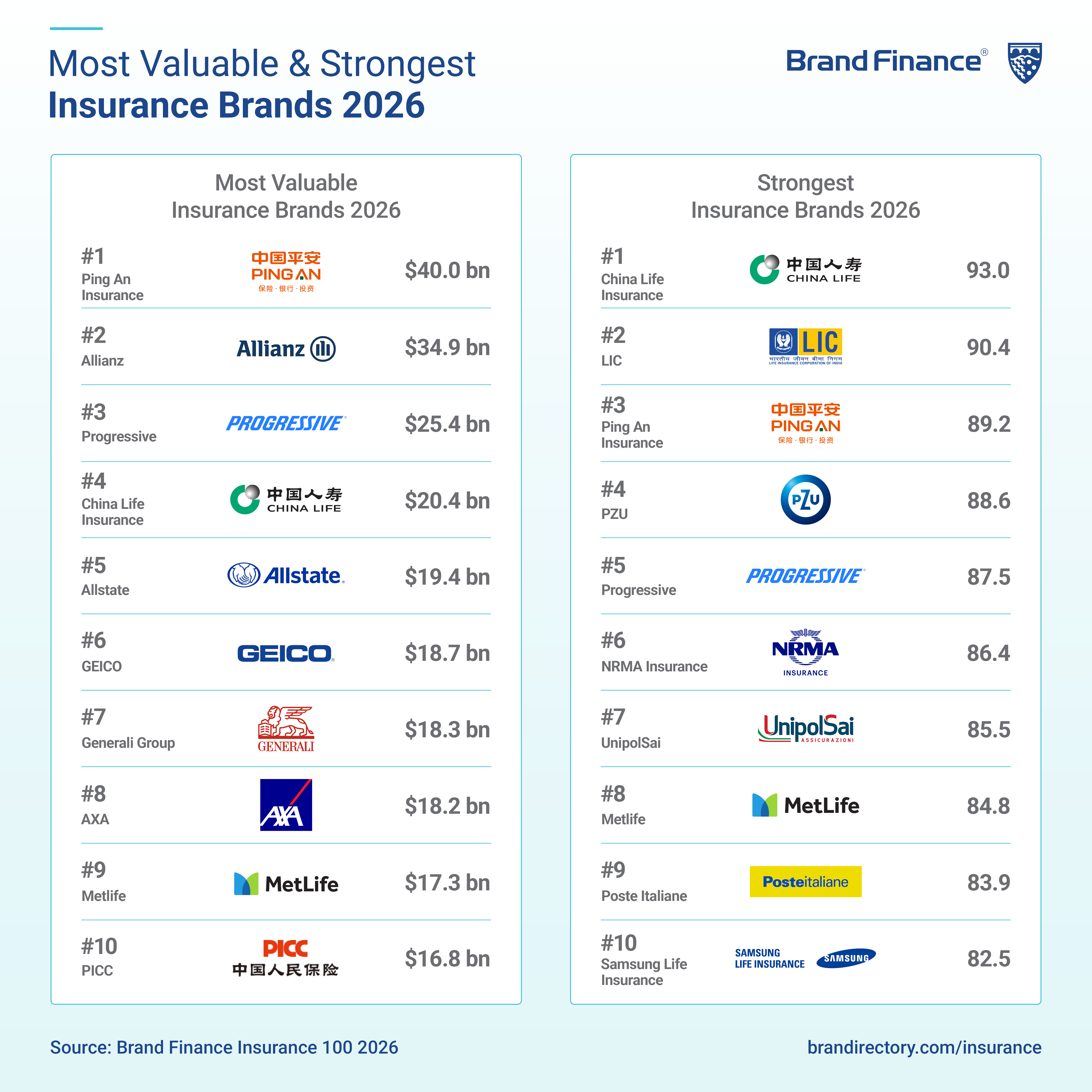
世界全体で、保険業界は過去5年間で最も力強いブランド価値成長を記録し、トップ100の保険ブランドは前年比14%増加して合計6,067億米ドルとなった。料率主導の追い風が和らぎ始める中、信頼、デジタル能力、引受品質、長期的価値創造への投資を継続する保険会社が、引き続き成長を維持するのに最も有利な立場にあると予想される。





Brand Finance is the world’s leading brand valuation consultancy. Bridging the gap between marketing and finance, Brand Finance evaluates the strength of brands and quantifies their financial value to help organisations make strategic decisions.
Headquartered in London, Brand Finance operates in over 25 countries. Every year, Brand Finance conducts more than 6,000 brand valuations, supported by original market research, and publishes over 100 reports which rank brands across all sectors and countries.
Brand Finance also operates the Global Brand Equity Monitor, conducting original market research annually on 6,000 brands, surveying more than 175,000 respondents across 41 countries and 31 industry sectors. By combining perceptual data from the Global Brand Equity Monitor with data from its valuation database — the largest brand value database in the world — Brand Finance equips ambitious brand leaders with the data, analytics, and the strategic guidance they need to enhance brand and business value.
In addition to calculating brand value, Brand Finance also determines the relative strength of brands through a balanced scorecard of metrics, compliant with ISO 20671.
Brand Finance is a regulated accountancy firm and a committed leader in the standardisation of the brand valuation industry. Brand Finance was the first to be certified by independent auditors as compliant with both ISO 10668 and ISO 20671 and has received the official endorsement of the Marketing Accountability Standards Board (MASB) in the United States.
Brand is defined as a marketing-related intangible asset including, but not limited to, names, terms, signs, symbols, logos, and designs, intended to identify goods, services, or entities, creating distinctive images and associations in the minds of stakeholders, thereby generating economic benefits.
Brand strength is the efficacy of a brand’s performance on intangible measures relative to its competitors. Brand Finance evaluates brand strength in a process compliant with ISO 20671, looking at Marketing Investment, Stakeholder Equity, and the impact of those on Business Performance. The data used is derived from Brand Finance’s proprietary market research programme and from publicly available sources.
Each brand is assigned a Brand Strength Index (BSI) score out of 100, which feeds into the brand value calculation. Based on the score, each brand is assigned a corresponding Brand Rating up to AAA+ in a format similar to a credit rating.
Brand Finance calculates the values of brands in its rankings using the Royalty Relief approach – a brand valuation method compliant with the industry standards set in ISO 10668. It involves estimating the likely future revenues that are attributable to a brand by calculating a royalty rate that would be charged for its use, to arrive at a ‘brand value’ understood as a net economic benefit that a brand owner would achieve by licensing the brand in the open market.
The steps in this process are as follows:
1 Calculate brand strength using a balanced scorecard of metrics assessing Marketing Investment, Stakeholder Equity, and Business Performance. Brand strength is expressed as a Brand Strength Index (BSI) score on a scale of 0 to 100.
2 Determine royalty range for each industry, reflecting the importance of brand to purchasing decisions. In luxury, the maximum percentage is high, while in extractive industry, where goods are often commoditised, it is lower. This is done by reviewing comparable licensing agreements sourced from Brand Finance’s extensive database.
3 Calculate royalty rate. The BSI score is applied to the royalty range to arrive at a royalty rate. For example, if the royalty range in a sector is 0-5% and a brand has a BSI score of 80 out of 100, then an appropriate royalty rate for the use of this brand in the given sector will be 4%.
4 Determine brand-specific revenues by estimating a proportion of parent company revenues attributable to a brand.
5 Determine forecast revenues using a function of historic revenues, equity analyst forecasts, and economic growth rates.
6 Apply the royalty rate to the forecast revenues to derive brand revenues.
7 Discount post-tax brand revenues to a net present value which equals the brand value.
Brand Finance has produced this study with an independent and unbiased analysis. The values derived and opinions presented in this study are based on publicly available information and certain assumptions that Brand Finance used where such data was deficient or unclear. Brand Finance accepts no responsibility and will not be liable in the event that the publicly available information relied upon is subsequently found to be inaccurate. The opinions and financial analysis expressed in the study are not to be construed as providing investment or business advice. Brand Finance does not intend the study to be relied upon for any reason and excludes all liability to any body, government, or organisation.
The data presented in this study form part of Brand Finance's proprietary database, are provided for the benefit of the media, and are not to be used in part or in full for any commercial or technical purpose without written permission from Brand Finance.