





Brand Finance sitúa a Mapfre como la única marca española entre las 100 marcas de seguros más valiosas del mundo
MADRID, 28 Mayo 2026 – El valor global de la marca Mapfre aumenta un 14%, alcanzando los 5.300 millones de dólares en 2026, según un nuevo informe de Brand Finance, la consultora líder mundial en valoración de marcas. La aseguradora escaló dos posiciones, situándose este año en el puesto 31 del ranking de las 100 marcas de seguros más valiosas del mundo en 2026, y es la única marca española incluida en el ranking.
Con la escalada de posiciones de Mapfre desde el puesto 33 del 2025 al puesto 31 en 2026, Mapfre recupera la posición 31 que a nivel mundial que ocupaba en el 2018, aunque su mejor posición histórica fue en 2016, cuando Mapfre se situó en el puesto 27 a nivel mundial en el ranking de las 100 marcas de seguros más valiosas del mundo.
El Índice de Fortalecimiento de Marca (BSI) de Mapfre se sitúa en 67,9 sobre 100 (rating de fortaleza AA-), lo que la posiciona como la 43ª marca de seguros más fuerte a nivel mundial. Si bien el estudio de Brand Finance muestra descensos en las puntuaciones de fortaleza de marca en todos los mercados analizados, Mapfre continúa con altas puntuaciones de percepciones en España, obteniendo una puntuación de 10 sobre 10 tanto en aceptación de precios como en preferencia del cliente, y un 9,2 sobre 10 en consideración en España.
Pilar Alonso Ulloa, Managing Director Iberia (España, Portugal) y Sudamérica en Brand Finance comentó:
“Mapfre continúa demostrando una gran solidez de marca y un crecimiento sostenido de su valor en un mercado global de seguros cada vez más competitivo. El desempeño de la marca en España sigue siendo una fortaleza clave, respaldada por niveles excepcionalmente altos de preferencia del cliente y aceptación de precios”.
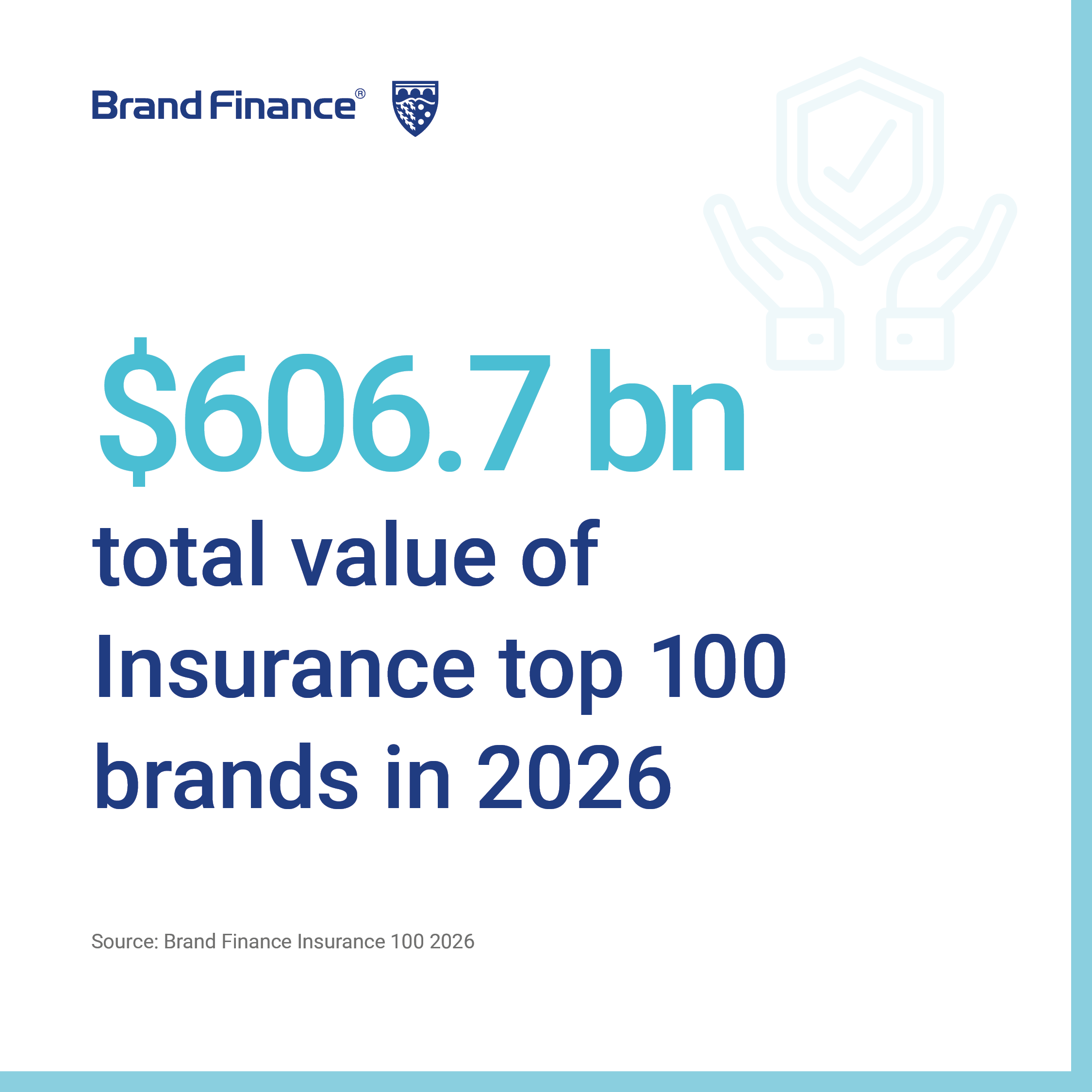
En general, las marcas de seguros están experimentando su mayor crecimiento en cinco años, con las 100 principales del mundo alcanzando un valor total de marca de 606.700 millones de dólares, un 14% más que el año anterior, y con una alta concentración, ya que el Top10 de las marcas más valiosas acaparan el 38% del valor total del sector.
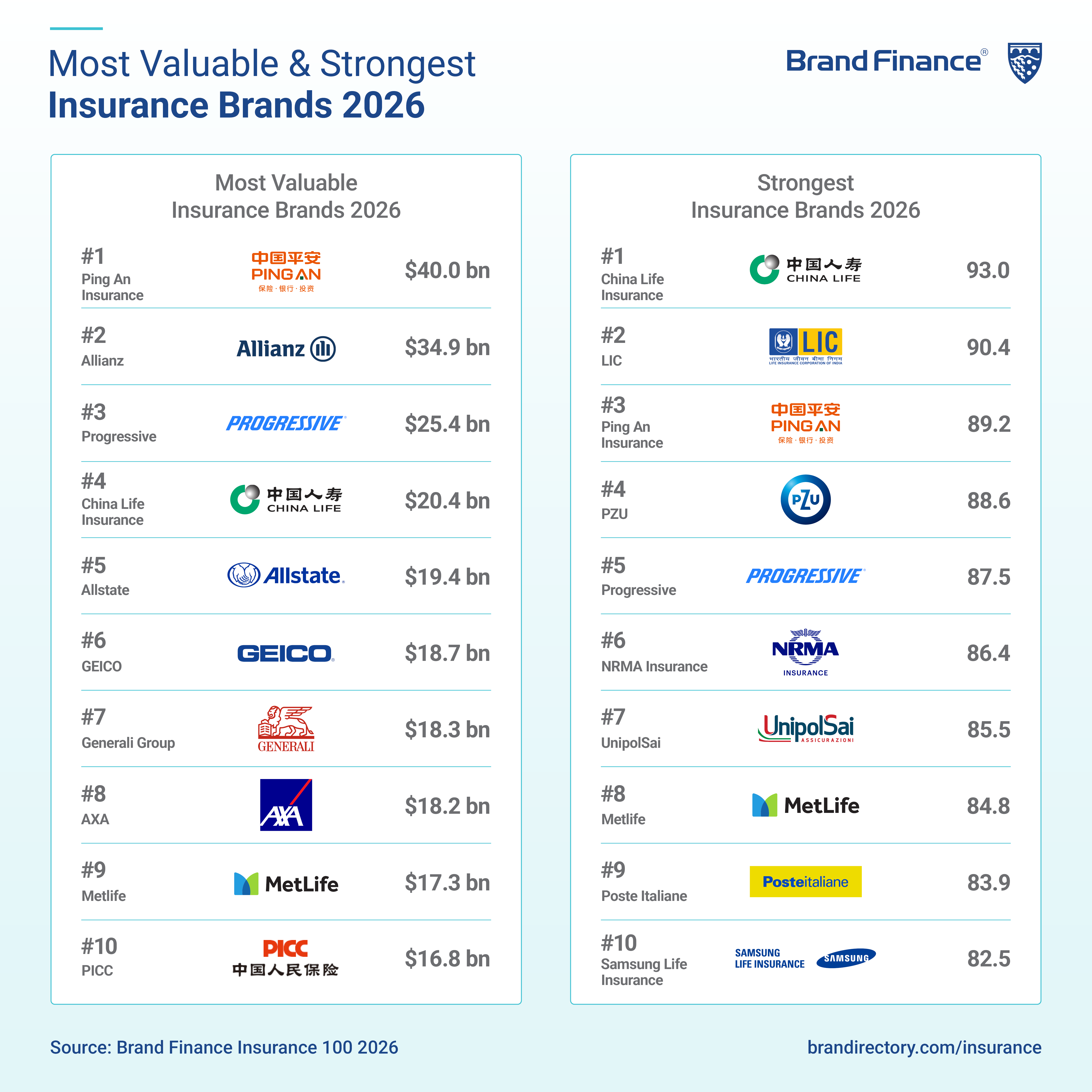
En 2026, Ping An Insurance cumplirá 10 años como la marca más valiosa en el ranking Brand Finance Insurance 100, con un valor de marca que aumentó un 19 % hasta alcanzar los 40.000 millones de dólares, gracias al desempeño constante de su cartera de seguros y a una gestión de riesgos reforzada. China Life Insurance se posiciona como la marca de seguros más sólida a nivel mundial, con una puntuación de 93/100 en el Índice de Fortaleza de Marca (BSI) con un rating de fortaleza AAA.




Brand Finance is the world’s leading brand valuation consultancy. Bridging the gap between marketing and finance, Brand Finance evaluates the strength of brands and quantifies their financial value to help organisations make strategic decisions.
Headquartered in London, Brand Finance operates in over 25 countries. Every year, Brand Finance conducts more than 6,000 brand valuations, supported by original market research, and publishes over 100 reports which rank brands across all sectors and countries.
Brand Finance also operates the Global Brand Equity Monitor, conducting original market research annually on 6,000 brands, surveying more than 175,000 respondents across 41 countries and 31 industry sectors. By combining perceptual data from the Global Brand Equity Monitor with data from its valuation database — the largest brand value database in the world — Brand Finance equips ambitious brand leaders with the data, analytics, and the strategic guidance they need to enhance brand and business value.
In addition to calculating brand value, Brand Finance also determines the relative strength of brands through a balanced scorecard of metrics, compliant with ISO 20671.
Brand Finance is a regulated accountancy firm and a committed leader in the standardisation of the brand valuation industry. Brand Finance was the first to be certified by independent auditors as compliant with both ISO 10668 and ISO 20671 and has received the official endorsement of the Marketing Accountability Standards Board (MASB) in the United States.
Brand is defined as a marketing-related intangible asset including, but not limited to, names, terms, signs, symbols, logos, and designs, intended to identify goods, services, or entities, creating distinctive images and associations in the minds of stakeholders, thereby generating economic benefits.
Brand strength is the efficacy of a brand’s performance on intangible measures relative to its competitors. Brand Finance evaluates brand strength in a process compliant with ISO 20671, looking at Marketing Investment, Stakeholder Equity, and the impact of those on Business Performance. The data used is derived from Brand Finance’s proprietary market research programme and from publicly available sources.
Each brand is assigned a Brand Strength Index (BSI) score out of 100, which feeds into the brand value calculation. Based on the score, each brand is assigned a corresponding Brand Rating up to AAA+ in a format similar to a credit rating.
Brand Finance calculates the values of brands in its rankings using the Royalty Relief approach – a brand valuation method compliant with the industry standards set in ISO 10668. It involves estimating the likely future revenues that are attributable to a brand by calculating a royalty rate that would be charged for its use, to arrive at a ‘brand value’ understood as a net economic benefit that a brand owner would achieve by licensing the brand in the open market.
The steps in this process are as follows:
1 Calculate brand strength using a balanced scorecard of metrics assessing Marketing Investment, Stakeholder Equity, and Business Performance. Brand strength is expressed as a Brand Strength Index (BSI) score on a scale of 0 to 100.
2 Determine royalty range for each industry, reflecting the importance of brand to purchasing decisions. In luxury, the maximum percentage is high, while in extractive industry, where goods are often commoditised, it is lower. This is done by reviewing comparable licensing agreements sourced from Brand Finance’s extensive database.
3 Calculate royalty rate. The BSI score is applied to the royalty range to arrive at a royalty rate. For example, if the royalty range in a sector is 0-5% and a brand has a BSI score of 80 out of 100, then an appropriate royalty rate for the use of this brand in the given sector will be 4%.
4 Determine brand-specific revenues by estimating a proportion of parent company revenues attributable to a brand.
5 Determine forecast revenues using a function of historic revenues, equity analyst forecasts, and economic growth rates.
6 Apply the royalty rate to the forecast revenues to derive brand revenues.
7 Discount post-tax brand revenues to a net present value which equals the brand value.
Brand Finance has produced this study with an independent and unbiased analysis. The values derived and opinions presented in this study are based on publicly available information and certain assumptions that Brand Finance used where such data was deficient or unclear. Brand Finance accepts no responsibility and will not be liable in the event that the publicly available information relied upon is subsequently found to be inaccurate. The opinions and financial analysis expressed in the study are not to be construed as providing investment or business advice. Brand Finance does not intend the study to be relied upon for any reason and excludes all liability to any body, government, or organisation.
The data presented in this study form part of Brand Finance's proprietary database, are provided for the benefit of the media, and are not to be used in part or in full for any commercial or technical purpose without written permission from Brand Finance.