





Data terbaru Brand Finance menunjukkan nilai keseluruhan sektor kini berjumlah $575.4 bilion
LONDON, 23 April 2026 – Sektor automotif global terus mencatat penurunan, menyusut 1% pada 2025 dan 7% lagi pada 2026, dengan jumlah nilai 100 jenama automotif paling bernilai kini mencecah USD575.4 bilion, menurut laporan Automotive Industry 2026 oleh Brand Finance.
Penurunan berterusan ini mencerminkan tekanan yang semakin memuncak dalam industri, daripada lambatnya peralihan ke arah kenderaan elektrik hinggalah kepada persaingan sengit daripada pengeluar China yang semakin berkembang pesat.
Walaupun penggunaan kenderaan elektrik (EV) semakin meningkat, pertumbuhannya tidak seragam seperti yang dijangkakan. Isu seperti kemudahan pengecasan yang masih terhad, kebimbangan terhadap bateri, serta harga yang tinggi membuatkan pengguna lebih berhati-hati. Selain itu, syarikat yang melabur besar dalam EV kini berdepan lebihan inventori dan keuntungan yang semakin tertekan. Ini menunjukkan bahawa jurang antara perancangan dan keadaan sebenar pasaran masih besar.
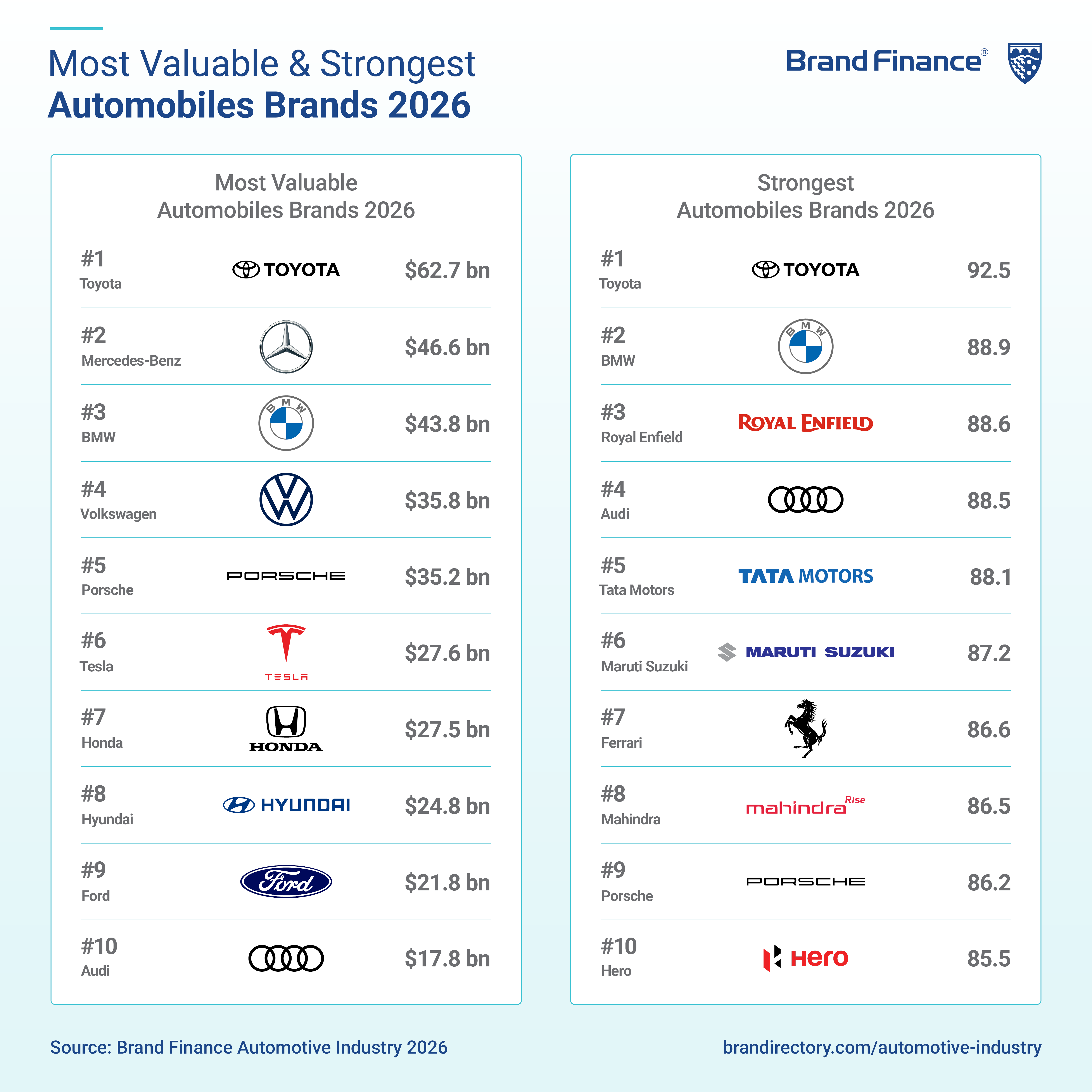
Dalam keadaan ini, Toyota (nilai jenama turun 3% kepada USD62.7 bilion) masih kekal sebagai jenama automotif paling bernilai dan paling kukuh untuk tahun kedua berturut-turut. Kekuatan Toyota datang daripada reputasinya yang dipercayai, jenama yang dikenali ramai, serta jualan global yang stabil, terutama bagi model hibrid . Dengan skor Indeks Kekuatan Jenama (BSI) sebanyak 92.5/100 dan penarafan AAA+, Toyota terus mendapat manfaat daripada pengaruh jenama yang tinggi, dikenali ramai, serta reputasi yang sinonim dengan kebolehpercayaan di pasaran utama termasuk Jepun, China, India, Malaysia, Singapura, Perancis, Sepanyol, Norway, Denmark, dan Australia.
Mercedes-Benz (nilai jenama turun 12% kepada USD46.6 bilion) dan BMW (nilai jenama naik 3% kepada USD43.8 bilion) masing-masing berada di tempat kedua dan ketiga. Mercedes-Benz terkesan akibat permintaan yang lemah di China dan tekanan tarif di Amerika Syarikat, selain kos penstrukturan semula operasi. Namun, imej premium dan reputasinya yang kuat masih membantu jenama ini kekal dalam kelompok teratas.
Sebaliknya, BMW menunjukkan prestasi lebih stabil dengan strategi yang lebih seimbang antara kenderaan petrol, hibrid dan elektrik. Prestasi baik di Eropah dan Amerika Syarikat membantu mengimbangi kelembapan di China.
Menurut Alex Haigh, Pengarah Global Sektor Industri Automotif, Brand Finance:
"Peralihan ke arah kenderaan elektrik memang sedang berlaku, tetapi tidak seragam seperti yang dijangkakan. Jenama yang lebih fleksibel, dengan gabungan teknologi petrol, hibrid dan elektrik, kini lebih mampu bertahan. Pada masa yang sama, persaingan semakin sengit, terutama daripada pengeluar EV China. Untuk berjaya dalam jangka panjang, jenama perlu bukan sahaja inovatif, tetapi juga memahami kesediaan pasaran dan keperluan pengguna."
Sementara itu, Zhejiang Leapmotor Technology (nilai jenama naik 67% kepada USD1 bilion) muncul sebagai jenama paling pantas berkembang pada 2026, didorong oleh pertumbuhan pesat dalam pasaran EV China.
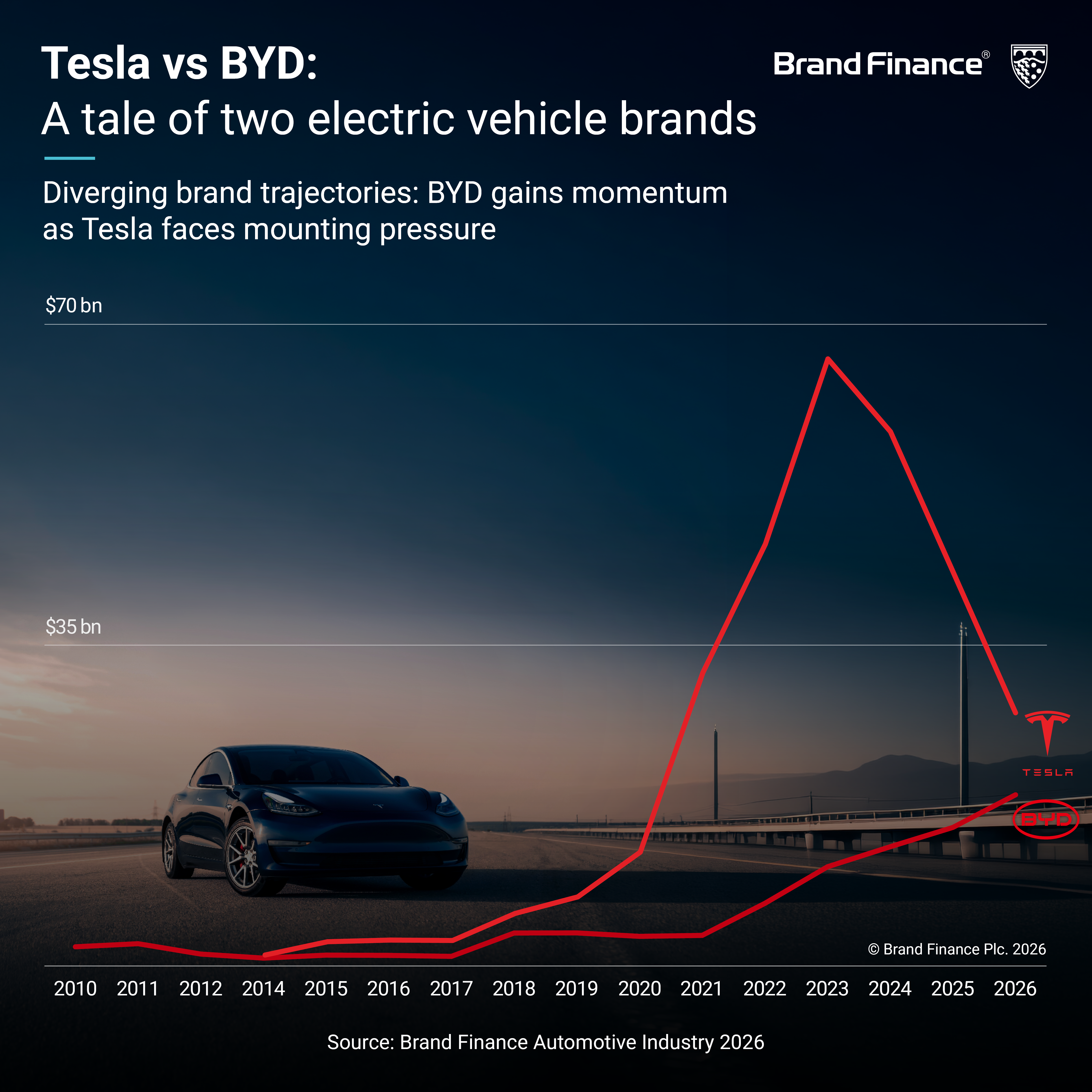
Dalam segmen EV, jurang antara jenama semakin jelas. Tesla (nilai jenama turun 36% kepada USD27.6 bilion) jatuh ke kedudukan keenam, mencatat antara penurunan terbesar dalam sektor ini. Sebaliknya, BYD (nilai jenama naik 23% kepada USD17.3 bilion) terus meningkat, kini berada di kedudukan ke-11 dunia. Kekuatan BYD datang daripada harga yang lebih berpatutan, pengeluaran berskala besar, dan kepercayaan pengguna yang semakin meningkat.
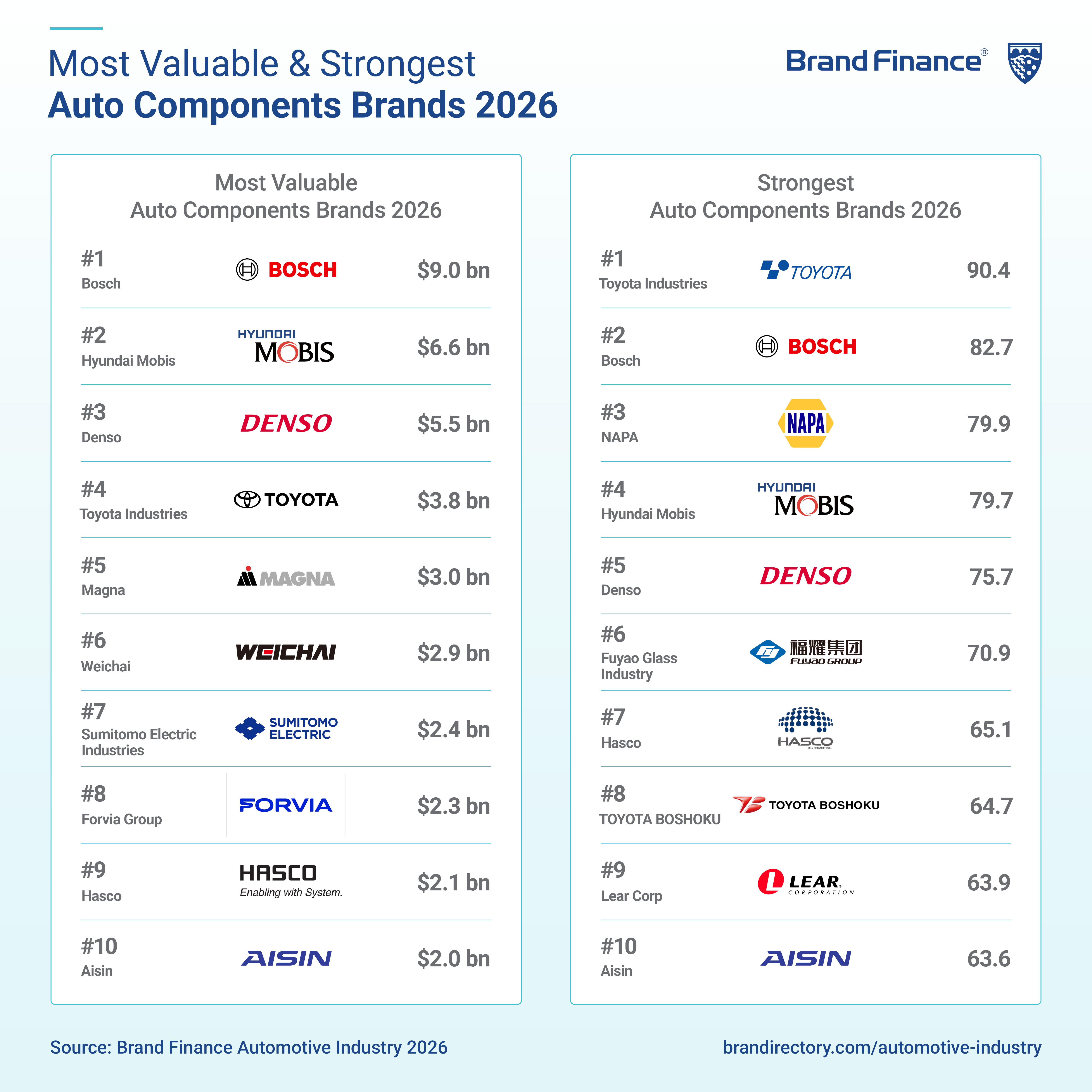
Dalam sektor komponen automotif pula, Bosch (nilai jenama naik 24% kepada USD9 bilion) kekal sebagai jenama paling bernilai, disokong oleh portfolio produk yang luas, perniagaan yang lebih stabil, serta kedudukannya yang kukuh sebagai pembekal teknologi utama kepada pengeluar automotif global.
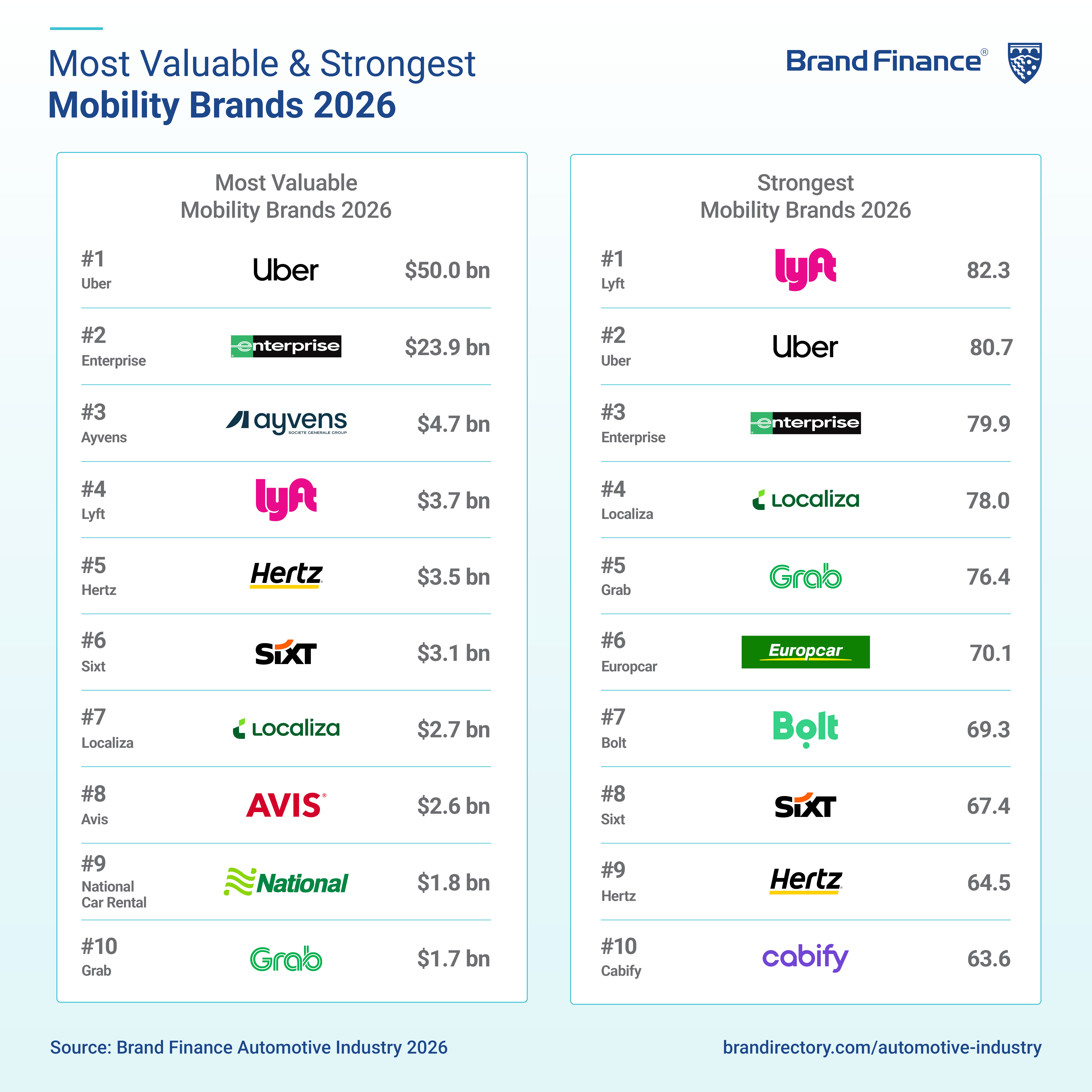
Beralih kepada sektor mobiliti, Uber (nilai jenama naik 35% kepada USD50 bilion) kekal sebagai jenama paling bernilai, didorong oleh pertumbuhan hasil yang kukuh dan kejayaan program langganan Uber One yang kini mempunyai lebih 30 juta pengguna.
Lyft (nilai jenama naik 7% kepada USD3.7 bilion) pula muncul sebagai jenama paling kukuh dalam sektor ini, hasil strategi harga yang lebih menarik dan tumpuan kepada pengalaman pengguna yang lebih baik.
Satu kejutan besar dalam sektor ini ialah kemunculan Grab (nilai jenama naik 53% kepada USD1.7 bilion), satu-satunya jenama mobiliti dari Asia Tenggara yang berjaya memasuki senarai 10 jenama teratas dunia pada tahun ini. Pertumbuhan Grab didorong oleh prestasi cemerlang dalam perkhidmatan penghantaran makanan melalui GrabFood dan mobiliti melalui GrabTaxi, dengan segmen Perkhidmatan Atas Permintaan mencatat peningkatan 24% berbanding tahun sebelumnya dalam suku ketiga 2025. Pencapaian ini membuktikan bahawa jenama dari Asia Tenggara kini semakin berdaya saing di peringkat global.




Brand Finance is the world’s leading brand valuation consultancy. Bridging the gap between marketing and finance, Brand Finance evaluates the strength of brands and quantifies their financial value to help organisations make strategic decisions.
Headquartered in London, Brand Finance operates in over 25 countries. Every year, Brand Finance conducts more than 6,000 brand valuations, supported by original market research, and publishes over 100 reports which rank brands across all sectors and countries.
Brand Finance also operates the Global Brand Equity Monitor, conducting original market research annually on 6,000 brands, surveying more than 175,000 respondents across 41 countries and 31 industry sectors. By combining perceptual data from the Global Brand Equity Monitor with data from its valuation database — the largest brand value database in the world — Brand Finance equips ambitious brand leaders with the data, analytics, and the strategic guidance they need to enhance brand and business value.
In addition to calculating brand value, Brand Finance also determines the relative strength of brands through a balanced scorecard of metrics, compliant with ISO 20671.
Brand Finance is a regulated accountancy firm and a committed leader in the standardisation of the brand valuation industry. Brand Finance was the first to be certified by independent auditors as compliant with both ISO 10668 and ISO 20671 and has received the official endorsement of the Marketing Accountability Standards Board (MASB) in the United States.
Brand is defined as a marketing-related intangible asset including, but not limited to, names, terms, signs, symbols, logos, and designs, intended to identify goods, services, or entities, creating distinctive images and associations in the minds of stakeholders, thereby generating economic benefits.
Brand strength is the efficacy of a brand’s performance on intangible measures relative to its competitors. Brand Finance evaluates brand strength in a process compliant with ISO 20671, looking at Marketing Investment, Stakeholder Equity, and the impact of those on Business Performance. The data used is derived from Brand Finance’s proprietary market research programme and from publicly available sources.
Each brand is assigned a Brand Strength Index (BSI) score out of 100, which feeds into the brand value calculation. Based on the score, each brand is assigned a corresponding Brand Rating up to AAA+ in a format similar to a credit rating.
Brand Finance calculates the values of brands in its rankings using the Royalty Relief approach – a brand valuation method compliant with the industry standards set in ISO 10668. It involves estimating the likely future revenues that are attributable to a brand by calculating a royalty rate that would be charged for its use, to arrive at a ‘brand value’ understood as a net economic benefit that a brand owner would achieve by licensing the brand in the open market.
The steps in this process are as follows:
1 Calculate brand strength using a balanced scorecard of metrics assessing Marketing Investment, Stakeholder Equity, and Business Performance. Brand strength is expressed as a Brand Strength Index (BSI) score on a scale of 0 to 100.
2 Determine royalty range for each industry, reflecting the importance of brand to purchasing decisions. In luxury, the maximum percentage is high, while in extractive industry, where goods are often commoditised, it is lower. This is done by reviewing comparable licensing agreements sourced from Brand Finance’s extensive database.
3 Calculate royalty rate. The BSI score is applied to the royalty range to arrive at a royalty rate. For example, if the royalty range in a sector is 0-5% and a brand has a BSI score of 80 out of 100, then an appropriate royalty rate for the use of this brand in the given sector will be 4%.
4 Determine brand-specific revenues by estimating a proportion of parent company revenues attributable to a brand.
5 Determine forecast revenues using a function of historic revenues, equity analyst forecasts, and economic growth rates.
6 Apply the royalty rate to the forecast revenues to derive brand revenues.
7 Discount post-tax brand revenues to a net present value which equals the brand value.
Brand Finance has produced this study with an independent and unbiased analysis. The values derived and opinions presented in this study are based on publicly available information and certain assumptions that Brand Finance used where such data was deficient or unclear. Brand Finance accepts no responsibility and will not be liable in the event that the publicly available information relied upon is subsequently found to be inaccurate. The opinions and financial analysis expressed in the study are not to be construed as providing investment or business advice. Brand Finance does not intend the study to be relied upon for any reason and excludes all liability to any body, government, or organisation.
The data presented in this study form part of Brand Finance's proprietary database, are provided for the benefit of the media, and are not to be used in part or in full for any commercial or technical purpose without written permission from Brand Finance.