Nvidia vola ma Tesla perde il 36% di brand value
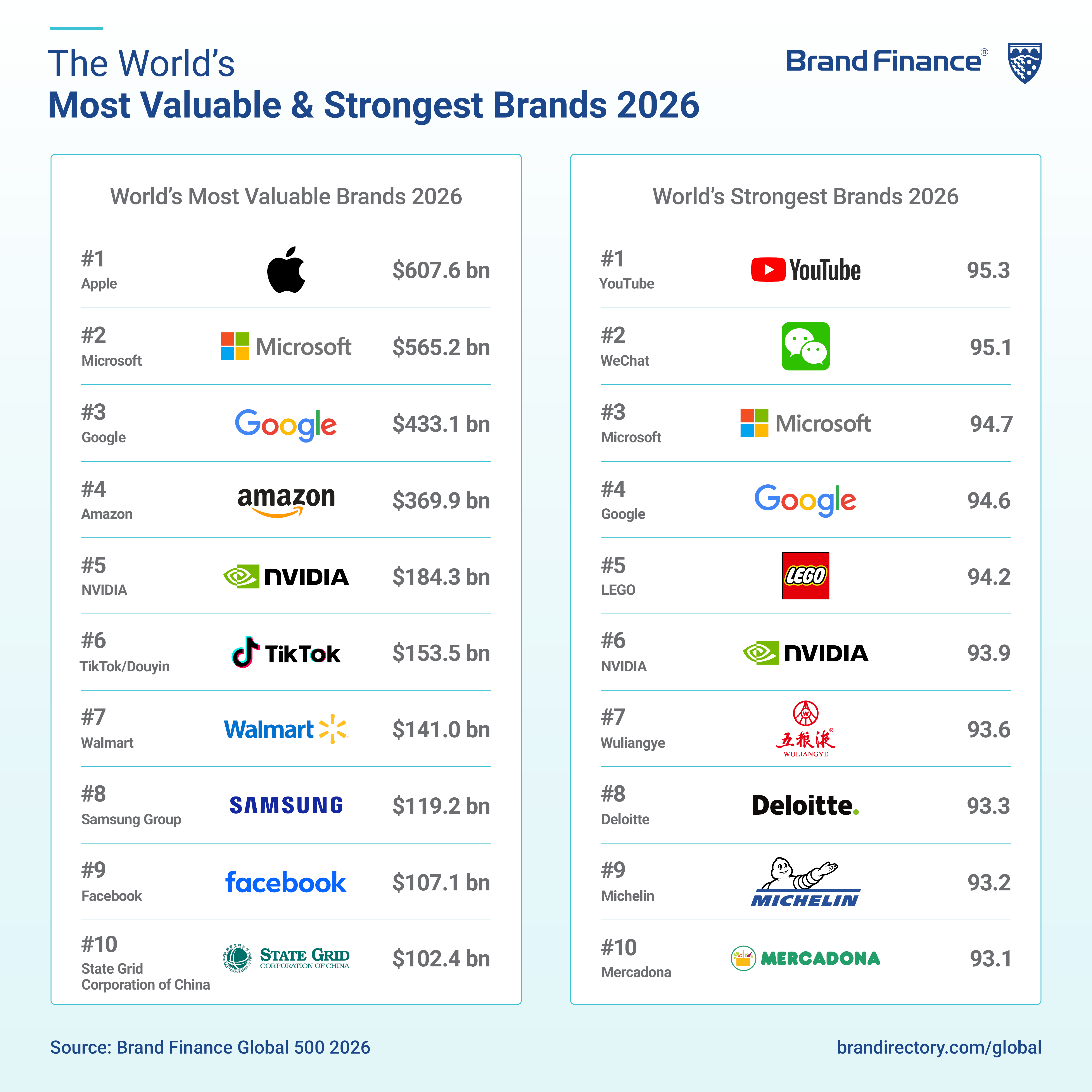
Milano 20 gennaio 2026 - A Davos, in occasione del World Economic Forum 2026, sono stati presentati i risultati del Brand Finance Global 500 2026, la classifica dei 500 principali brand del mondo ordinati per valore del trademark. Questo indicatore misura il valore generato dalla capacità delle marche di influenzare percezioni e decisioni di acquisto dei consumatori e rappresenta, in media, circa il 20% del valore complessivo, delle imprese presenti in classifica, fissato al 1°gennaio 2026.
Apple e le altre Big Tech continuano a dominare il Brand Finance Global 500 e, nel complesso, i brand dei settori tech & media sono quelli che registrano la maggiore crescita anno su anno, secondi solo all’aerospazio & difesa. Al contrario, i marchi del settore automotive, trainati dal crollo record di Tesla, mostrano una contrazione media del valore.
Nvidia raddoppia il proprio valore e supera Facebook, Samsung e TikTok
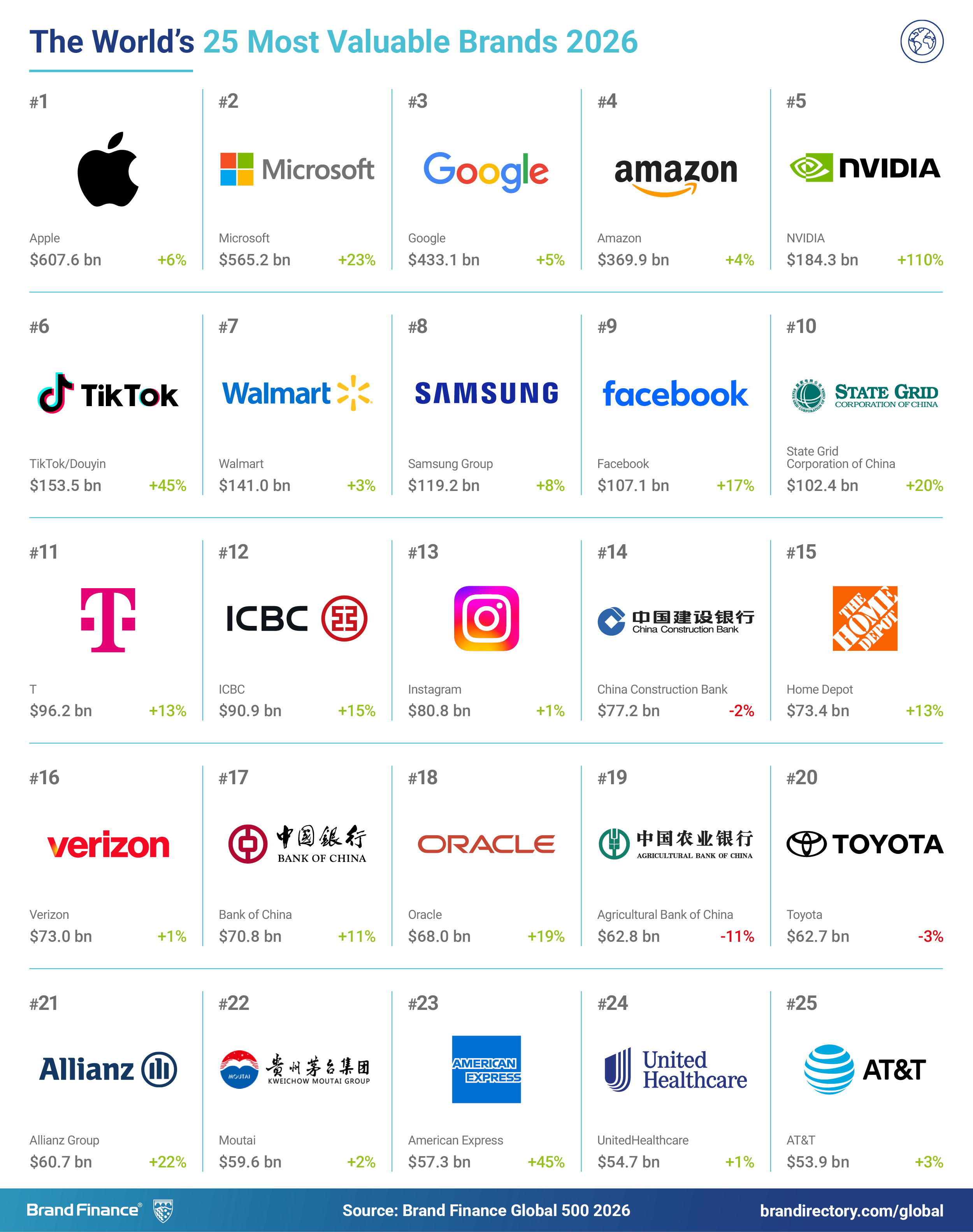
Nella top 10 del Brand Finance Global 500 2026 spicca il trademark Nvidia, che raddoppia il proprio valore (+110%) raggiungendo i 184,3 miliardi di dollari e superando brand come Facebook, Samsung, Walmart e TikTok. Le analisi di Brand Finance evidenziano come Nvidia, pur operando prevalentemente in ambito B2B, goda di un forte apprezzamento anche tra i consumatori finali: negli Stati Uniti è infatti uno dei brand tecnologici più amati e con la migliore reputazione, con performance superiori a quelle di Apple, Intel, Microsoft e Dell.
Registrano una crescita significativa anche altri brand tecnologici B2B, direttamente o indirettamente legati allo sviluppo dell’intelligenza artificiale, tra cui Oracle, TSMC, SAP, Cisco e AMD.
Il ruolo determinante degli asset intangibili
Questa dinamica è coerente con quanto emerge anche dal Global Intangible Finance Tracker di Brand Finance, secondo cui una quota crescente del valore delle imprese – in particolare nei settori tecnologici e legati all’intelligenza artificiale – è rappresentata da asset intangibili non iscritti a bilancio. Nel caso di Nvidia, ad esempio, il 98% del valore di impresa dipende da asset intangibili e da come questi vengono percepiti dal mercato, a conferma del ruolo centrale del brand e della reputazione nelle prospettive di crescita.
Massimo Pizzo, Brand Finance, commenta: «La febbre da intelligenza artificiale ha progressivamente sostituito quella per la sostenibilità. Se fino a ieri le imprese cercavano di posizionarsi attorno ai temi ESG, oggi accade lo stesso con l’AI. Fino a pochi mesi fa Google non era percepita dai consumatori come un brand fortemente associato all’intelligenza artificiale, ed è anche per questo che la sua crescita è stata più limitata; la recente partnership con Apple è però destinata a modificare questa percezione».
Tesla: il peggior calo di valore tra i principali marchi globali
Tesla è il brand che registra la maggiore perdita di valore assoluto anno su anno tra i 500 principali marchi globali, seguita da Agricultural Bank of China e Mercedes-Benz. È anche il marchio che perde più valore in termini percentuali: il trademark Tesla si riduce del 36%, pari a oltre 15 miliardi di dollari, facendo scendere il brand di 39 posizioni fino al 75° posto della classifica.
Il calo è attribuibile soprattutto al peggioramento delle prospettive di vendita e a un significativo indebolimento della capacità del brand di influenzare i consumatori nei principali mercati globali, analizzati a fine 2025. L’erosione risulta particolarmente marcata in Europa, dove indicatori chiave come reputazione, appeal e fiducia mostrano un netto deterioramento rispetto all’anno precedente.
Massimo Pizzo conclude:
«L’indebolimento del brand e il conseguente peggioramento delle vendite di Tesla sono una conseguenza diretta sia della crescente impopolarità dell’immagine di Elon Musk, sia del rafforzamento dell’immagine e della reputazione dei brand concorrenti, primo fra tutti BYD, che anno su anno aumenta il proprio valore di marca del 23%».





Brand Finance is the world’s leading brand valuation consultancy. Bridging the gap between marketing and finance, Brand Finance evaluates the strength of brands and quantifies their financial value to help organisations make strategic decisions.
Headquartered in London, Brand Finance operates in over 25 countries. Every year, Brand Finance conducts more than 6,000 brand valuations, supported by original market research, and publishes over 100 reports which rank brands across all sectors and countries.
Brand Finance also operates the Global Brand Equity Monitor, conducting original market research annually on 6,000 brands, surveying more than 175,000 respondents across 41 countries and 31 industry sectors. By combining perceptual data from the Global Brand Equity Monitor with data from its valuation database — the largest brand value database in the world — Brand Finance equips ambitious brand leaders with the data, analytics, and the strategic guidance they need to enhance brand and business value.
In addition to calculating brand value, Brand Finance also determines the relative strength of brands through a balanced scorecard of metrics, compliant with ISO 20671.
Brand Finance is a regulated accountancy firm and a committed leader in the standardisation of the brand valuation industry. Brand Finance was the first to be certified by independent auditors as compliant with both ISO 10668 and ISO 20671 and has received the official endorsement of the Marketing Accountability Standards Board (MASB) in the United States.
Brand is defined as a marketing-related intangible asset including, but not limited to, names, terms, signs, symbols, logos, and designs, intended to identify goods, services, or entities, creating distinctive images and associations in the minds of stakeholders, thereby generating economic benefits.
Brand strength is the efficacy of a brand’s performance on intangible measures relative to its competitors. Brand Finance evaluates brand strength in a process compliant with ISO 20671, looking at Marketing Investment, Stakeholder Equity, and the impact of those on Business Performance. The data used is derived from Brand Finance’s proprietary market research programme and from publicly available sources.
Each brand is assigned a Brand Strength Index (BSI) score out of 100, which feeds into the brand value calculation. Based on the score, each brand is assigned a corresponding Brand Rating up to AAA+ in a format similar to a credit rating.
Brand Finance calculates the values of brands in its rankings using the Royalty Relief approach – a brand valuation method compliant with the industry standards set in ISO 10668. It involves estimating the likely future revenues that are attributable to a brand by calculating a royalty rate that would be charged for its use, to arrive at a ‘brand value’ understood as a net economic benefit that a brand owner would achieve by licensing the brand in the open market.
The steps in this process are as follows:
1 Calculate brand strength using a balanced scorecard of metrics assessing Marketing Investment, Stakeholder Equity, and Business Performance. Brand strength is expressed as a Brand Strength Index (BSI) score on a scale of 0 to 100.
2 Determine royalty range for each industry, reflecting the importance of brand to purchasing decisions. In luxury, the maximum percentage is high, while in extractive industry, where goods are often commoditised, it is lower. This is done by reviewing comparable licensing agreements sourced from Brand Finance’s extensive database.
3 Calculate royalty rate. The BSI score is applied to the royalty range to arrive at a royalty rate. For example, if the royalty range in a sector is 0-5% and a brand has a BSI score of 80 out of 100, then an appropriate royalty rate for the use of this brand in the given sector will be 4%.
4 Determine brand-specific revenues by estimating a proportion of parent company revenues attributable to a brand.
5 Determine forecast revenues using a function of historic revenues, equity analyst forecasts, and economic growth rates.
6 Apply the royalty rate to the forecast revenues to derive brand revenues.
7 Discount post-tax brand revenues to a net present value which equals the brand value.
Brand Finance has produced this study with an independent and unbiased analysis. The values derived and opinions presented in this study are based on publicly available information and certain assumptions that Brand Finance used where such data was deficient or unclear. Brand Finance accepts no responsibility and will not be liable in the event that the publicly available information relied upon is subsequently found to be inaccurate. The opinions and financial analysis expressed in the study are not to be construed as providing investment or business advice. Brand Finance does not intend the study to be relied upon for any reason and excludes all liability to any body, government, or organisation.
The data presented in this study form part of Brand Finance's proprietary database, are provided for the benefit of the media, and are not to be used in part or in full for any commercial or technical purpose without written permission from Brand Finance.