




This article was originally published in the Brand Finance Africa 200 2026.
As one of Africa's largest and most inclusive financial services groups, Equity has spent decades turning banking into an instrument of social and economic mobility, and is now positioning itself as a tri-engine business spanning social, economic and sustainability impact. Equity discusses how a purpose of transforming lives, giving dignity and expanding opportunities for wealth creation, a digital-first model in which over 98% of transactions now happen outside the branch, and the Africa Recovery and Resilience Plan have repositioned the brand as a development partner to the continent rather than a bank.
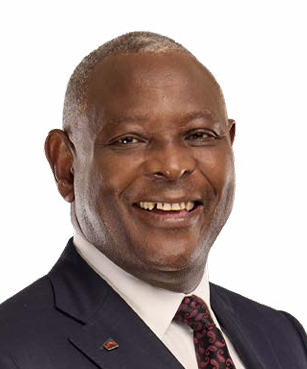
1) How does the Equity brand build trust among its stakeholders?
Equity’s brand is built by consistently delivering on its promise as captured in its purpose of ‘transforming lives, giving dignity and expanding opportunities for wealth creation’ through a culture built around values.
By anchoring its identity in clearly defined principles, specifically professionalism, integrity, creativity and innovation, teamwork, unity of purpose, and effective corporate governance, Equity has fostered deep-seated trust across its ecosystem. This trust is further reinforced by a steadfast commitment to providing respect and dignity for every customer.
Over the years, the Group has lived up to this commitment through disciplined execution, ensuring that its purpose is a lived reality. Whether through its diverse product offerings or regional market interactions, stakeholders experience a brand that reliably translates its core promise into tangible, social, and economic impact.
Strong governance and prudent risk management: Equity reinforces stakeholder confidence through disciplined risk management and capital stewardship. In FY2025, the Group maintained robust liquidity buffers, reporting a Group liquidity ratio of 64.7%, alongside strong capital and asset-quality buffers that signal stability to depositors, regulators, investors and partners. The Group also maintained a conservative credit risk posture; loan loss provisions declined by 28% to KSh 14.5 billion while NPL coverage stood at 68%, underscoring prudent provisioning and balance-sheet protection through volatile cycles.
Performance that is independently verifiable: Equity’s results, disclosures and third-party validations build credibility. Brand Finance has recognised Equity as among the world’s strongest banking brands (including a top African ranking for 2026 and global ranking for brand strength in 2024), which strengthens confidence among external stakeholders that Equity’s reputation is not self-asserted but externally benchmarked.
Transparency and sustainability disclosure: Equity’s sustainability reporting demonstrates a structured approach to ESG and stakeholder accountability. The Group’s shift to a tri-engine model (social, economic, sustainability) and public reporting on sustainability priorities: including climate and nature risk considerations, supports trust among DFIs, global partners and regulators who increasingly require evidence-based ESG governance.
Trust through inclusion and development outcomes: Equity’s purpose and strategy is operationalised through the Africa Recovery and Resilience Plan (ARRP), a private-sector-led agenda focused on catalysing, capacitating, connecting and financing enterprises and households. This provides stakeholders with a clear framework for how Equity’s balance sheet, networks and partnerships translate into development outcomes (jobs, enterprise growth, inclusion).
Customer protection and security culture: Equity invests in customer education and fraud prevention messaging (including guidance on verified contact channels and strict “do not share PIN” discipline), while also strengthening trust through sustained investment in robust, secure technology systems that support fraud prevention, detection and response across its digital and alternative channels; reinforcing that customer safety is prioritised alongside convenience.

2) How does Equity build customer loyalty and stickiness across products and services?
Equity drives loyalty by building a high-utility ecosystem that customers and stakeholders use frequently, across life moments and business needs, supported by convenience, choice of channels, and relevant products.
A connected ecosystem (One Equity): Equity grows stickiness by making financial services a “one-stop” relationship: payments, savings, borrowing, investing, trade, and increasingly insurance; so customers can meet multiple needs without switching providers. This reduces friction and increases cross-product adoption.
Digital-first convenience at scale: Equity’s model is built around freedom, choice & control, of channel choice, enabling customers to transact via Equity Mobile, Equity Online, USSD (*247#), agents, merchants, ATMs and branches. In the FY2025 Financial Report, the Group reported that over 98% of customer transactions were conducted outside branches, with 88.4% processed through digital channels, driving stickiness through always-on availability, convenience, and a consistent customer experience.
Mass distribution + last-mile reach: A wide service footprint (branches, agents and merchants) ensures customers can access services conveniently and reliably; critical for trust and retention, especially for underserved and rural segments.
Payments that enable lifestyles increase daily usage: Solutions such as Pay With Equity encourage frequent transactions for individuals and merchants by simplifying payments across channels. High-frequency payments are a major loyalty driver because they embed the brand into daily routines, enabling lifestyles.
Savings and goals-based engagement: Equity’s self-service (digital) savings suite supports different customer needs; classic savings, fixed deposits, call deposits, and goal-based savings, helping customers plan, track progress, and build positive financial habits. Goal tracking and scheduled savings features increase repeat engagement and reduce churn.
Regional, Diaspora enablement and cross-border utility: Equity’s regional footprint and innovations like real-time cross-border payments/borderless banking within its markets deepen loyalty for customers who trade, travel, study, or work across borders; turning Equity into a practical “regional banking home & work globally and bank locally.”
Life-moment relevance: Equity strengthens loyalty by solving real customer moments (school fees payments, instant credit for short-term needs, diaspora remittances via multiple IMT partners, SME and agribusiness solutions). These use-cases build emotional loyalty because the brand is associated with reliability during important milestones.
Capability-building alongside products: Equity enhances stickiness by pairing financial products with financial literacy, entrepreneurship and MSME capacity building (including large-scale training and financing under youth/women/MSME programs). Customers are more likely to stay where they feel supported to grow, not only transacted with.

3) How does Equity involve employees to align with the brand’s values and goals?
Equity aligns employees with its brand by grounding engagement in the Group’s core philosophies, and values centered on professionalism, integrity, creativity and innovation, teamwork, unity of purpose, respect and dignity for the customer, and effective corporate governance, alongside a clear purpose of transforming lives, restoring dignity, and expanding opportunities for wealth creation. Employees are positioned as custodians of this promise, with clear alignment between what the brand stands for and how it is delivered through everyday actions, decisions, and customer interactions across all markets.
Impact pride as an engagement driver: The breadth of Equity’s social, sustainability and inclusion programs helps strengthen employee pride and advocacy; employees see the brand’s purpose in action, which typically improves service culture and reinforces a consistent brand experience. , coupled with strong financial results, reinforces our market leadership and solidifies our position in the evolving TMT sector.
Shared ownership and alignment: Equity established an Employee Share Ownership Programme (ESOP) (5% of share capital as reported in sustainability disclosures), reinforcing long-term alignment between employee actions, brand reputation, and shareholder value.
Capability building and professional standards: Equity invests significantly in staff capability building to strengthen service quality, compliance discipline, innovation capability, and consistent customer experience. In FY2025, the Group reported 989,152 employee training hours (up from 592,612 in 2024), reinforcing a high-performance culture and equipping teams to deliver on the brand promise across all markets and channels.
Purpose embedded in “how we do business” – Unity of Purpose: Employees are engaged around the brand mission of transforming lives and the ARRP agenda. This creates line-of-sight between frontline roles (service, credit, digital adoption, customer protection) and broader outcomes (financial inclusion, enterprise growth, resilience).
Customer protection culture and conduct: Equity equips employees to protect customers through consistent security and anti-fraud guidance and verified communication standards; helping ensure trust is experienced in everyday interactions, not only in campaigns.