






This article was originally published in World Trademark Review and has been adapted and expanded for Brand Finance audiences.
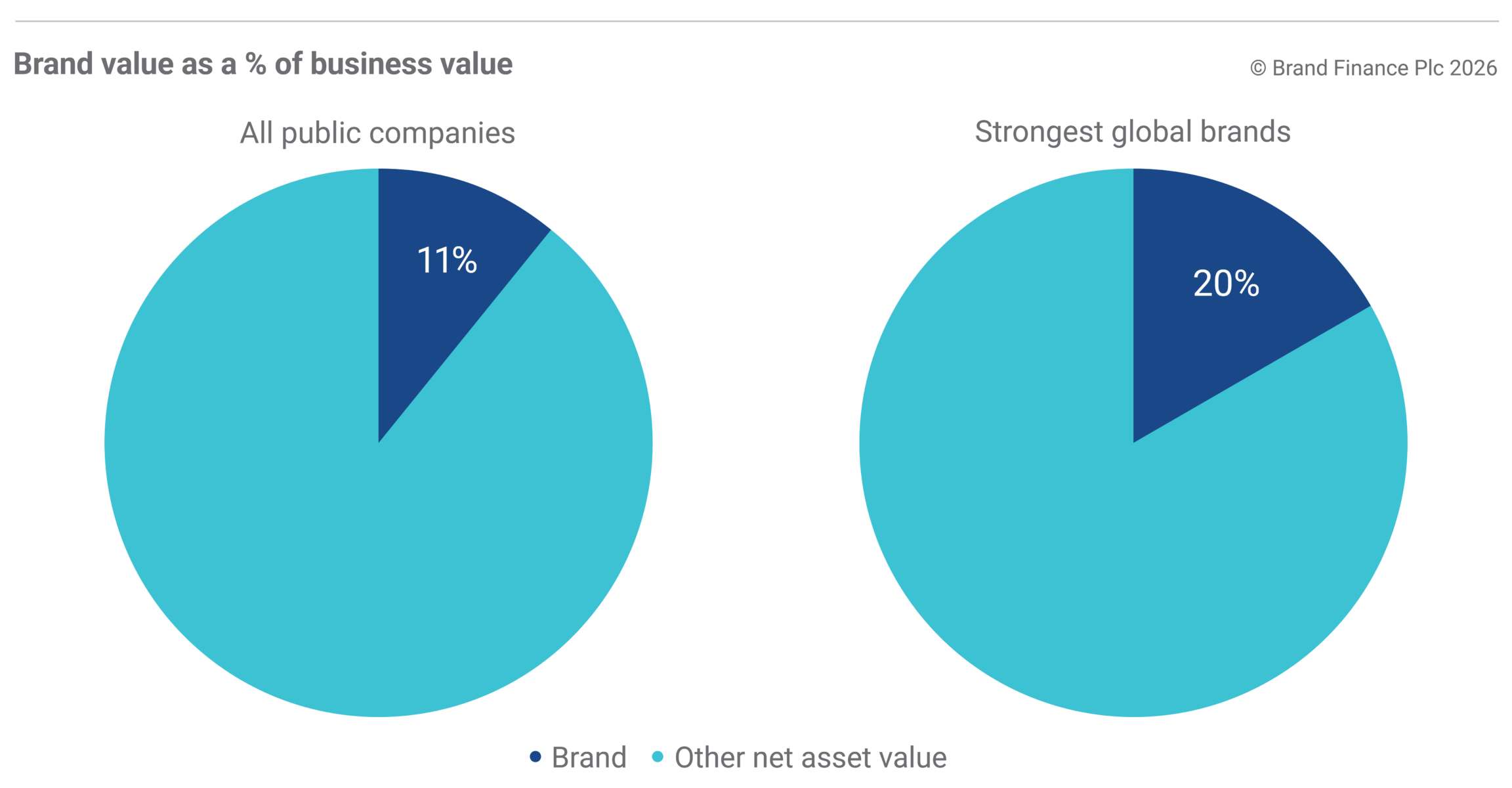
In the 21st century economy, growth increasingly depends on how effectively companies manage and leverage their intangible assets. Brands are among the most powerful of these assets, representing 11% of the total company value of public companies worldwide1, rising to 20% among businesses with the strongest global brands. Despite this, the potential of leveraging brand value to unlock new sources of business value generation often remains overlooked.
As companies reach maturity in their core markets, they face increasing pressure to find new sources of growth. Economic pressure, rising capital costs, and market saturation – combined with hyper-competitive market conditions and the shift towards asset-light business models – have made this challenge more acute.
In this context, brand licensing is an important strategic lever. Licensing opportunities most often arise in two situations: when a brand seeks to expand its reach without significant new investment, and when a company reduces or exits direct operations in a market but wishes to maintain brand presence through trusted partners.
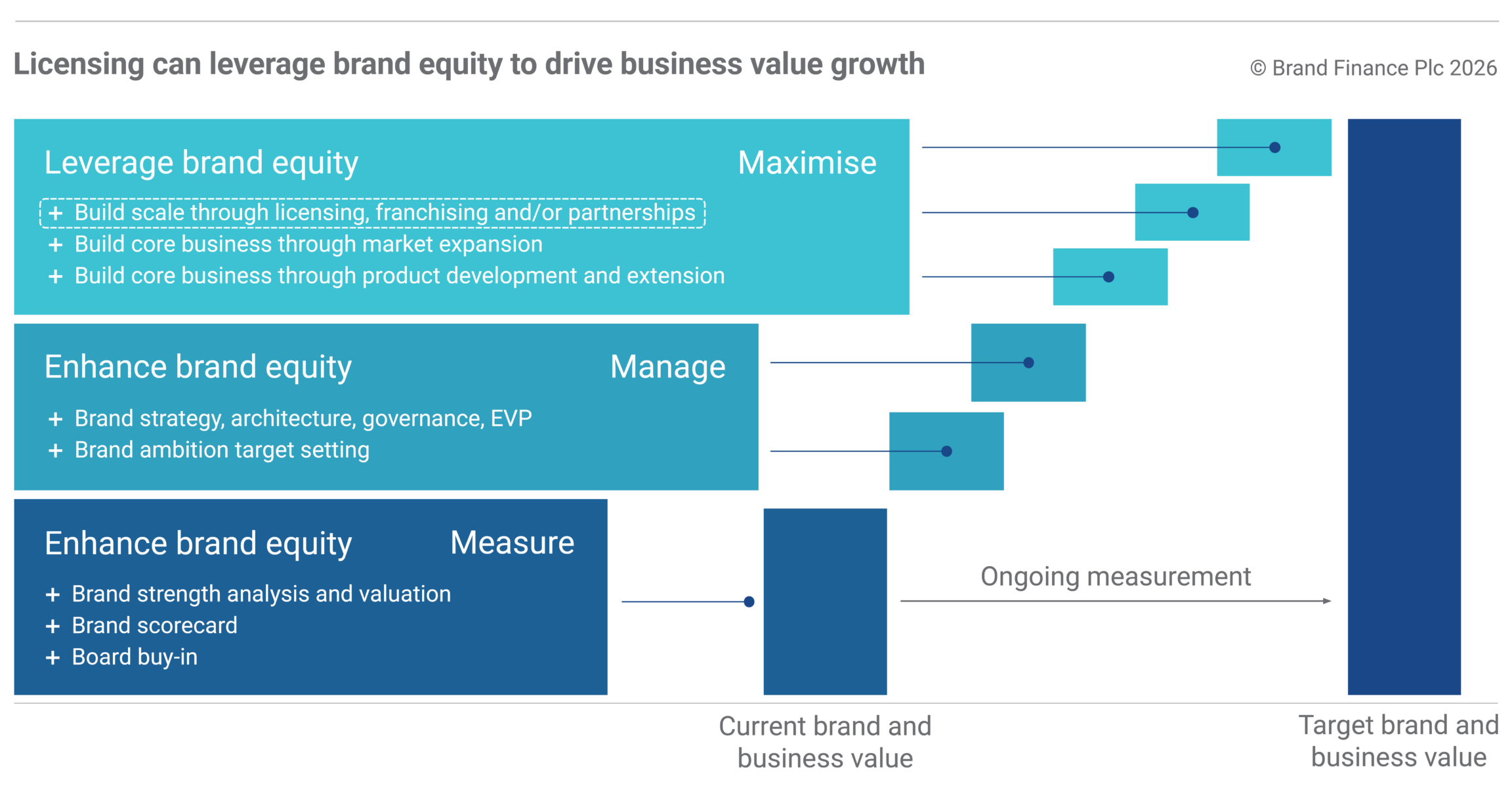
For a company seeking to become a licensee or licensor, it is essential to understand how that brand impacts the commercial results of the underlying business the brand is used on. The onus is regularly on licensors to demonstrate the commercial power of their brand when negotiating with new licensees or renewing agreements with existing partners. The more clearly the licensor can evidence the brand’s ability to deliver superior outcomes - such as stronger customer preference, higher pricing power, or improved market share - the more effectively it can justify royalty rates and negotiate favourable commercial terms, including marketing fund contributions and brand governance responsibilities.
Brand Finance has developed advanced techniques that combine sophisticated market research with dynamic financial modelling to quantify the impact of a strong licensed brand on a licensee’s performance. Tailored to the value drivers of each industry, these approaches measure how brand strength influences customer choice and willingness to pay, translating intangible equity into tangible uplifts in revenue, profit margin, and overall business value.
Demonstrating the business impact of brand
Brand Finance developed this service because the financial contribution of a brand is often underestimated in licensing negotiations. Increasingly, licensees are scrutinising the value in the license, demanding greater transparency on how brand strength translates into commercial performance. Licensees are experts in their own markets, and licensors need to meet them with equal depth of insight on the licensed brand. Strong relationships are built when both parties share a fact-based understanding of how the brand enhances choice, pricing power, and profitability.
To demonstrate this impact in licensing negotiations, Brand Finance focuses on isolating the specific contribution of brand strength within a licensee’s business model. Using research tailored to each market, the analysis separates the role of brand from other performance drivers and clarifies the specific commercial levers it influences, providing a sound basis for negotiation. This is then translated into clear, quantifiable commercial outcomes which, in turn, enable recommended royalty rates to be determined.
These techniques can also be applied in other brand-focused business contexts, including brand extensions into new categories and geographic markets, joint venture negotiations, and rebranding following M&A, where quantifying the commercial impact of the brand is critical to decision-making.
Market and business model-specific analysis
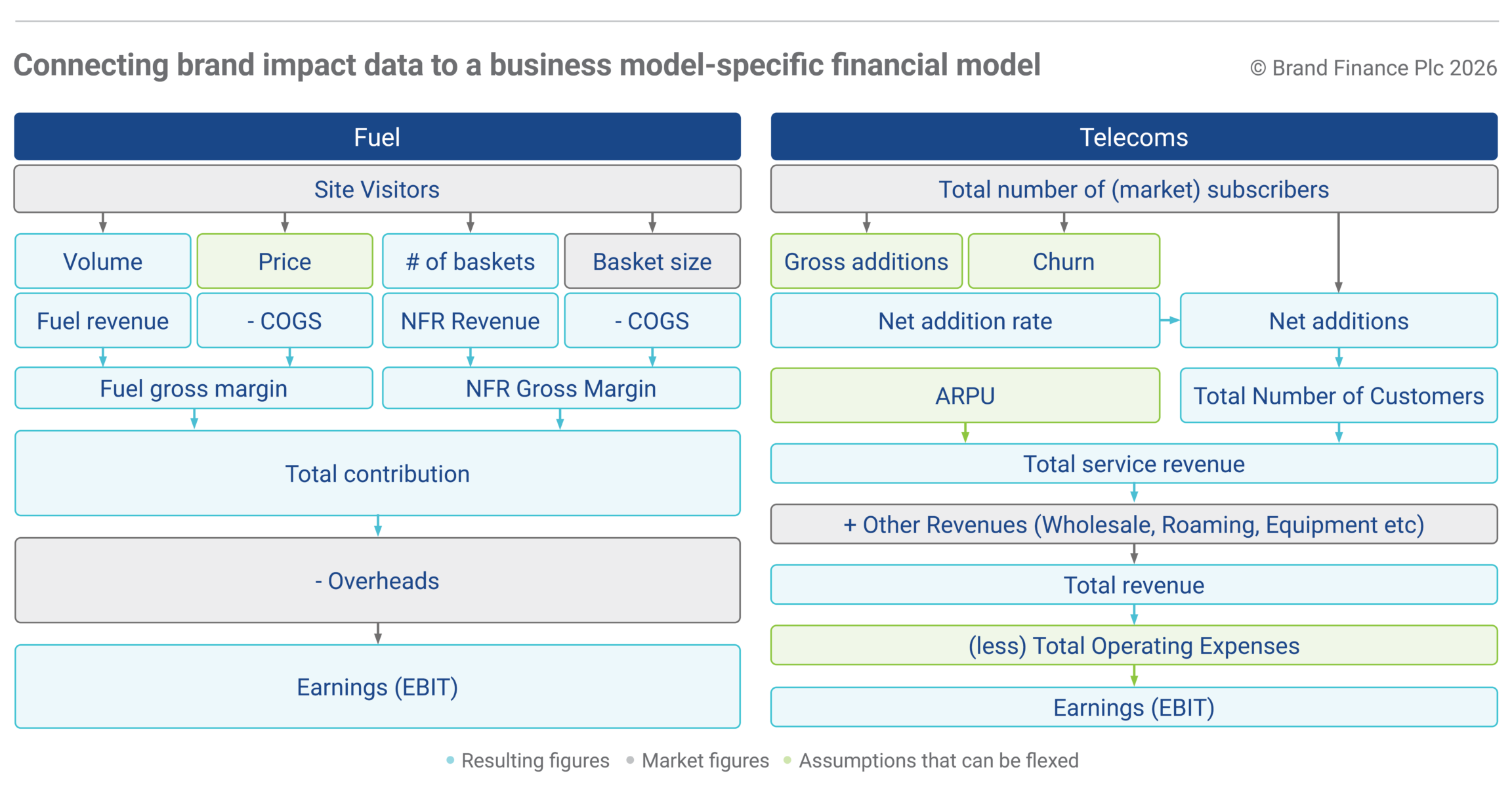
Each licensing situation is different. Brand Finance designs research that reflects the competitive context of the licensee’s market, while also generating evidence on how the brand influences the specific value drivers of the licensee’s business model. For example, analysis in retail fuel considers volume and price of fuel as well as average basket size for convenience store visits, whereas analysis in telecoms considers churn, gross additions and ARPU (average revenue per user). This ensures that licensors can present evidence that resonates with partners who understand both their market landscape and the levers that drive commercial performance.
Choice-based modelling
Brand Finance uses a range of research techniques to measure how brand equity affects customer decision-making. However, for licensing applications, we often find choice-based methodologies - such as Discrete Choice Modelling – are particularly robust and defensible, as they allow us to isolate the impact of the brand from other factors such as price or product features. This enables the analysis to quantify how a stronger brand increases preference and willingness to pay.
Financial simulation
The results of the research feed into dynamic financial models that mirror the licensee’s revenue and cost structures. Simulations predict how changes in branding and associated brand strength would influence demand, pricing, revenue, and margins. It is through this process that our approach connects intangible perceptions directly to tangible financial impact and recommended royalties.
Negotiation support
By translating brand effects into monetary and royalty rate terms, Brand Finance equips licensors and licensees with credible, defensible evidence for negotiations. The data supports fair royalty rates, clear marketing investment responsibilities, and stronger long-term partnerships grounded in mutual value creation.
Developing a robust brand licensing strategy
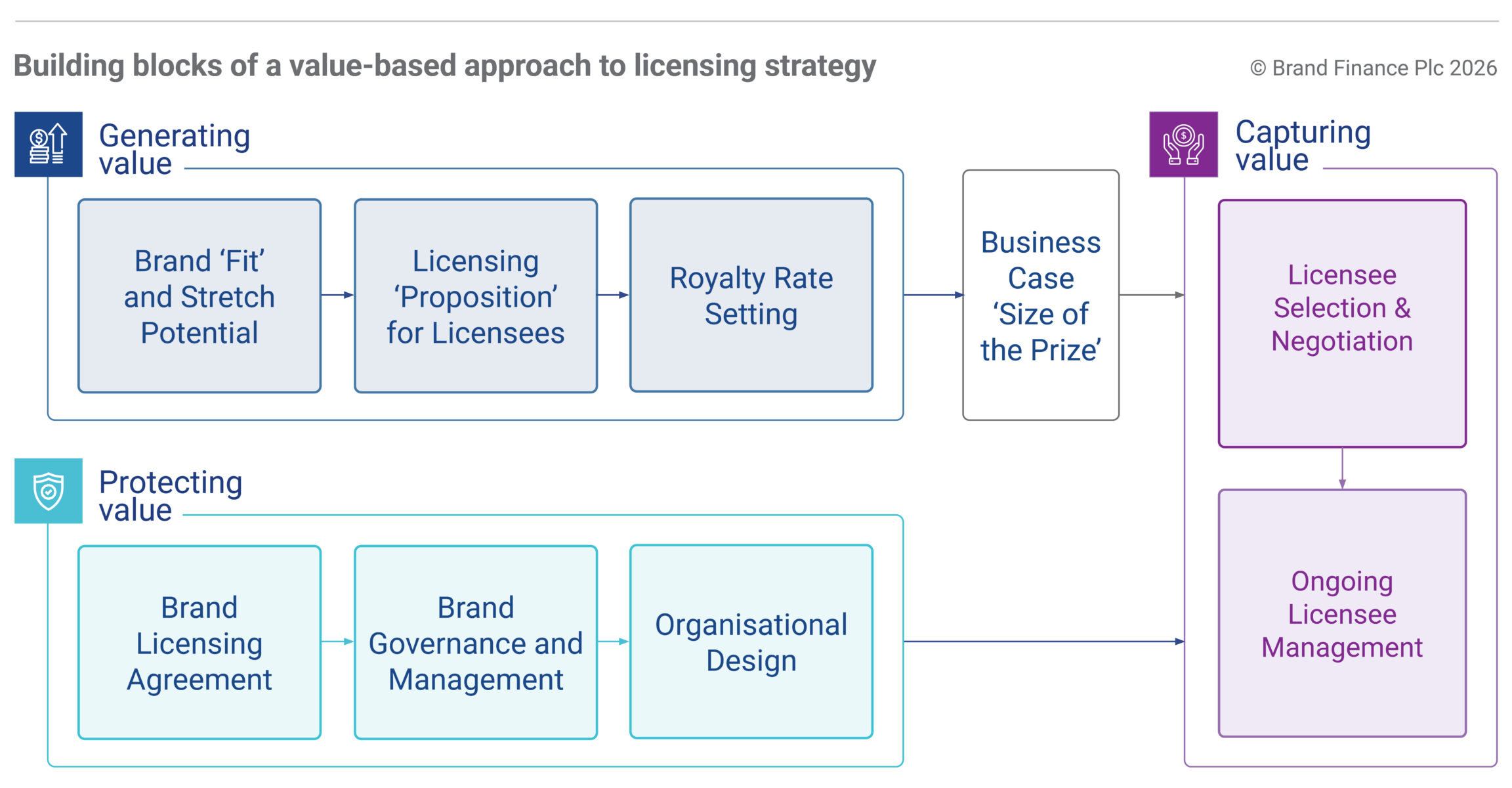
A successful licensing strategy involves not only generating value but also protecting value and then capturing value through ongoing brand management. Effectively negotiating brand licensing rates based on objectivity and quantitative data derived from research and financial modelling as described above will help to ensure that both licensor and licensee generate value. But other activities are required to protect and capture value, including winning evidence-based senior management discussions internally, creating brand guidelines and contracts, considering resource organisation and putting in place effective day-to-day brand management practices.
Brand Finance supports clients by applying a structured approach to brand licensing strategy development built on four pillars.
1. Strategy and opportunity assessment
Licensing begins with clarity of purpose. Each opportunity must align with the brand’s positioning, core business strategy, and long-term objectives. Evaluating fit and stretch potential ensures licensing the brand will add value to the licensor by identifying a sustainable incremental revenue stream, as well as adding value to licensees.
2. Research and financial modelling
As described above, robust customer research and market simulation reveal how brand equity influences preference, customer acquisition and churn, and price acceptance, which all impact revenue and profit. Translating these findings into financial models provides a transparent basis for rate setting and commercial negotiation.
3. Governance and compliance
Sustained value creation also depends on protecting the brand when it is being managed day-to-day by a third-party partner. Clear frameworks for brand use, quality standards, and performance monitoring help protect brand equity and ensure consistent delivery across markets. Successful implementation depends upon having a robust brand licensing agreement and strong brand management processes, through training, appropriate review meetings, creating a ‘brand community’ for best practice sharing and use of appropriate IT tools.
4. Internal alignment
Licensing decisions succeed when marketing and finance share the same evidence base. Building that alignment creates internal confidence and external credibility in negotiations. Internally, it’s critical at the outset to secure senior management buy-in through evidence-based business case modelling of the potential licensing opportunity, or ‘size of the prize’.
Optimal resource organisation is also needed to deliver a successful licensing strategy, including consideration of BrandCo structures and co-ordinated core brand and brand licensing teams. These aspects will help in developing a compelling ‘licensing proposition’ for licensees, typically spanning inputs from product, marketing, research, finance and legal teams, as well as brand.
Illustrative case experience
Brand Finance has supported many of the world’s leading organisations in unlocking the commercial potential of their brands through licensing and securing acceptable terms to all parties by ensuring a deep understanding of the financial impact of the licensed brand on business results.
Global energy company
Supported in the development of a centralised licensing entity and governance framework to manage brand use following operational divestments. The work included royalty rate setting, negotiation support, and the design of controls to safeguard brand integrity across multiple partner markets.
International telecommunications group
Advised on brand valuation and rate optimisation during multi-market contract renewals. Conducted customer research and market simulations to quantify the brand’s financial impact on licensee performance.
North American technology brand
Modelled brand-driven financial uplift using discrete choice modelling and retention research to support royalty rate recommendations and ensure alignment between marketing and finance teams.
Middle Eastern telecoms operator
Created a transparent brand charging system and governance process to support a growing portfolio of licensees and ensure consistent brand representation in new markets.
European consumer services brand
Assessed brand stretch potential into adjacent categories, sized opportunities, and modelled the incremental value created by strategic brand extension.
Conclusion
A strong brand is one of an organisation’s most powerful commercial assets. When managed strategically, it can deliver measurable financial returns well beyond its core operations.
Licensing provides a disciplined, capital-efficient way to extend that value. By demonstrating how brand strength drives customer preference, pricing, and profitability, organisations can create new income streams under favourable terms, while protecting long-term brand equity.
Across industries, the most successful licensing strategies are grounded in evidence. Quantifying the financial contribution of the brand builds trust between partners, supports favourable commercial terms, and strengthens the integrity of the brand over time.
Organisations seeking to manage their brands more effectively through licensing can benefit from a structured, data-driven approach. Brand Finance’s experience across multiple sectors demonstrates how brands can be deployed responsibly and profitably to unlock their full potential.
1Brand Finance Global Intangible Finance Tracker 2025 and Brand Finance Global 500.
About the author(s): Mike Rocha is Managing Director of Europe & the Americas; Annie Brown is Managing Director UK in the London office; Anthony Kendall is a Licensing Strategy Director in the London office. The authors wish to thank Florina Cormack-Loyd for her contributions to this article.