





Milano, 28 maggio 2026 - La finestra si sta chiudendo. Il periodo di crescita sostenuta dei premi assicurativi volge al termine. Le principali agenzie di rating e società di ricerca convergono nel descrivere il passaggio da hard a soft market: margini in contrazione, pricing nella riassicurazione in calo, competizione in accelerazione. In un soft market la redditività non viene più consegnata dagli aumenti tariffari — deve essere guadagnata.¹²³⁴⁵⁶⁷
“Il momento di rafforzare il proprio marchio è adesso, non quando il ciclo sarà già cambiato. L’Indicatore di Forza del Brand si costruisce in anni: le compagnie che aspettano si troveranno a competere solo sul prezzo, nel momento peggiore per farlo.”
— Massimo Pizzo, Senior Consultant, Brand Finance
IL MERCATO ITALIANO
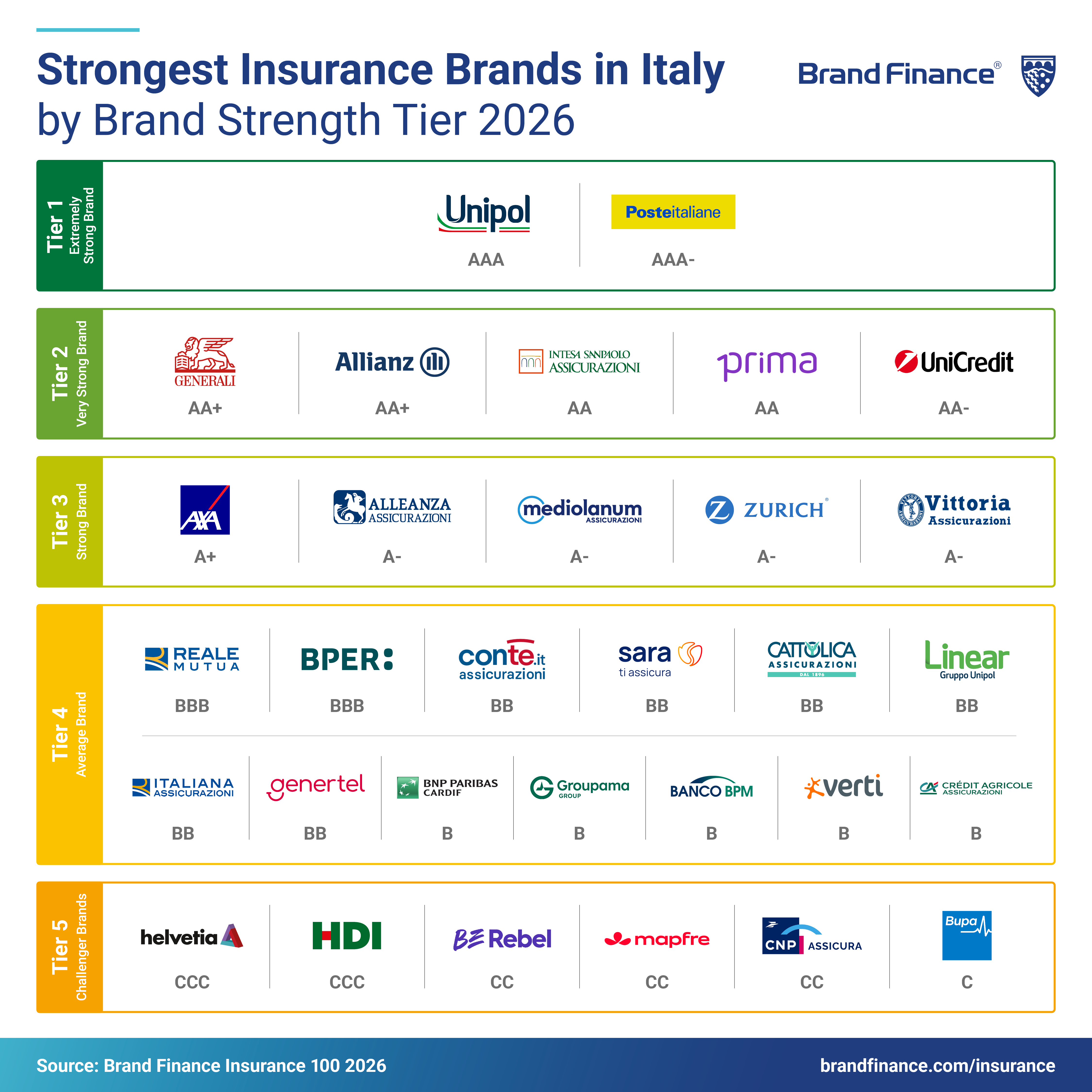
Brand Finance ha analizzato la forza di 31 brand assicurativi presenti sul mercato italiano su un campione di 1.143 adulti rappresentativi della popolazione italiana. Il quadro che emerge è un mercato a tre velocità: una ristretta cerchia di brand eccellenti al vertice, una fascia intermedia esposta alla pressione competitiva e una lunga coda di brand strutturalmente vulnerabili. Solo 7 brand su 31 — il 23% del campione — raggiungono il rating AA o superiore, la soglia che identifica i brand capaci di influenzare attivamente le scelte dei consumatori.
UnipolSai (AAA) e Poste Italiane (AAA-) guidano il mercato dominando i driver con il peso maggiore nel modello BSI. UnipolSai ottiene il punteggio massimo sulla Preferenza (10/10, a pari merito con Poste Italiane) e guida sulla Considerazione (8,8/10) — i due indicatori che insieme valgono il 35% del punteggio e misurano l’intenzione d’acquisto reale. A questo si aggiungono primati su Affidabilità (7,3/10) e Gradimento (9,5/10): UnipolSai è il brand che gli italiani vogliono scegliere, di cui si fidano e che piace di più. Poste Italiane domina la dimensione della conoscenza: è il brand più compreso (9,6/10), più conosciuto (9,5/10) e di cui si parla di più spontaneamente (9,7/10 sul Passaparola). I due leader operano in segmenti diversi — UnipolSai nel ramo auto, Poste Italiane prevalentemente nel ramo vita — rendendo il loro primato complementare piuttosto che direttamente competitivo.
Nel tier AA figurano Generali, Allianz, Intesa SanPaolo Assicurazioni, UniCredit Assicurazioni e Prima assicurazioni. Allianz è il brand con la reputazione più alta in Italia (7,7/10): un asset costruito in decenni che si traduce in fiducia duratura. Generali guida sull’Accettazione del Prezzo (8,2/10) — la disponibilità dei consumatori a pagare un premio più alto rispetto ai concorrenti — un vantaggio cruciale quando il mercato si ammorbidisce. La presenza di Intesa SanPaolo Assicurazioni e UniCredit Assicurazioni nel tier AA dimostra che il modello bancassicurativo funziona quando costruisce un’identità assicurativa autonoma e riconoscibile, distinta dal brand bancario madre.
Il caso più significativo è Prima assicurazioni: fondata nel 2014, ha guadagnato 20 punti in due anni diventando il brand più raccomandato dagli italiani e il più capace di generare coinvolgimento attivo. Una crescita costruita sull’engagement digitale e sulla cultura della raccomandazione — la dimostrazione concreta che investire nel marchio produce risultati misurabili in tempi più rapidi di quanto il settore creda.
IL CONTESTO INTERNAZIONALE
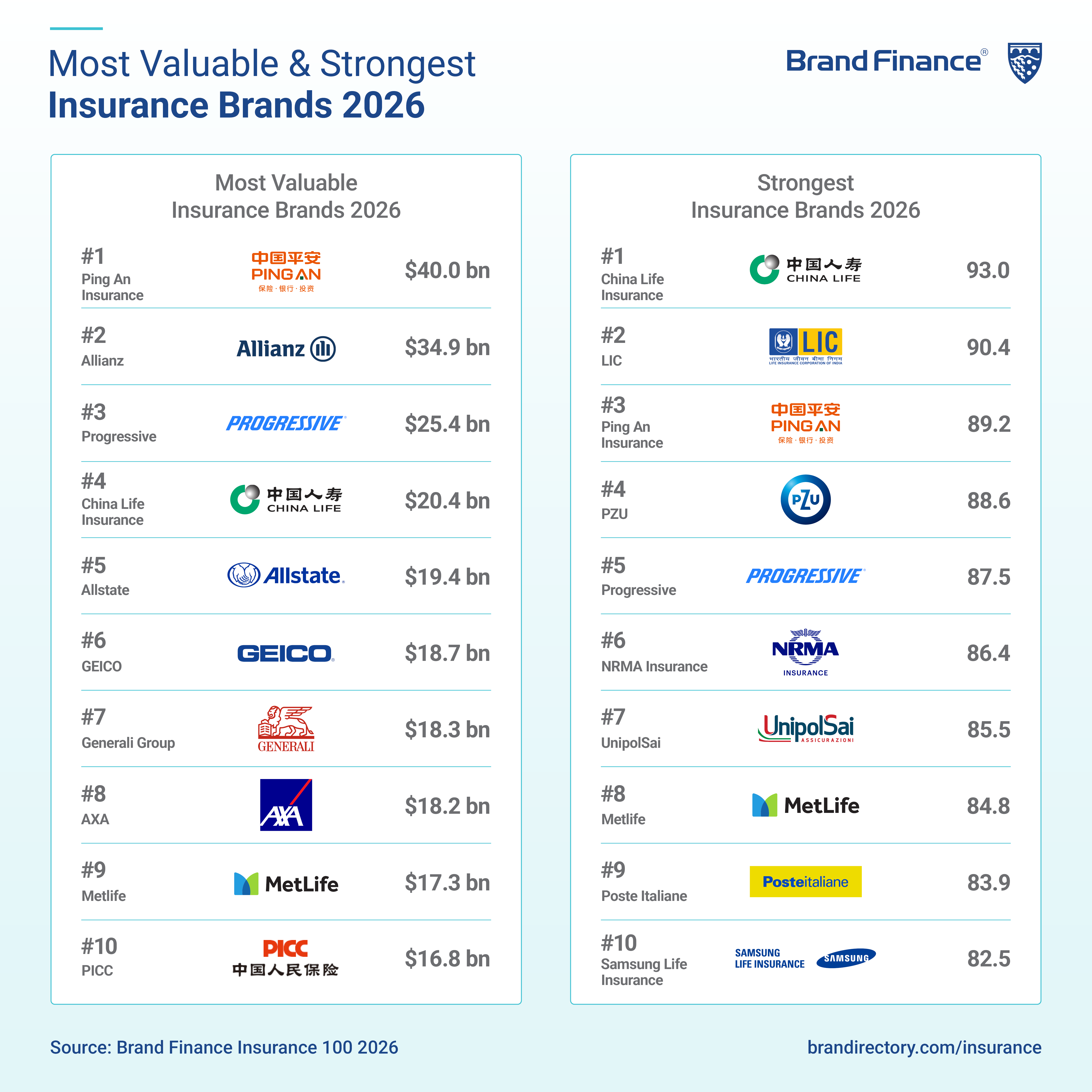
Il mercato italiano riflette una tendenza globale. Il valore dei marchi assicurativi mondiali cresce del 14% nel 2026 — la performance più robusta degli ultimi cinque anni — per un totale di 607 miliardi di dollari. Eppure, l’Indicatore di Forza del Brand medio delle top 100 assicurazioni si ferma a 66,19: quasi 10 punti sotto la media dei brand della classifica intersettoriale Global 500 (75,79). Il valore finanziario cresce, ma la capacità di influenzare e attrarre i consumatori rimane strutturalmente debole. È lo stesso paradosso che emerge in Italia: marchi che valgono miliardi, ma che faticano a costruire una relazione profonda con i propri clienti.
"Il dato più significativo è la direzione: nel 2026 il BSI assicurativo cresce del +3,2% mentre quello dei Global 500 è piatto. Il settore si sta muovendo nella direzione giusta, ma il gap rimane ampio e il tempo stringe. Con la normalizzazione del ciclo tariffario in corso, i brand che avranno investito nella propria forza — in Italia come nel resto del mondo — arriveranno al momento più competitivo con un vantaggio difficilmente colmabile. Quelli che non lo avranno fatto si troveranno a rispondere con l’unico strumento rimasto: il prezzo."
— Massimo Pizzo, Senior Consultant, Brand Finance
FONTI
¹ Swiss Re Institute, Sigma 5/2024: Global economic and insurance market outlook 2025–26, ottobre 2024.
² Swiss Re Institute, US Property & Casualty Outlook, ottobre 2025.
³ Swiss Re Institute, Sigma 2/2025: World insurance in 2025, aprile 2025.
⁴ Moody's Ratings, 2026 P&C Personal Insurance Outlook, 2025.
⁵ S&P Global Market Intelligence, US P&C 2026 Outlook, gennaio 2026.
⁶ Deloitte Insights, 2026 Global Insurance Outlook, dicembre 2025.
⁷ Fitch Ratings, 2026 US P&C Insurance Outlook, gennaio 2026.




Brand Finance is the world’s leading brand valuation consultancy. Bridging the gap between marketing and finance, Brand Finance evaluates the strength of brands and quantifies their financial value to help organisations make strategic decisions.
Headquartered in London, Brand Finance operates in over 25 countries. Every year, Brand Finance conducts more than 6,000 brand valuations, supported by original market research, and publishes over 100 reports which rank brands across all sectors and countries.
Brand Finance also operates the Global Brand Equity Monitor, conducting original market research annually on 6,000 brands, surveying more than 175,000 respondents across 41 countries and 31 industry sectors. By combining perceptual data from the Global Brand Equity Monitor with data from its valuation database — the largest brand value database in the world — Brand Finance equips ambitious brand leaders with the data, analytics, and the strategic guidance they need to enhance brand and business value.
In addition to calculating brand value, Brand Finance also determines the relative strength of brands through a balanced scorecard of metrics, compliant with ISO 20671.
Brand Finance is a regulated accountancy firm and a committed leader in the standardisation of the brand valuation industry. Brand Finance was the first to be certified by independent auditors as compliant with both ISO 10668 and ISO 20671 and has received the official endorsement of the Marketing Accountability Standards Board (MASB) in the United States.
Brand is defined as a marketing-related intangible asset including, but not limited to, names, terms, signs, symbols, logos, and designs, intended to identify goods, services, or entities, creating distinctive images and associations in the minds of stakeholders, thereby generating economic benefits.
Brand strength is the efficacy of a brand’s performance on intangible measures relative to its competitors. Brand Finance evaluates brand strength in a process compliant with ISO 20671, looking at Marketing Investment, Stakeholder Equity, and the impact of those on Business Performance. The data used is derived from Brand Finance’s proprietary market research programme and from publicly available sources.
Each brand is assigned a Brand Strength Index (BSI) score out of 100, which feeds into the brand value calculation. Based on the score, each brand is assigned a corresponding Brand Rating up to AAA+ in a format similar to a credit rating.
Brand Finance calculates the values of brands in its rankings using the Royalty Relief approach – a brand valuation method compliant with the industry standards set in ISO 10668. It involves estimating the likely future revenues that are attributable to a brand by calculating a royalty rate that would be charged for its use, to arrive at a ‘brand value’ understood as a net economic benefit that a brand owner would achieve by licensing the brand in the open market.
The steps in this process are as follows:
1 Calculate brand strength using a balanced scorecard of metrics assessing Marketing Investment, Stakeholder Equity, and Business Performance. Brand strength is expressed as a Brand Strength Index (BSI) score on a scale of 0 to 100.
2 Determine royalty range for each industry, reflecting the importance of brand to purchasing decisions. In luxury, the maximum percentage is high, while in extractive industry, where goods are often commoditised, it is lower. This is done by reviewing comparable licensing agreements sourced from Brand Finance’s extensive database.
3 Calculate royalty rate. The BSI score is applied to the royalty range to arrive at a royalty rate. For example, if the royalty range in a sector is 0-5% and a brand has a BSI score of 80 out of 100, then an appropriate royalty rate for the use of this brand in the given sector will be 4%.
4 Determine brand-specific revenues by estimating a proportion of parent company revenues attributable to a brand.
5 Determine forecast revenues using a function of historic revenues, equity analyst forecasts, and economic growth rates.
6 Apply the royalty rate to the forecast revenues to derive brand revenues.
7 Discount post-tax brand revenues to a net present value which equals the brand value.
Brand Finance has produced this study with an independent and unbiased analysis. The values derived and opinions presented in this study are based on publicly available information and certain assumptions that Brand Finance used where such data was deficient or unclear. Brand Finance accepts no responsibility and will not be liable in the event that the publicly available information relied upon is subsequently found to be inaccurate. The opinions and financial analysis expressed in the study are not to be construed as providing investment or business advice. Brand Finance does not intend the study to be relied upon for any reason and excludes all liability to any body, government, or organisation.
The data presented in this study form part of Brand Finance's proprietary database, are provided for the benefit of the media, and are not to be used in part or in full for any commercial or technical purpose without written permission from Brand Finance.