




This article was originally published in the Brand Finance Luxury & Premium 50 2026.

Luxury brands tend to focus their sponsorship efforts on elite disciplines like Formula One to precisely target an affluent audience traditional advertisement struggles to reach. This is even more true for luxury automotive brands, where the fit between sport and product speaks for itself.
Seven of the 11 teams on the 2026 grid carry an automotive brand’s name, and the sector’s biggest names have long had an interest in motor racing’s major spectacle. But the interest goes beyond performance and competition. Formula One is a unique commercial opportunity to reach an affluent audience at scale, not just a platform to showcase engineering. That’s why luxury and sports auto brands tend to have a bigger presence in the market than mass-market ones, evidenced through Renault FORMULA ONE Team’s rebranding to promote its high-end car marque, Alpine.
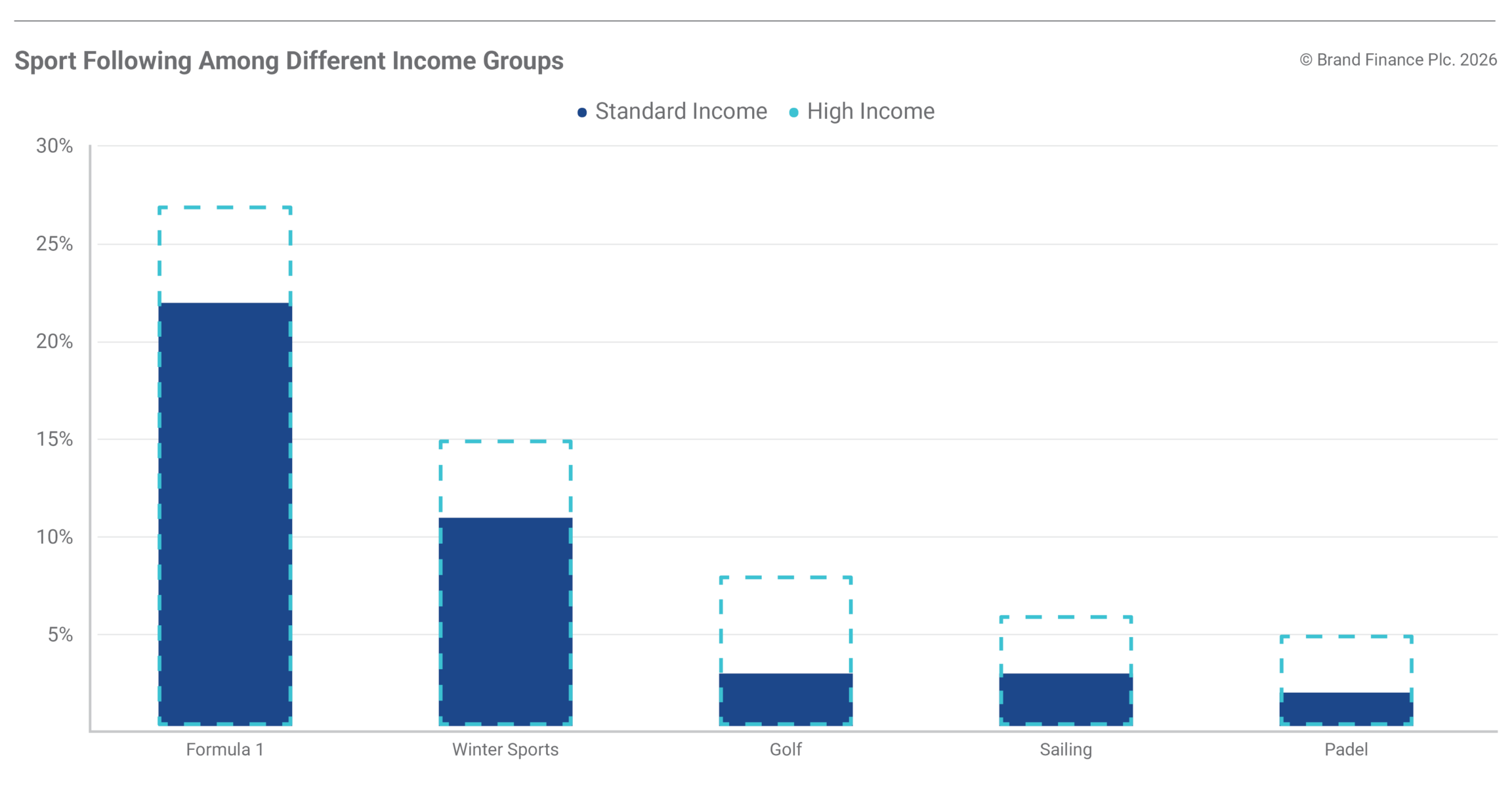
Brand Finance data shows higher income individuals are more likely to follow certain sports when compared to the general population. For example, they are more than twice as likely to follow golf (163%) and padel (128%), and show increased engagement with sailing (98%) and winter sports (35%). Formula One’s uplift is more modest at 22%, but its total reach is far higher than other sports. Our data shows that high-income Europeans are 3.2 times more likely to follow Formula One (27%) than golf (8%), and almost 5 times more likely than sailing (6%). For a luxury automotive brand, Formula One is where the wealthiest consumers are concentrated at scale. This gives luxury automotive brands more visibility with their target audience than any other sport and tends to build stronger connections between affluent audiences and brands with an active presence in the sport.
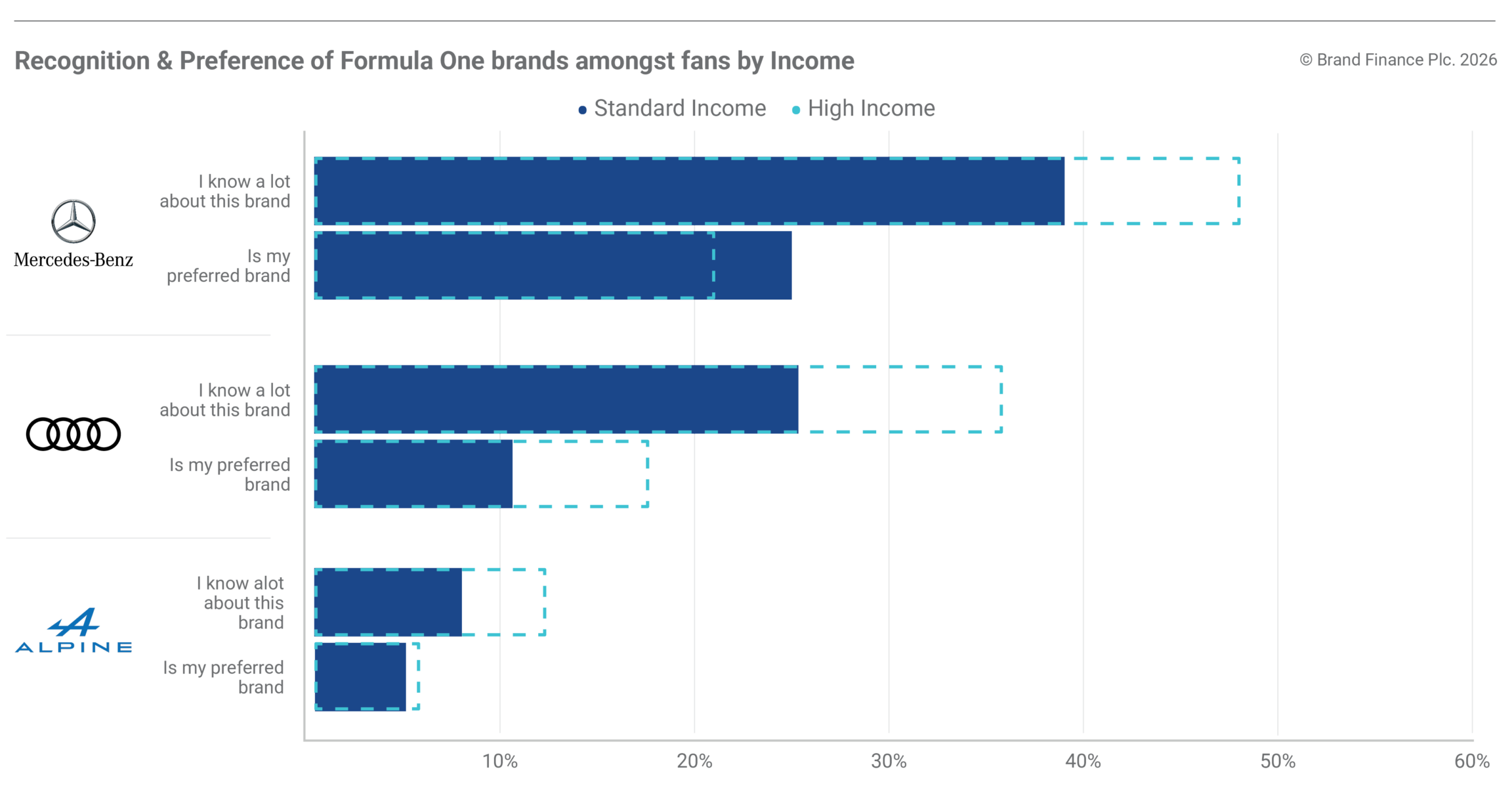
Among Formula One fans, Brand Finance data also finds high-income individuals show around 31% higher recognition and preference on average for luxury brands. The uplift is strongest for Alpine: high-income fans are 53% more likely to say they know a lot about the brand than standard income fans, well ahead of more established brands with Formula One presence like Mercedes or Audi – though those brands have less room to grow, having built recognition over decades. Mercedes shows the opposite pattern, preferred 15% more among standard income fans than high-income ones, which underlines how distinct Alpine’s high-income skew is.
However, Alpine’s recognition and preference still trail both Mercedes and Audi in terms of total output. But given Alpine’s relatively new presence in Formula One, that more looks like headroom than a weakness. Since 2022, the first season the team ran as Alpine, net familiarity among high-income individuals has risen eight percentage points, from 33% to 41%. Without the German brands’ decades of mainstream road-car presence, Alpine has a clear opportunity to use Formula One’s reach to close the gap on its own terms: building positioning through association with a luxury sport, while establishing itself as a genuinely capable performance brand in parallel. Recognition is climbing; converting that into consideration is the real opportunity ahead. Alpine’s Formula One presence gives it several routes to build that consideration. Competing against, and beating, established names in front of global audiences builds manufacturing capability. Further, a third of Formula One viewers are under 35, meaning Alpine’s exposure today reaches people who may not be buying a luxury brand yet, but could become customers in the future.
The connection shows up directly in how Alpine markets to customers too. The brand promotes tangible technology transfers from Formula One to its road cars – aerodynamics and battery management systems as developed by its race engineers – giving potential buyers a concrete, specific reason to consider Alpine cars as exclusive and performance-driven. Sponsorship adds another layer. Alpine’s upcoming partnership with Gucci will see the team rebranded as Alpine Gucci F1 Team from the 2027 season, pairing the brand with one of the most recognised names in luxury fashion and further reinforcing that premium positioning among affluent audiences.
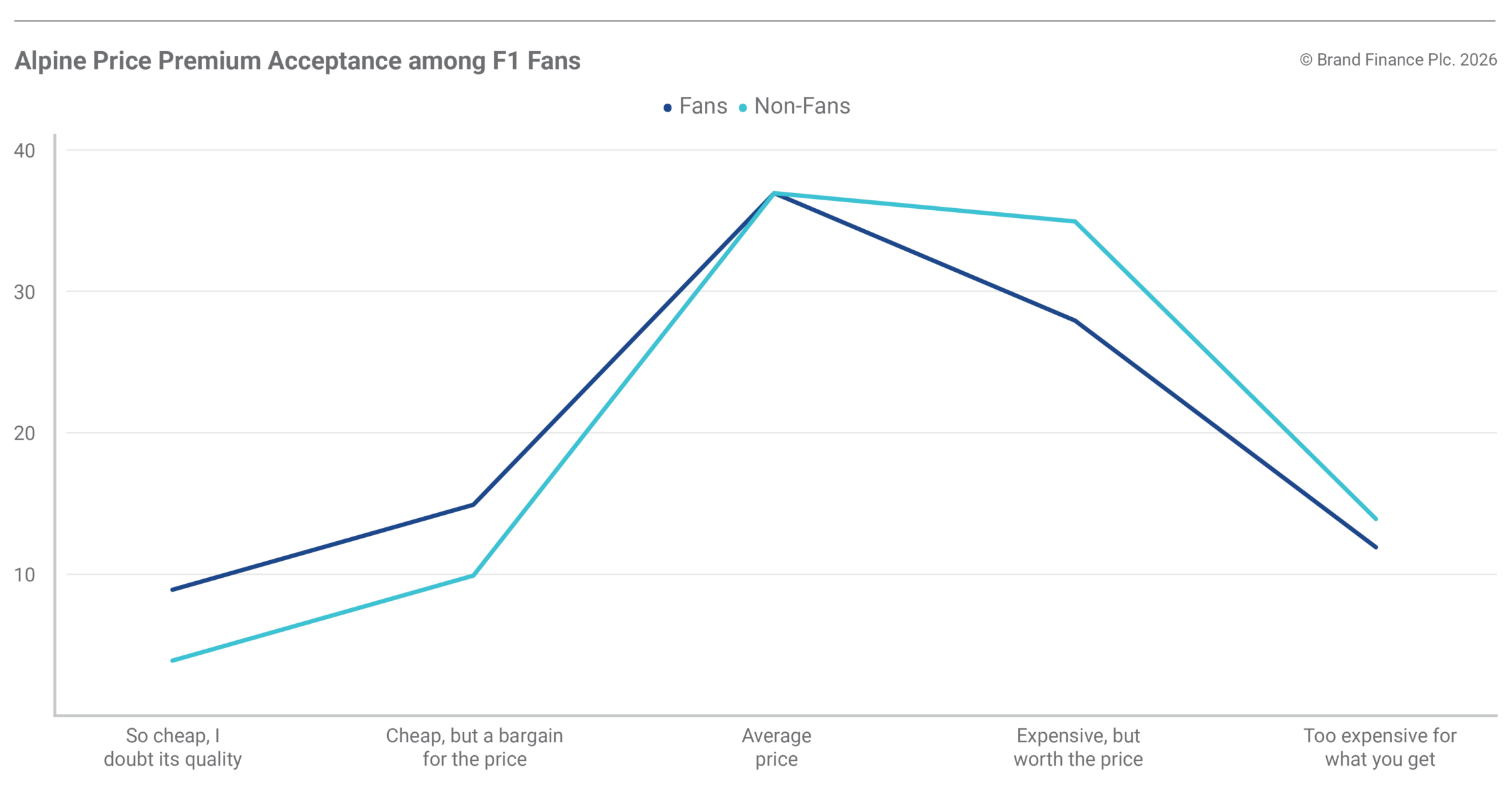
Alpine’s association with such a prestigious competition like Formula One is also evident in how fans judge its pricing. According to our data, high-income Formula One fans are roughly twice as likely as non-fans to reject the idea that Alpine’s pricing signals doubtful quality (4% vs 9%), and meaningfully more likely to see a premium price as justified rather than excessive (35% vs 28% choosing ‘expensive, but worth the price’). The two groups converge almost exactly at ‘average price’, suggesting Formula One exposure doesn’t seem to change how people judge value overall, so much as it shifts a share of the audience further up the brand funnel, from doubting Alpine's premium to accepting it.
Since entering Formula One as a manufacturer in 2021, Alpine’s brand has grown sharply. Brand Finance measured Alpine’s brand value at €227 million in 2022 following its first season; our 2026 valuation puts the figure at €973 million – more than four times higher within five years, with €217 million of that growth in the last year alone. Ultimately, luxury and premium sports sponsorship goes beyond prestige. It serves as a strategic tool to engage hard-to-reach target audiences through the experiences that resonate most. To fully realise the brand growth and financial benefits of these partnerships, brands turn to more lifestyle-driven marketing techniques that align with the passions and aspirations of higher income individuals. World-renowned sporting events provide the stage for that strategy, creating brand equity and affinity, and tangible financial results, where conventional marketing falls short.