




This article was originally published in the Brand Finance IT Services 25 2026.

In the rapidly evolving AI era, IT services brands must go beyond technological capability to win the hearts and minds of customers by building strong brand knowledge, credibility, and appeal. This imperative is further intensified by the high-stakes nature of technology decision-making, where IT leaders are personally and professionally accountable for outcomes, and where failed transformations, security incidents, or misjudged AI investments can result in substantial operational, reputational, and career risk.
Grounded in marketing science, being well known (for the thing you want to sell), reputable, and admired remains among the most powerful drivers of brand choice and preference. Brand Finance’s extensive experience, reinforced by our latest research, confirms the enduring importance of these fundamentals - particularly in a market shaped by rapid technological change, increasing organisational complexity, and heightened scrutiny across the C-suite. The analysis derives from Brand Finance’s primary research, conducted among more than 1,000 IT decision-makers globally and evaluating 30 leading IT services brands across a wide range of metrics, including familiarity, reputation, trust, admiration, consideration, preference, price premium, and advocacy. The findings reveal a clear and compelling relationship between brand knowledge, credibility, and appeal, and their influence on consideration and, ultimately, brand preference.
Drivers of reputation and admiration
Using statistical analysis, we identified the key factors driving reputation (credibility) and admiration (appeal) among IT services brands, revealing an important distinction between how these two dimensions are built. Reputation is most strongly driven by perceptions of global scale and recognised capability, with global brand presence emerging as the single most influential factor, followed by deep expertise in AI. This reflects a fundamental concern among IT leaders: the need for delivery certainty at scale. When technology decisions can determine business continuity, regulatory exposure, or executive credibility, buyers gravitate towards brands that signal proven execution, resilience, and the ability to deliver complex programmes without unpleasant surprises, particularly as AI moves from experimentation to business-critical deployment.
Admiration, by contrast, is shaped more strongly by relational and trust-based attributes. Being perceived as a trusted partner stands out as the most powerful driver of admiration, significantly outweighing purely technical or commercial factors. This highlights the emotional dimension of B2B decision-making: IT leaders are not only selecting technology, but choosing partners they believe will stand with them when things go wrong, help them navigate internal stakeholder pressure, and protect both organisational outcomes and personal reputations. Supporting this, a strong customer service focus, strong company culture, and commitment to supporting communities and wider society play an increasingly important role in driving admiration than reputation. These attributes help reassure buyers that a provider will act responsibly, transparently, and in the long-term interests of the client, qualities that matter deeply when decisions increasingly involve CEOs, CFOs, CMOs, and risk leaders, not just the CIO alone.
Beyond technical capability, these findings point to a broader evolution in client expectations. Organisations are no longer seeking to associate solely with the most advanced or competitively priced providers, but with brands that demonstrate responsible leadership, doing the right things, in the right way, under pressure. Traditional commercial levers such as pricing, product-led positioning, or service-led claims play a relatively limited role in shaping either reputation or admiration. This shift is particularly pronounced in the context of AI. As AI adoption accelerates, the primary concern for many IT leaders is no longer access to the technology itself, but where AI delivers genuine business impact versus where it introduces cost, risk, or reputational exposure without clear return. Trust in how AI is governed, deployed, secured, and integrated across the organisation has therefore become critical. Taken together, these drivers point to an emerging pattern: digital transformation that delivers value for society overall, rather than AI adoption for its own sake. Sustainability, responsibility, and governance are becoming central priorities, reflecting AI’s far-reaching economic, social, and environmental impacts.
“I know you, I trust you, I like you”: how building on reputation and admiration can sustain growing consideration and preference
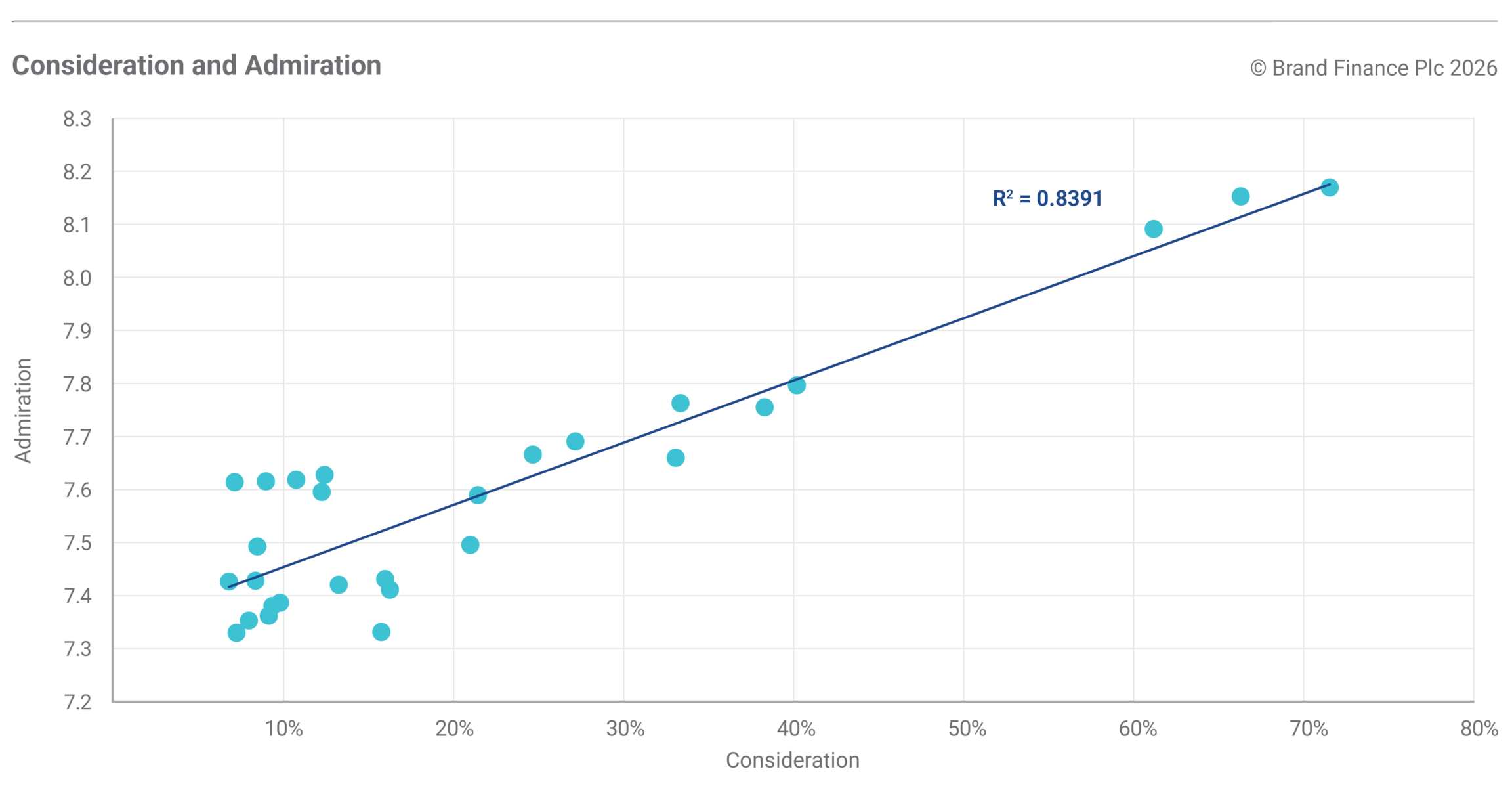
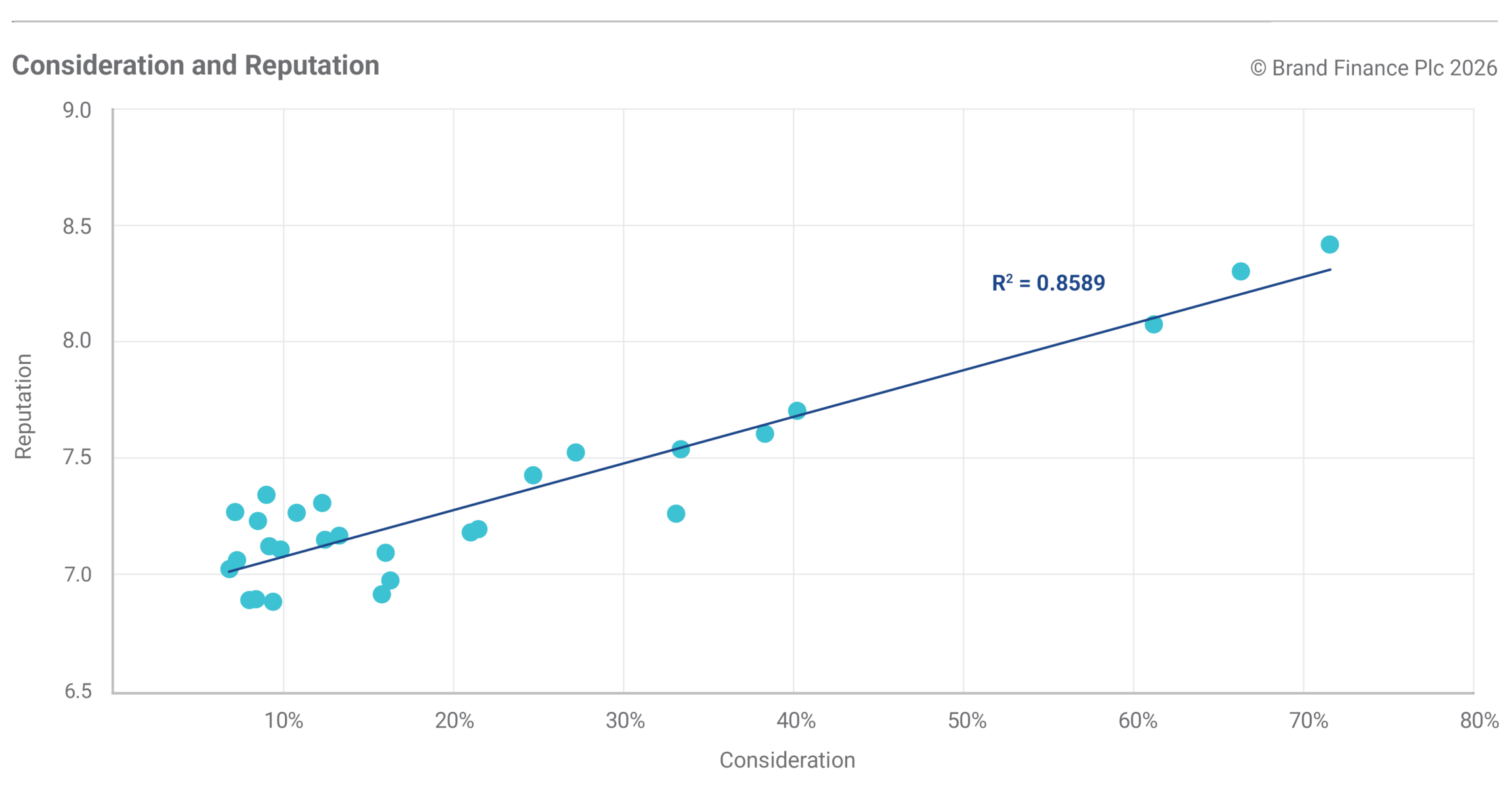
In our Brand Strength model, familiarity (“I know you”), credibility (“I trust you”), and appeal (“I like you”) have been identified and proven to be tightly linked to consideration and preference. This linkage is particularly powerful in IT services, where buyers often make decisions under conditions of uncertainty, time pressure, and personal accountability. When CIOs and technology leaders are required to justify large investments, manage security and resilience risks, and align multiple internal stakeholders, brands that are well known, trusted, and admired enjoy a significant advantage in being shortlisted and ultimately selected. To illustrate the strength of this relationship, we analysed the link between consideration and both reputation (a critical component of trust) and admiration (a critical component of appeal). The results show a strong positive relationship: more reputable and highly admired brands are significantly more considered and preferred. This reinforces a clear conclusion: brands that address the real anxieties facing IT leaders today, by signalling trust, reliability, and responsible leadership, materially improve their chances of winning in the AI era.